Seoul to Busan is about 330 km as the crow flies, which can be covered very quickly, e.g. with the KTX high-speed trains of the Korean state railway Korail. Based on Alstom’s TGV-A, these multiple units operate on a network of 13 lines with a strong focus on the capital Seoul.
It’s a matter of taste, but the Korail KTX trains don’t look too dynamic in their light grey/blue paintwork…
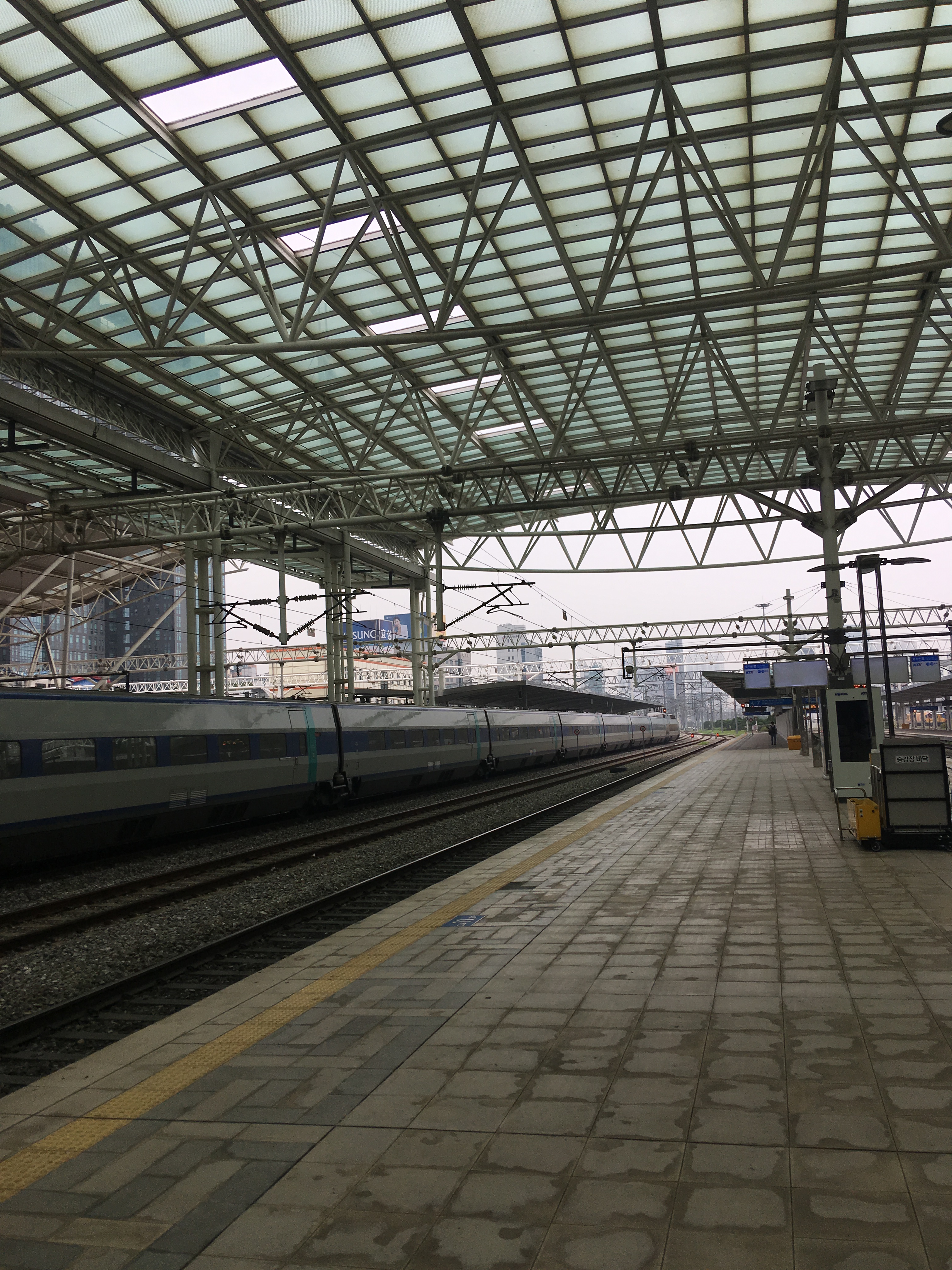
…the new SRT-Trains however:

The cruising speeds on the Korean KTX network are quite remarkable – maximum speeds of around 300 km/h, on the Seoul – Busan route even up to 370 km/h. But the fast trains have a disadvantage: You can’t see anything anymore, except maybe bridges and noise barriers, but even those are omitted in Korea on the new SRT tracks, because 86% of them run underground.
A Contemplative Trip on Historic Tracks
Since it needed a “buffer day” before travelling via ferry to Japan anyway (time and tide wait for no man), I looked around for a more contemplative option and came across the Mugunghwa-ho trains – left over from the 1980s and named after the Korean national flower, the shrub marshmallow, or hibiscus, in Korean Moghungwa.
These locomotive-hauled passenger trains were introduced in 1980 as express trains. Gradually upstaged by the KTX high-speed trains, they now form the lowest long-distance train category at Korail, connecting rural areas with each other and with the metropoles.
One of the oldest and most important long-distance railway lines in Korea is the Gyongbu Line from Seoul to Busan via Suwon, Daejon, Daehgu. This route is still the most important transport corridor in the country, carrying 2/3 of all long-distance travellers some of them still traveling by Mugunghwa-ho.
Of course, travel times ofthe “Hibiscus Train” are significantly longer than in the KTX trains and the price of the trip is much lower.
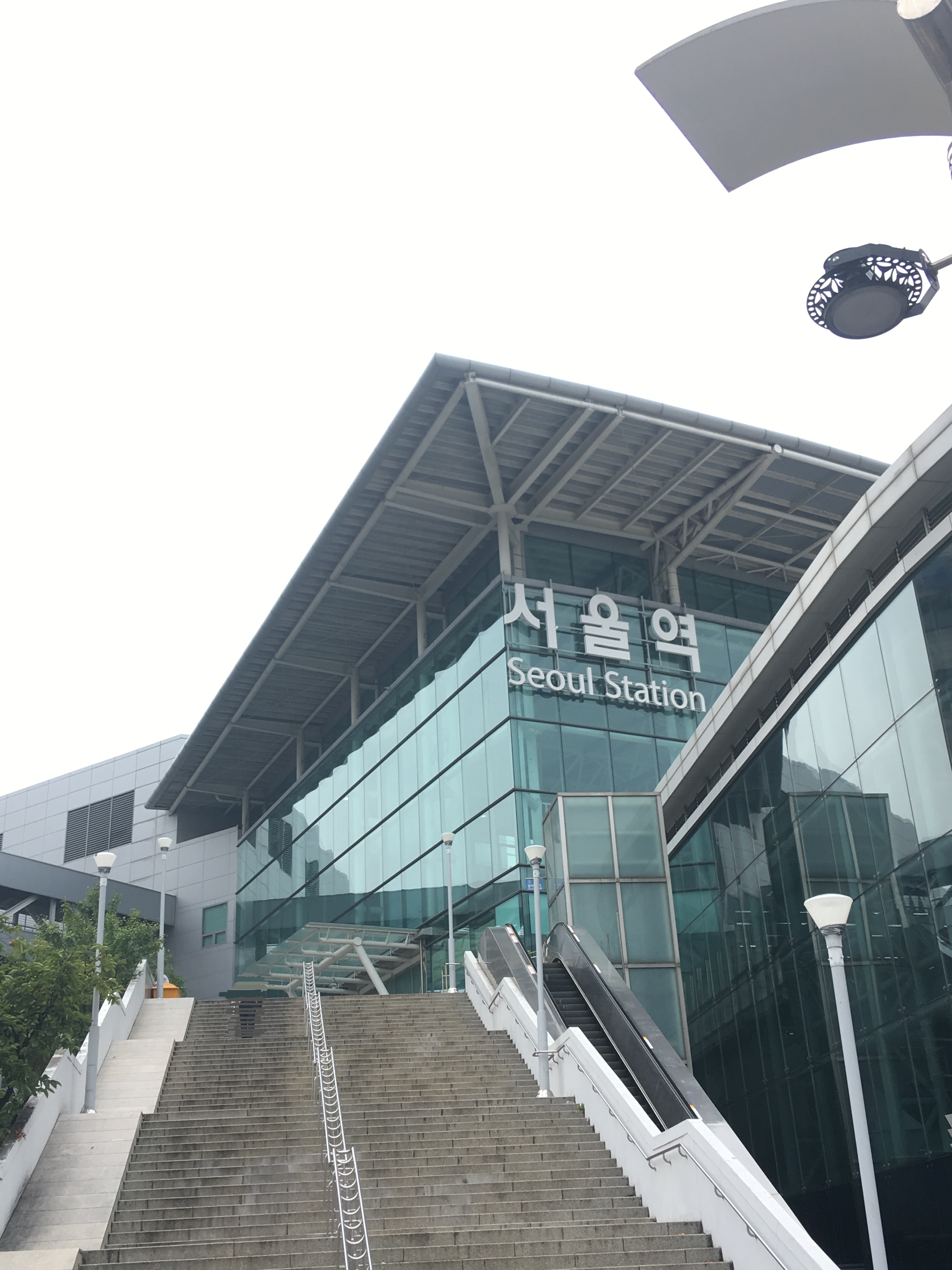
The start of the almost six-hour trip is Seoul Central Station:
Downgraded to Regional Train yet not Put on the Sidelines
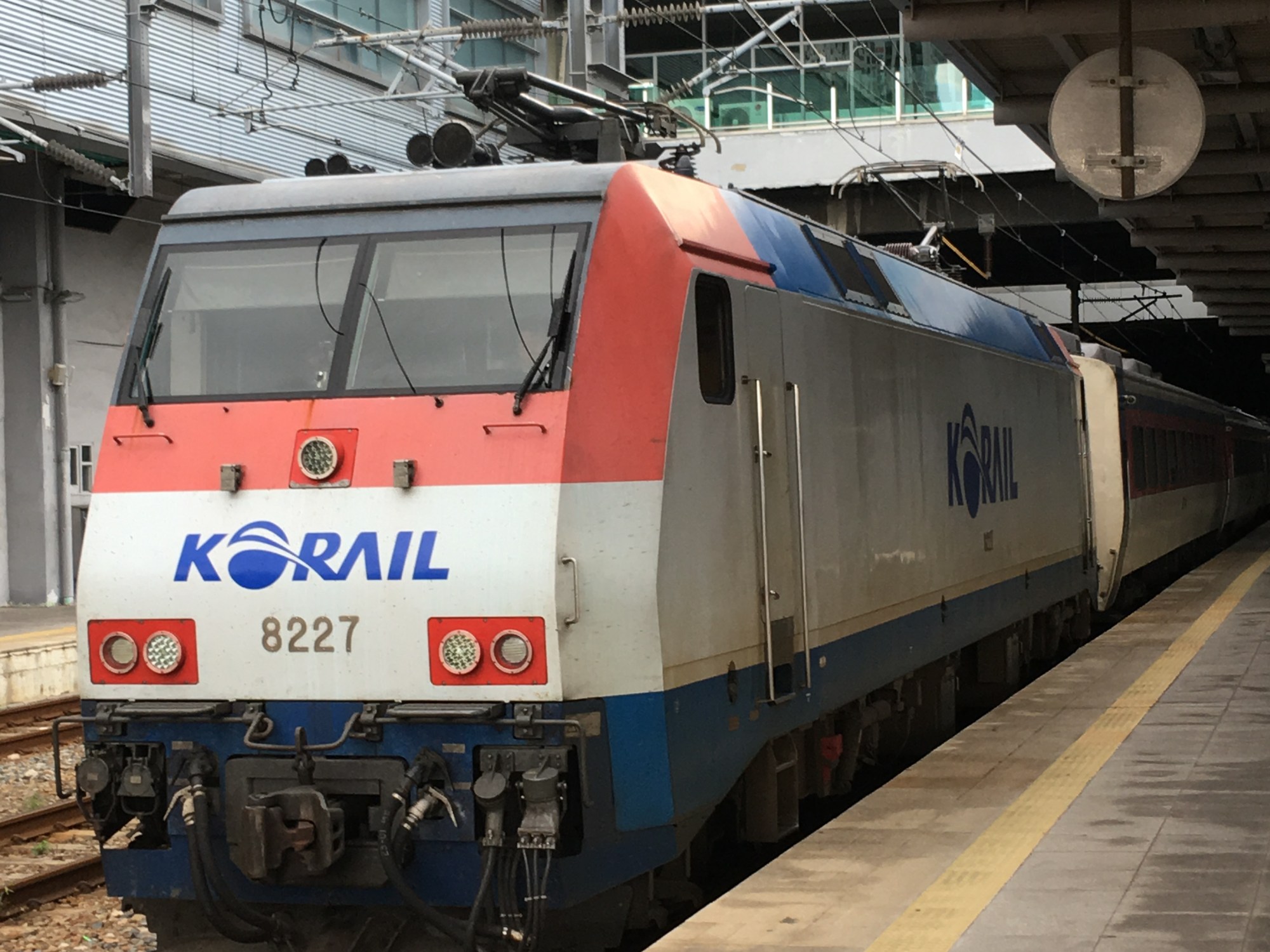
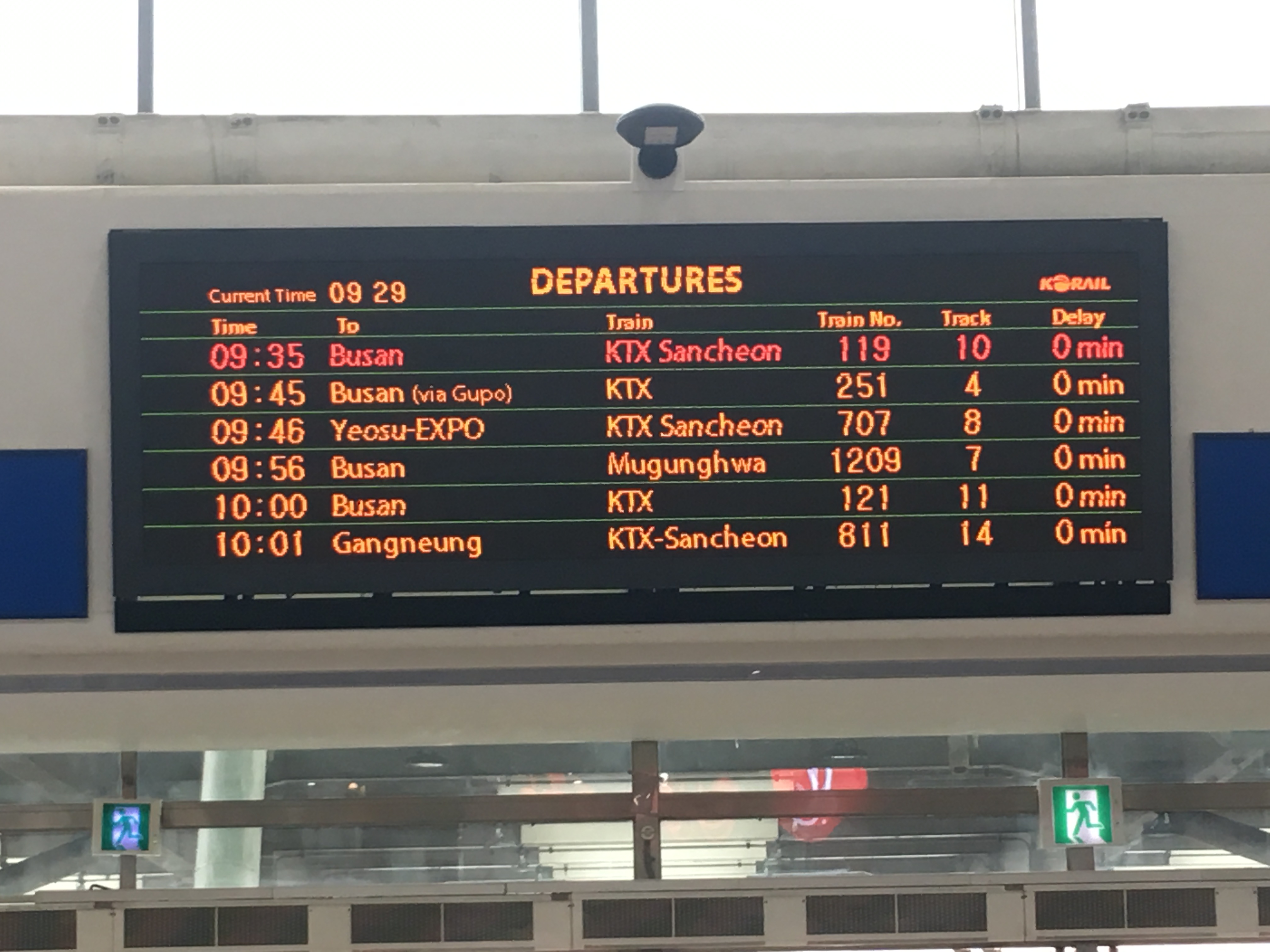
Train number 1209 arrived freshly cleaned and bang on time from the depot. The eight cars of the Long Length Mugunghwa-ho Passenger Car type were pulled by an electric locomotive class 8200, more precisely number 8227, built in 2004.
Connoisseurs immediately see the close relationship to the European “bread and butter” class 152 locomotive, and the 8200s were indeed built by Siemens and Daewoo (today Hyundai-Rotem) as a joint venture.

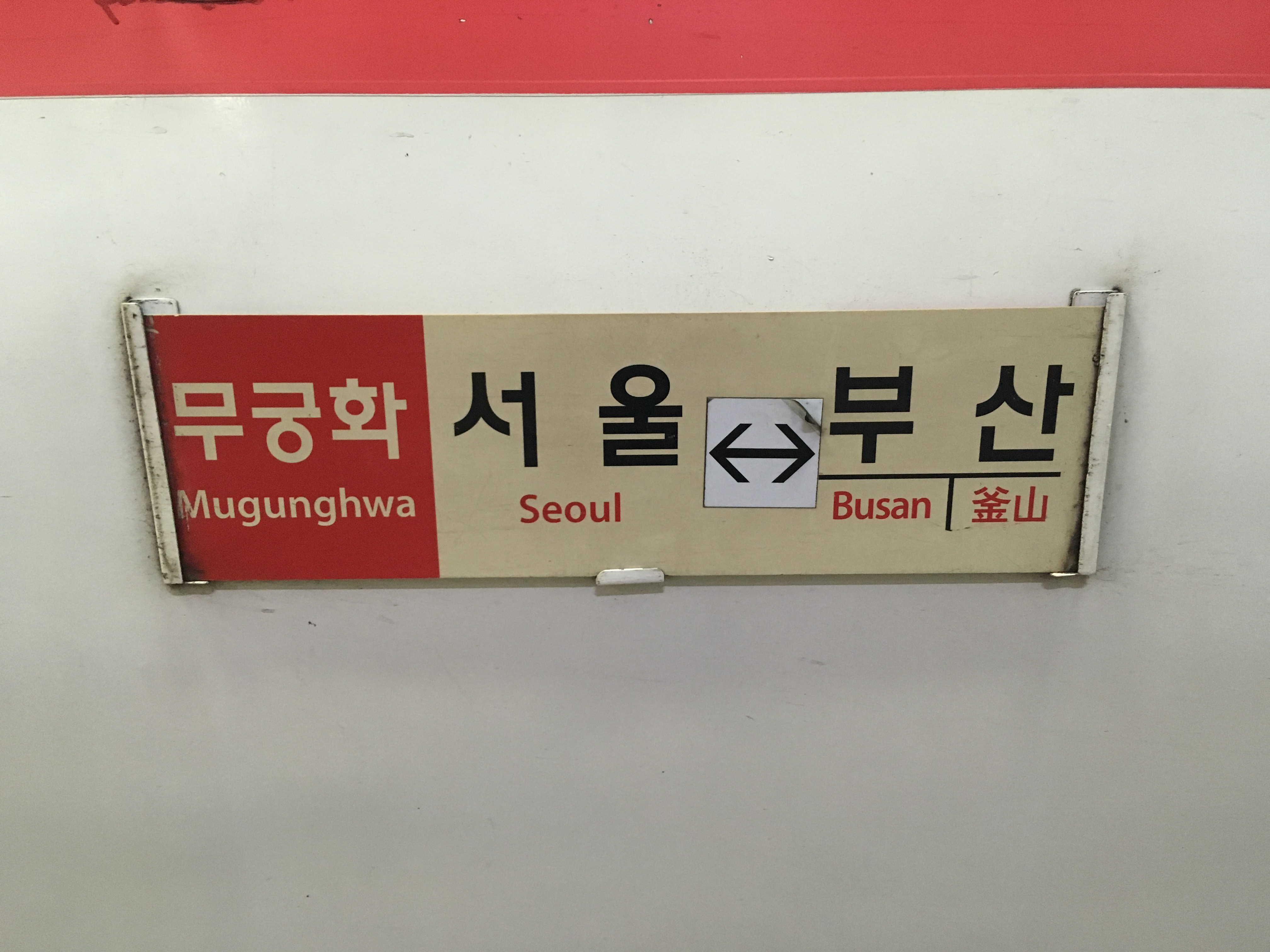
It wasn’t just the the increasingly rare combination of tractor unit and attached cars, but also the well-maintained seats, panels and equipment that brought up a real nostalgic feeling:


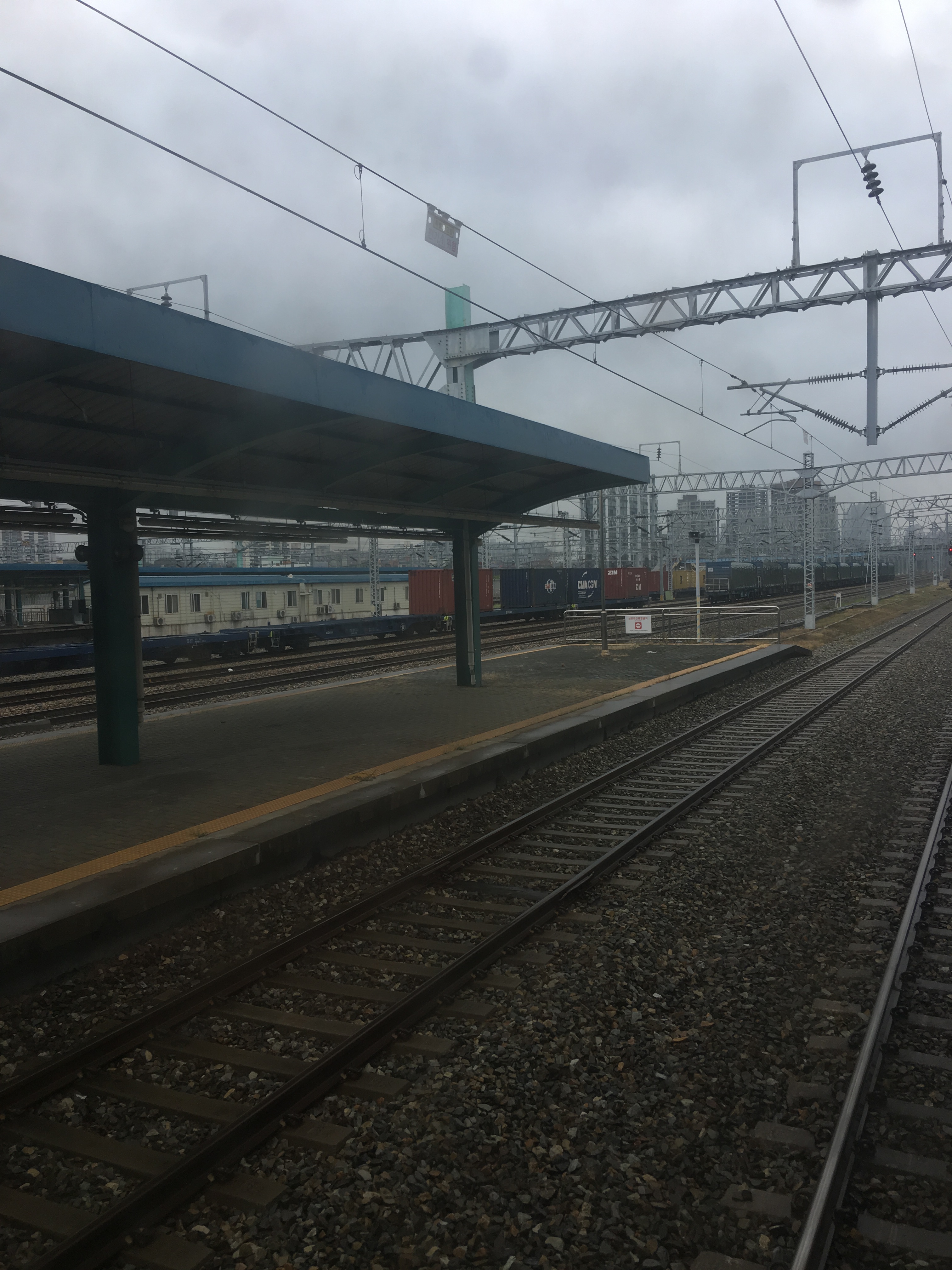
The journey south starts crossing the Hangang River a few minutes after leaving the station and then takes some 45 minutes to leave the suburbs of the capital behind.
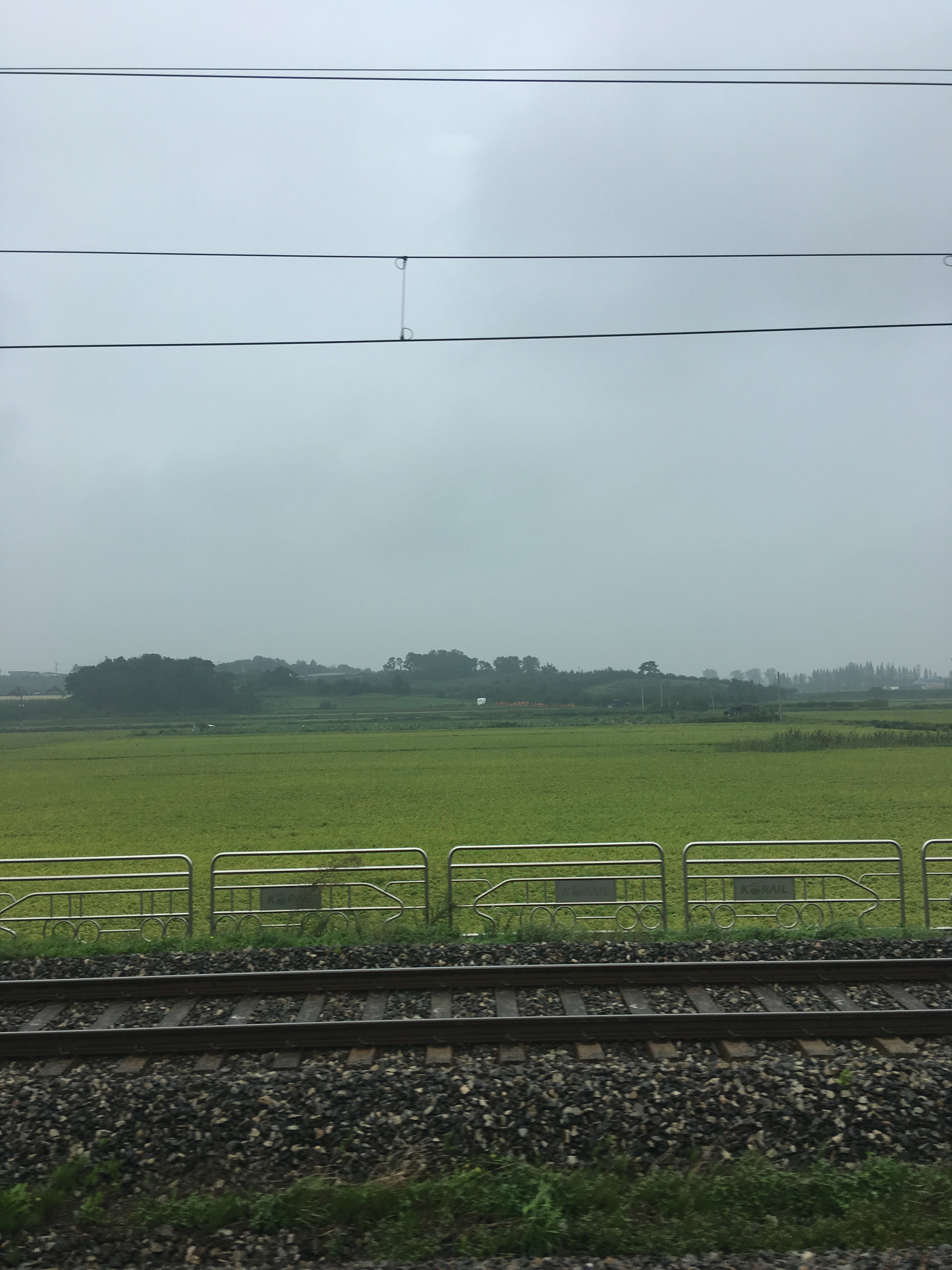
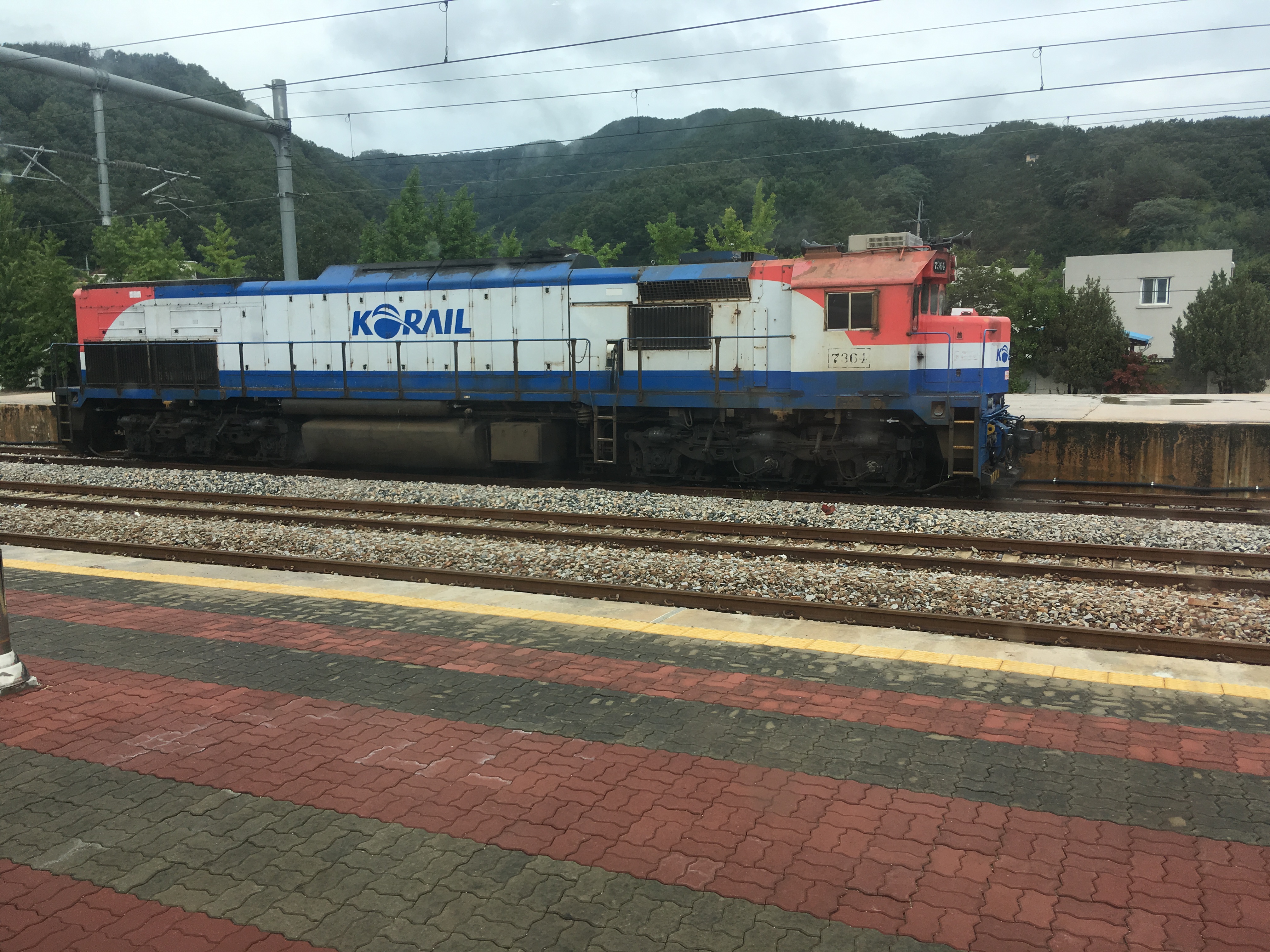
After that, the line gradually swings more and more eastwards and crosses a landscape of steeply rising, solitary hills with a few plains inbetween. The construction of this railway line must have been quite a challenge in this terrain
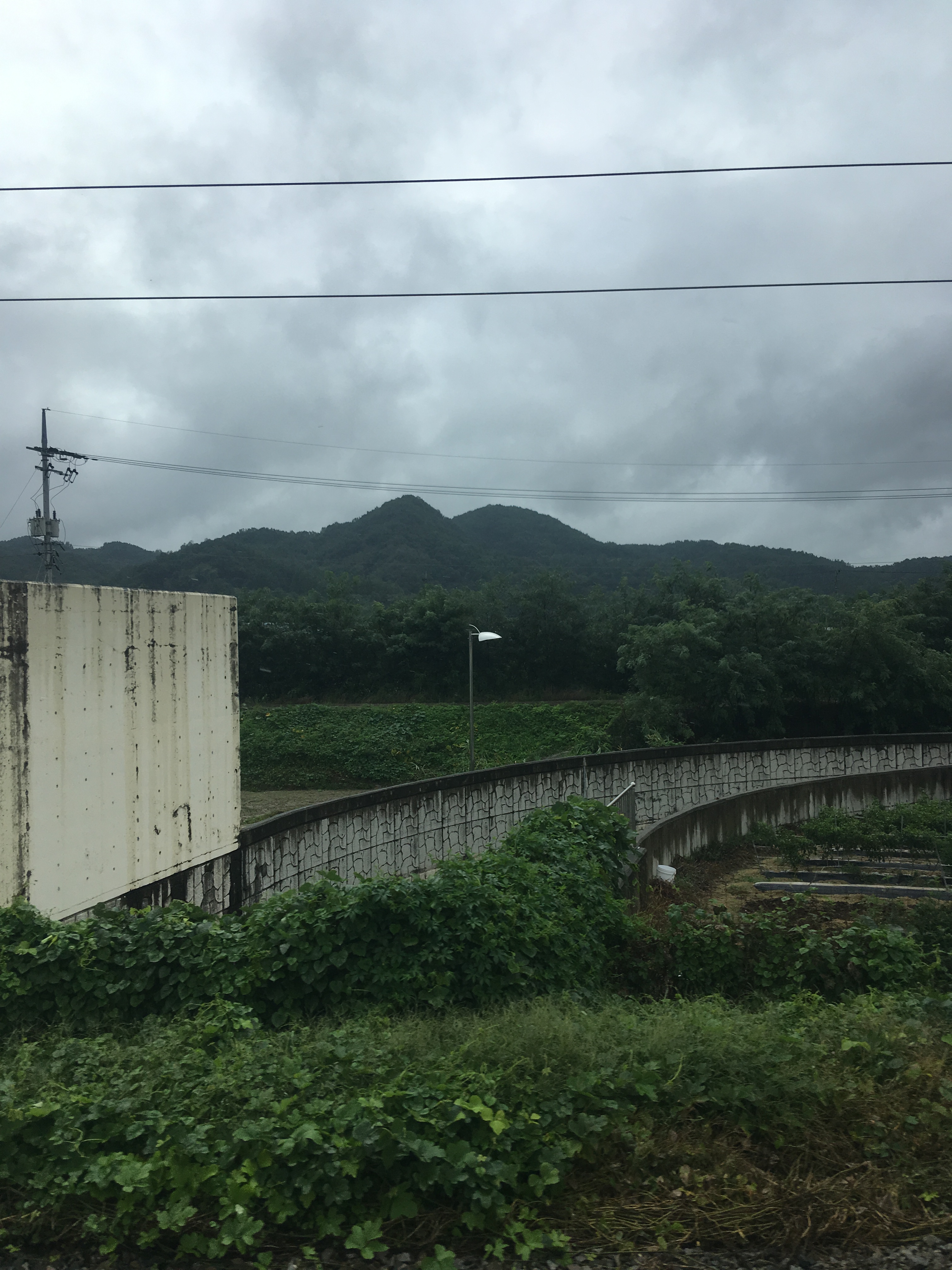
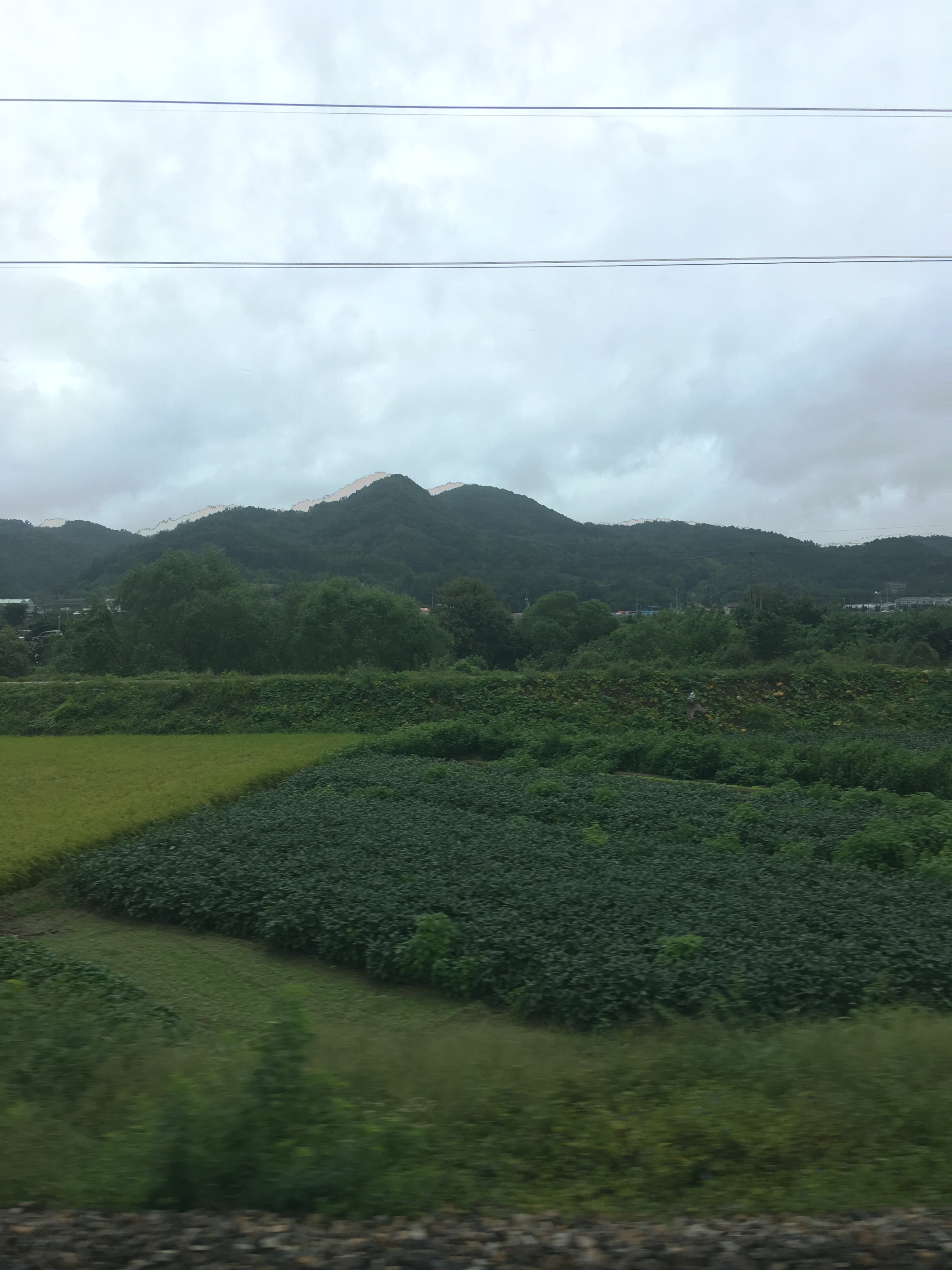
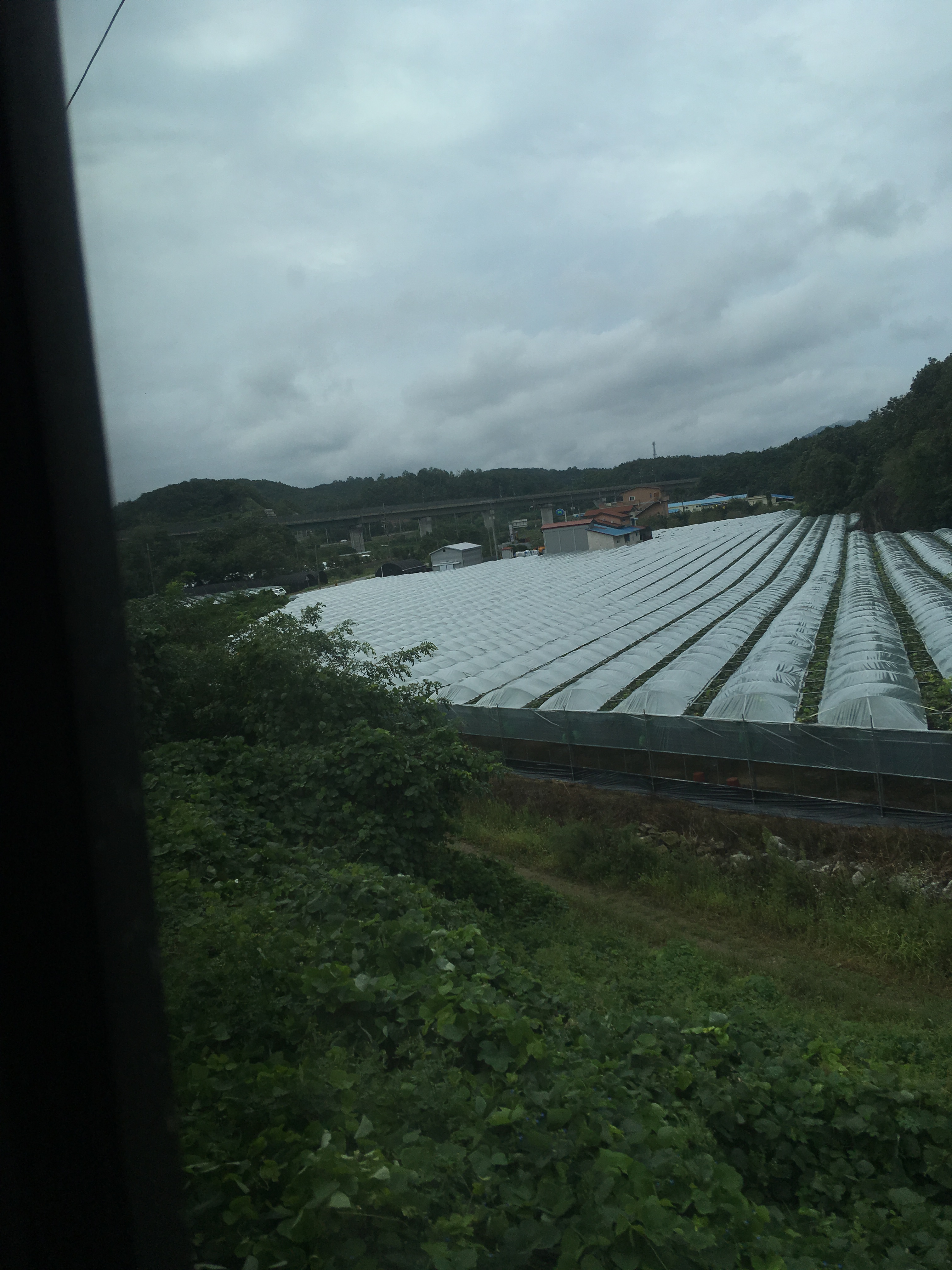
Many passengers get off and on again and again at a total of 36 stops along the way. The seat next to me changed occupancy a total of six times. In addition to some military personnel, there were mainly older ladies and some middle-aged gentlemen with tool cases on board. Naturally, the well-to-do business clientele does not take these slow traits.
Although the many stops are a bit tiring after a while, it is overall a comfortable journey through a landscape well worth seeing. The train is pleasantly air-conditioned and the seats are sufficiently wide and have a generous spacing.
However, you have to make do without amenities such as Wi-Fi, power connections or an on-board bistro.
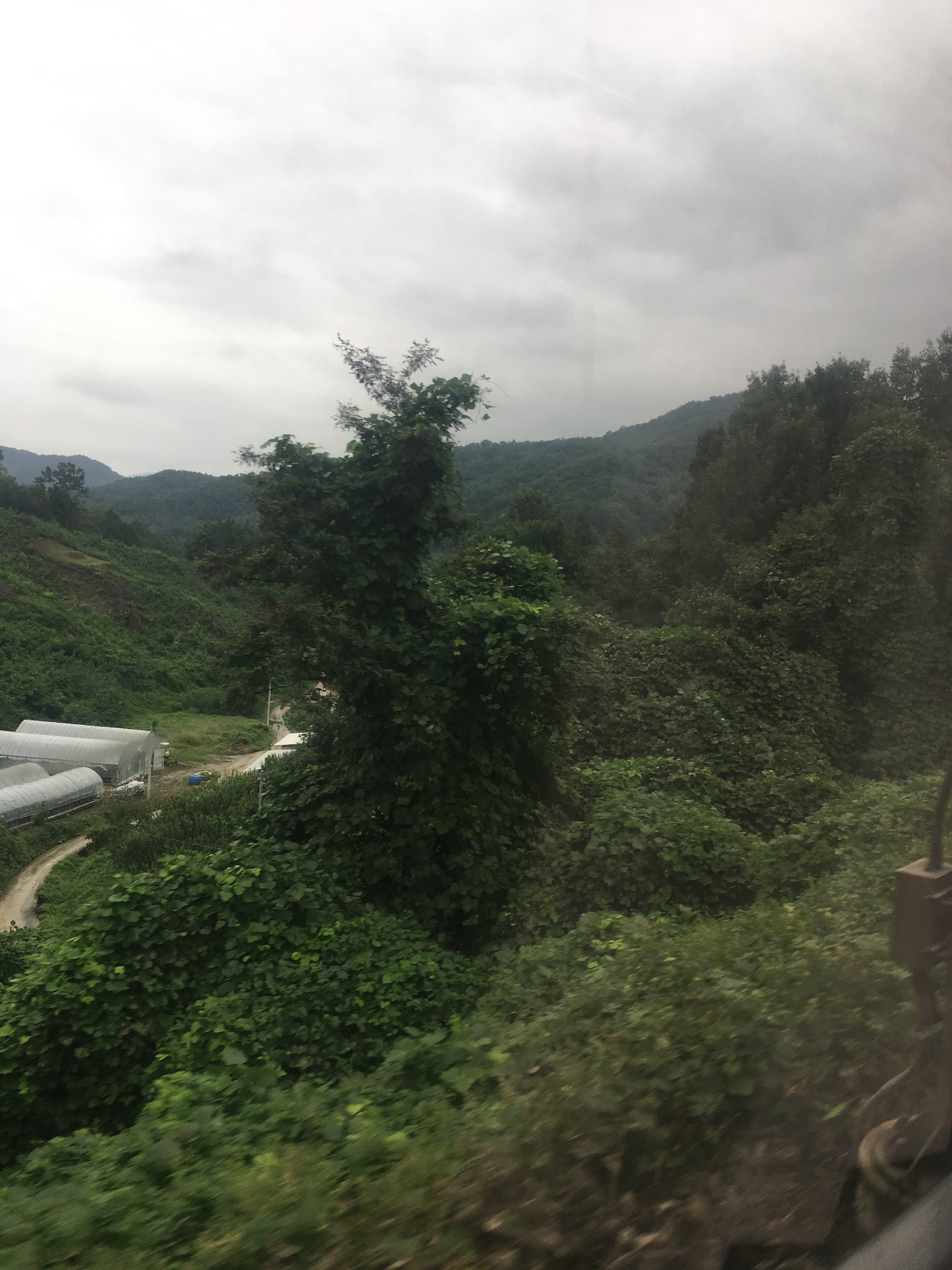
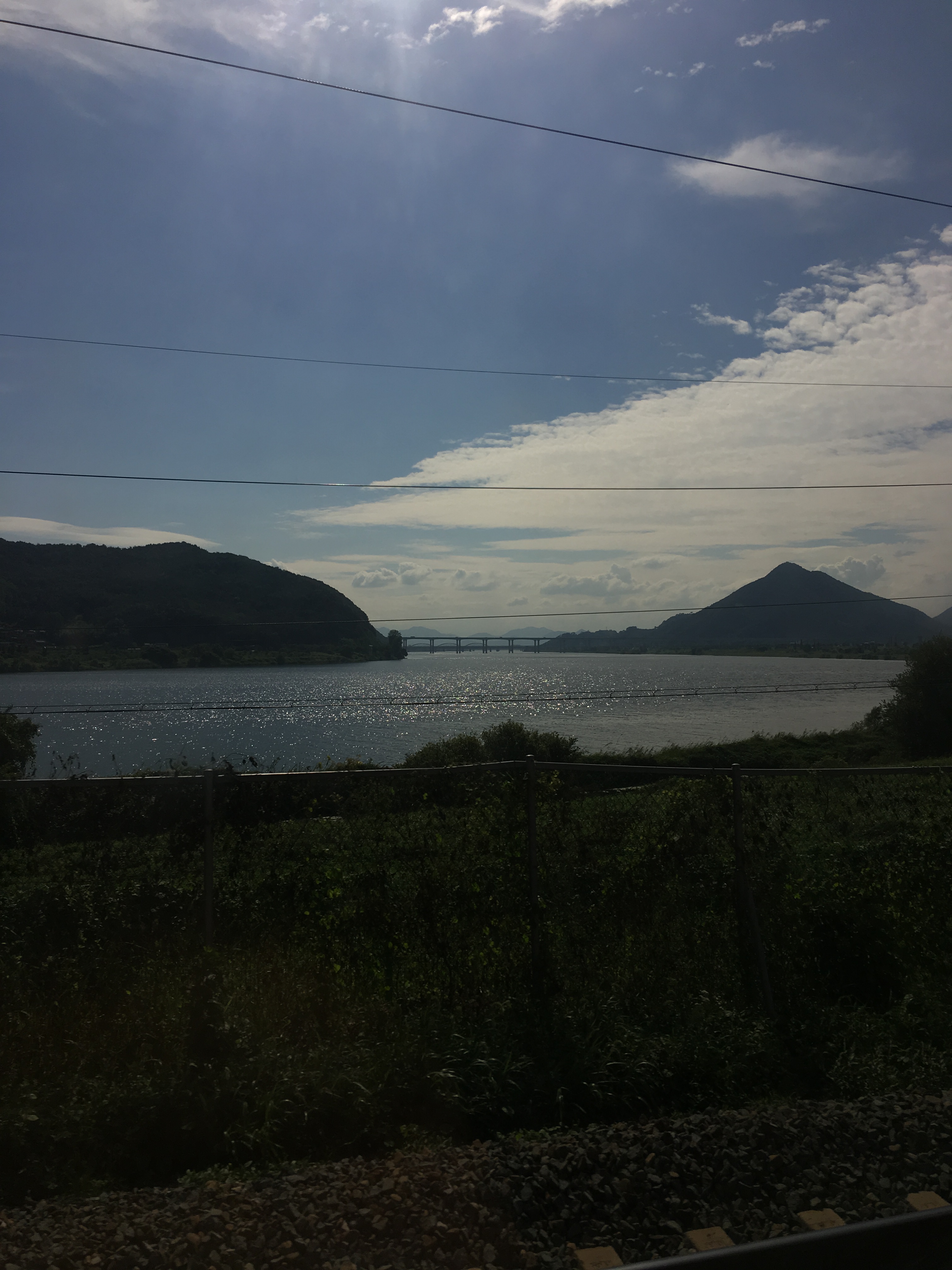
About an hour and a half before Busan, you notice that you have clearly moved south. The landscape takes on a slight Mediterranean touch and the ever-widening Nakdongdang River heralds the nearby sea.
 Pennyblog
One thought on “Mugunghwa-ho Korea’s Hibiscus Train Seoul – Busan”