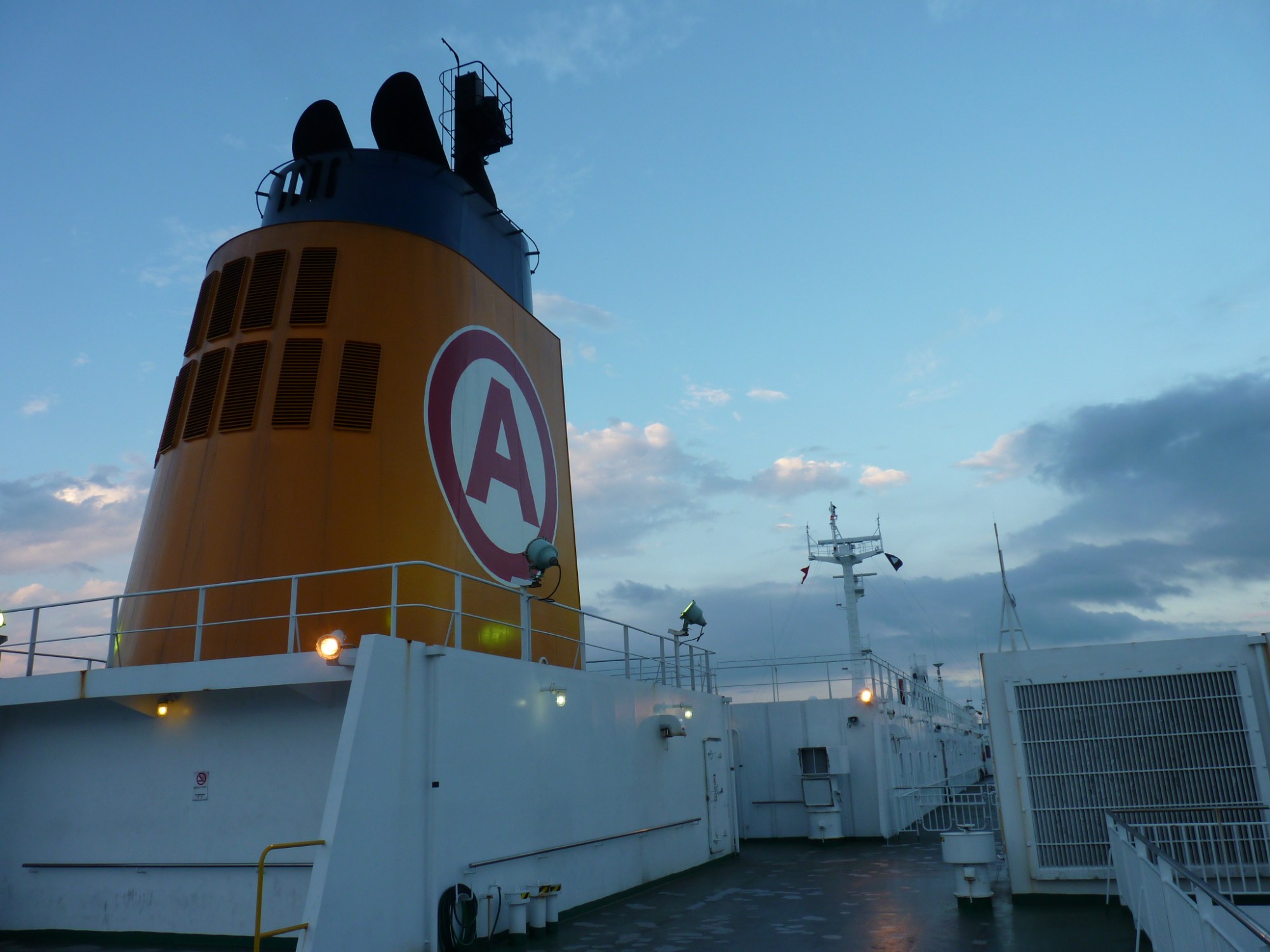
Route 58 is Japan’s longest national highway albeit only a portion of it runs on dry land. Interestingly, the route originates from the island of Okinawa – instead of being extended from the main islands. Its roots go back as far as the 15th century, when emperor Sho Kinpuku ordered a road circumventing Okinawa to be built.
I covered the wet bits only on this trip, taking the 26-hour crossing from Kagoshima to Naha (Okinawa) on A Line Ferry’s sturdy workhorse the ferry Akebono.

Booking
When I first started researching this trip, I was confused to the max. Even figuring out the schedule was challenging, as I can’t read Japanese. I started out by establishing some basics such as which ships operate on this route and which shipping companies run them. Sounds simple but proved to be challenging.
Just some of the confusing insights from that first phase:
There is a daily crossing from Kagoshima to Naha – in principle. Three ships are taking turns. They alternate through the schedule, so you can never tell which days of the week they will sail. The timetable is very reliable, but it will only be published two months in advance. There are two companies operating similar ships. Marix Lines operating the ferries Queen Coral Cross and Queen Coral Plus as well as A Line Ferries operating the Akebono. Marue A and A Line are two names for the same company. One company – Marix Lines – provides a schedule at the beginning of each month on Instagram (@marix_line), the other doesn’t. It is fair to assume that days left blank in the schedule of one company are covered by another company’s ship, unless they aren’t. Tickets can be booked one month in advance at the earliest. Just call us during our business hours. Oh, BTW, we don’t speak any English.
It dawned on me that getting my hands on a ticket would be the biggest challenge of this trip. I hadn’t much hope that my community college Japanese would stand the test of ordering a passage on the phone, so my original plan was to just show up at the harbor and hope for the best, as car ferries usually have spaces left for foot passengers.
To my delight it was announced in Spring 2024 that ferry tickets to Okinawa would soon be available through an online shop. That sounded almost too good and indeed there still were a few catches:
- Tickets still are only bookable one month in advance.
- Only the most basic accommodation – 2nd class Japanese style dorm – can be booked online.
- Booking is through third party travel agents. Registering with them is complicated.
- The websites still aren’t available in English and automatic translations run into a lot of barriers such as PDFs.
So how to proceed from here? As you won’t know which ship you will travel on until the timetable comes out, use the time to familiarize yourself with the online ticket shops. I even set up accounts with all of them to be prepared once the timetables come out.
Registering an account is challenging too. I highly recommend doing it on a laptop or pc and having your phone with a translation app ready as buttons and navigation elements often remain in kanji, even with automatic translation enabled in the browser. It’s also worth noting that in Japanese an O-Symbol means ‘yes’ or ‘OK’ and also signals availability.
I also had to convert my name into kanji (using https://kanji.tools/name-in-kanji/) and to provide an address in Japan (I just used the airport hotel I was going to stay at).
Once the schedule came out, I knew my trip would be on the ferry Akebono. Its operator A Line Ferries uses Willer Travel and Sky-Ticket as partners to sell tickets online.
I found Willer Travel’s website a little easier to navigate, so when the time came one month on advance – we are talking about a Japanese ferry , so this means to the minute – I started the booking. My training paid off and also the credit card payment went through on the first attempt (Visa) and a couple of minutes after that my ticket arrived in my e-mail. The mail also contained comprehensive information about times, boarding formalities and how to get to the port in Kagoshima.
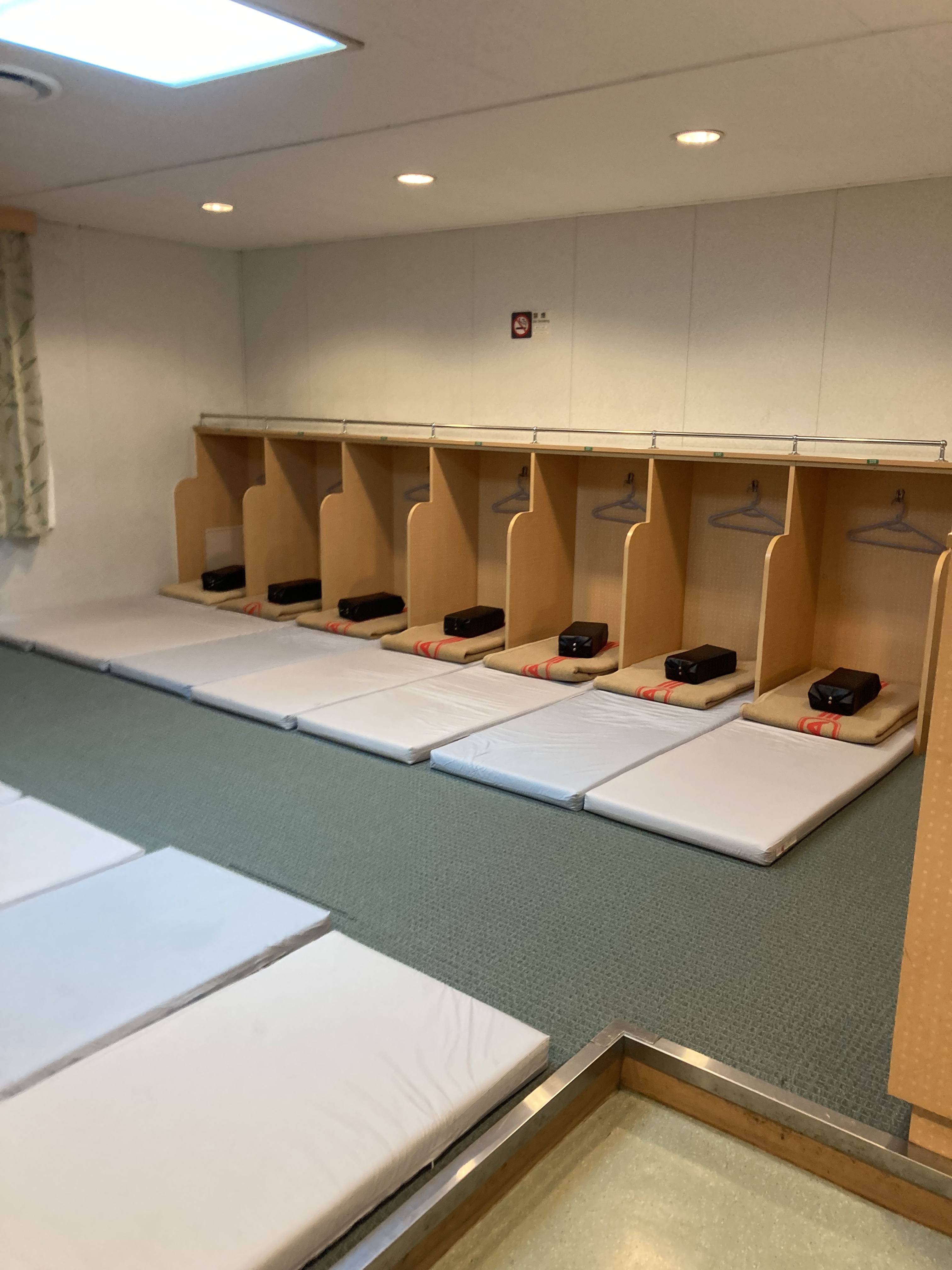
While happy about finally having secured my passage, I remained reserved about the idea of spending a night on a mat with a box as a pillow and sharing the space with nine strangers but love and money wouldn’t buy me another accommodation category in advance, so I decided to go for it and try to upgrade on the spot in Kagoshima.
Getting to the Port in Kagoshima
Kagoshima is located right on the south-western tip of Kyushu so in a way it is Japan’s Land’s End.
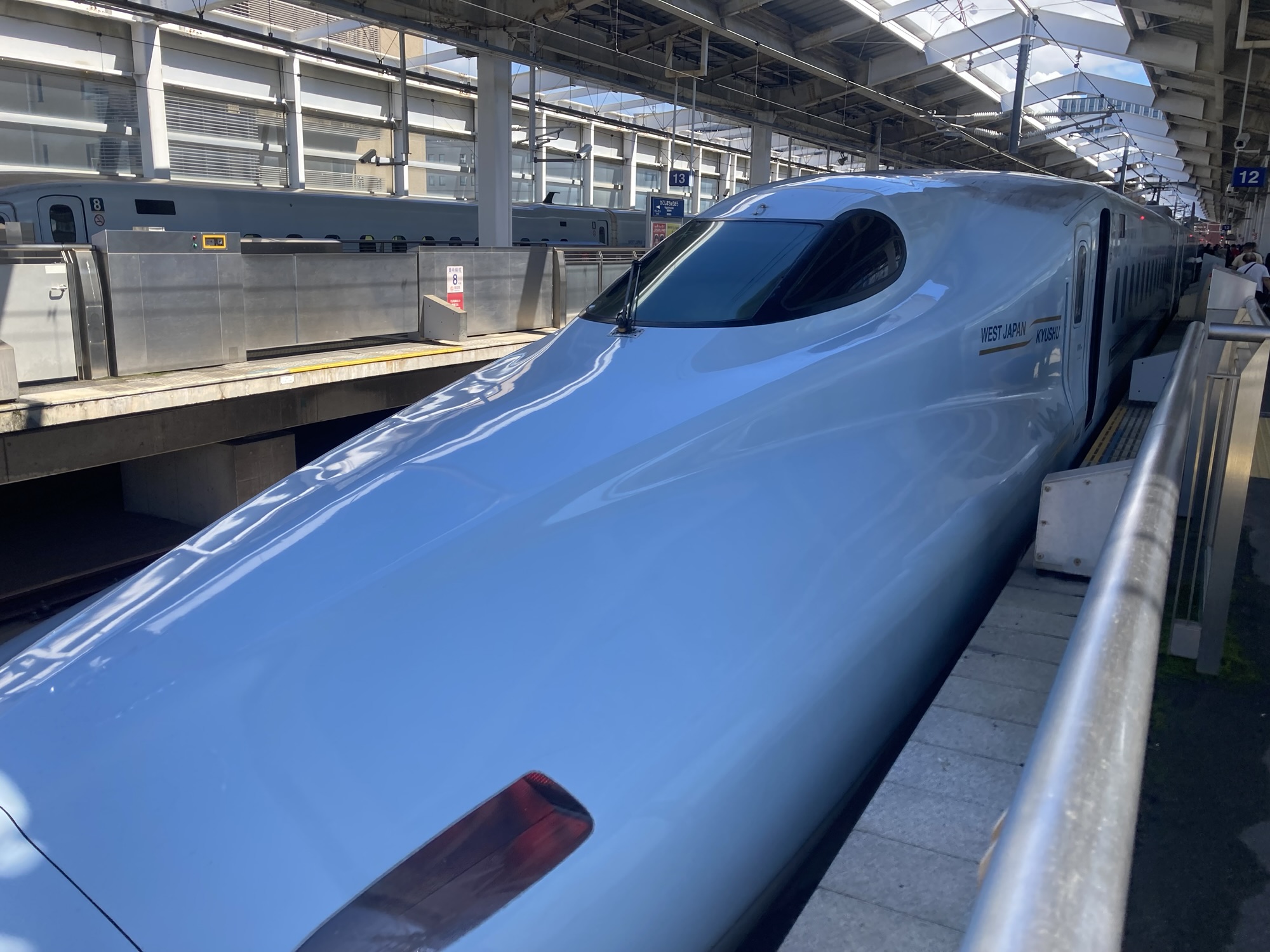
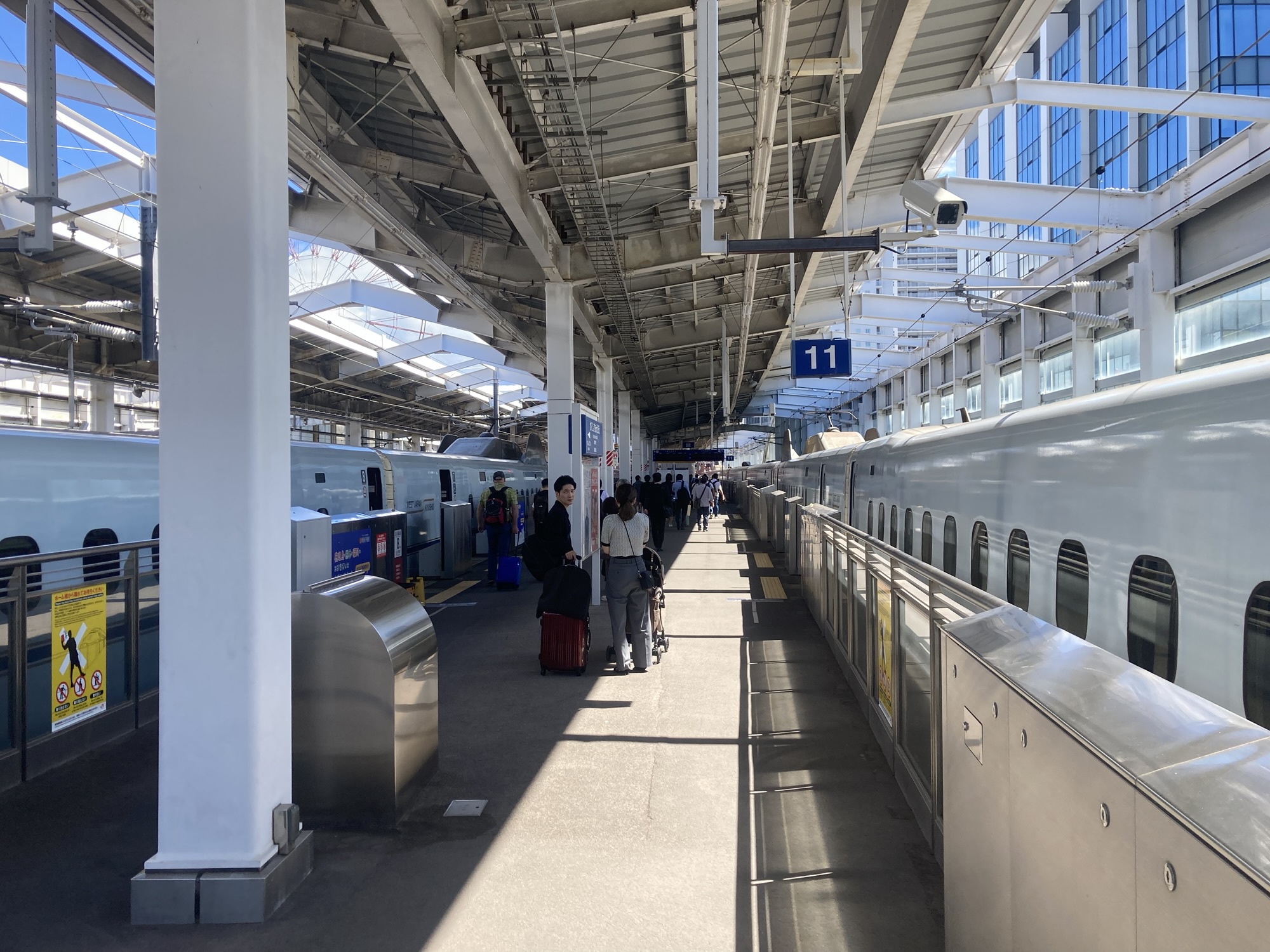
There are direct flights from Tokyo and Osaka and also good connections by Shinkansen high-speed trains. Osaka–Kagoshima is 3:45 hours, Tokyo–Kagoshima a little over 7 hours. Not bad considering that this is a 900, respectively 1,300 KM journey. Just don’t expect views. These are highly engineered lines with many tunnels and noise protection walls.
I traveled from Osaka’s Kansai Aiport (KIX) on a super-fast connection using the Haruka Airport express which connects to the Mizuho Shinkansen, which is a limited stop service, at Shin Osaka Station. I left the airport at 6:40 am and arrived in Kagoshima Chuo station at 11:36 with plenty of slack to catch the ferry.
The speed and reliability of Japanese trains comes with a price tag though. My combined express tickets tallied up to 37,460 YEN (about 231 EUR) for basic fare and express supplement. I booked directly on JR West’s website which was easy (no need to use third party services).
Kagoshima Chuo has got to be one of the nicest little stations in Japan with a bright station hall and a delightful cafe. There is a small mall connected to the station. Stock up on sundries for your trip in the konbinis there as the ferry terminal only has a small kiosk and there is just a small stand with a very limited selection.
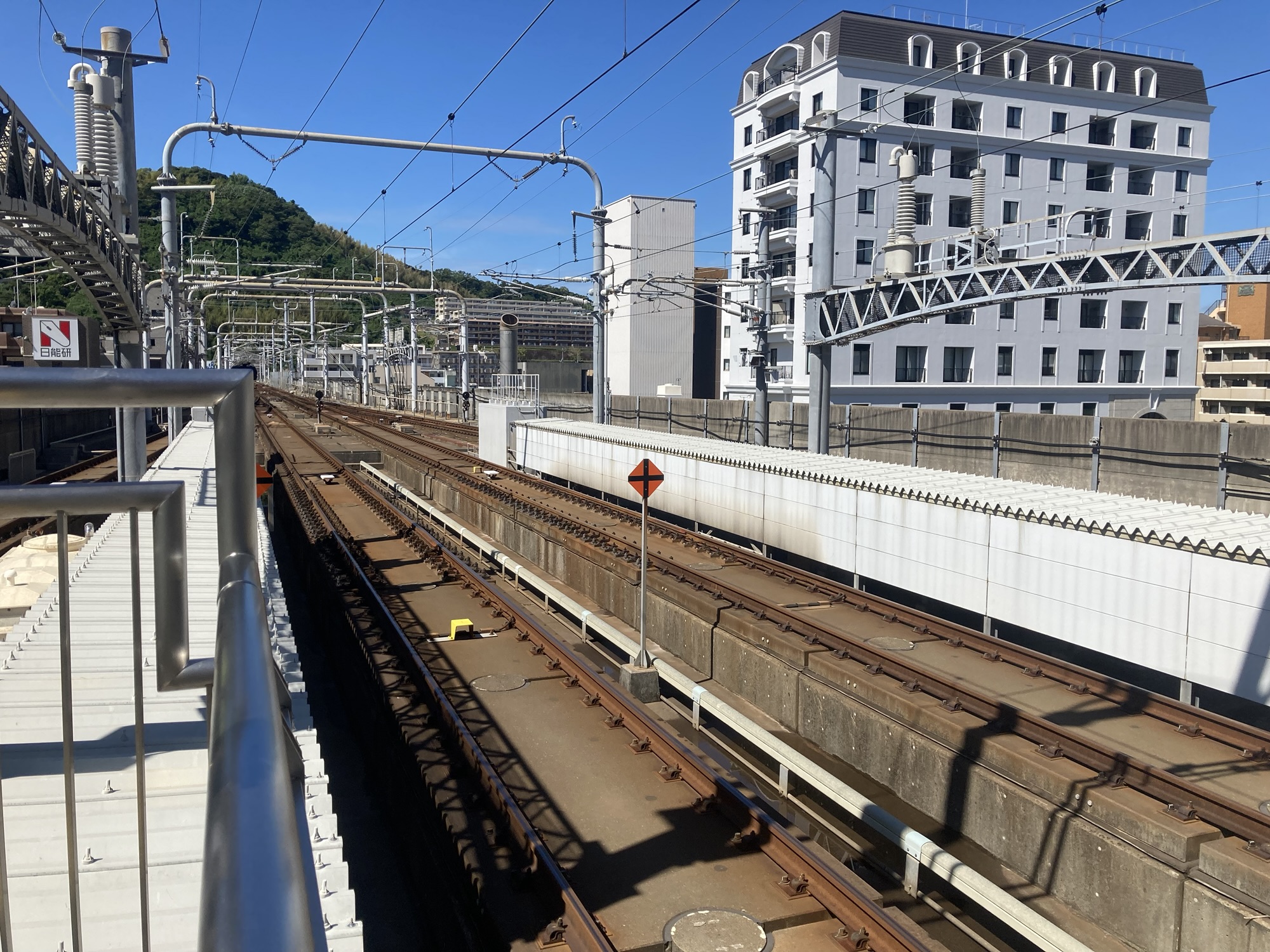
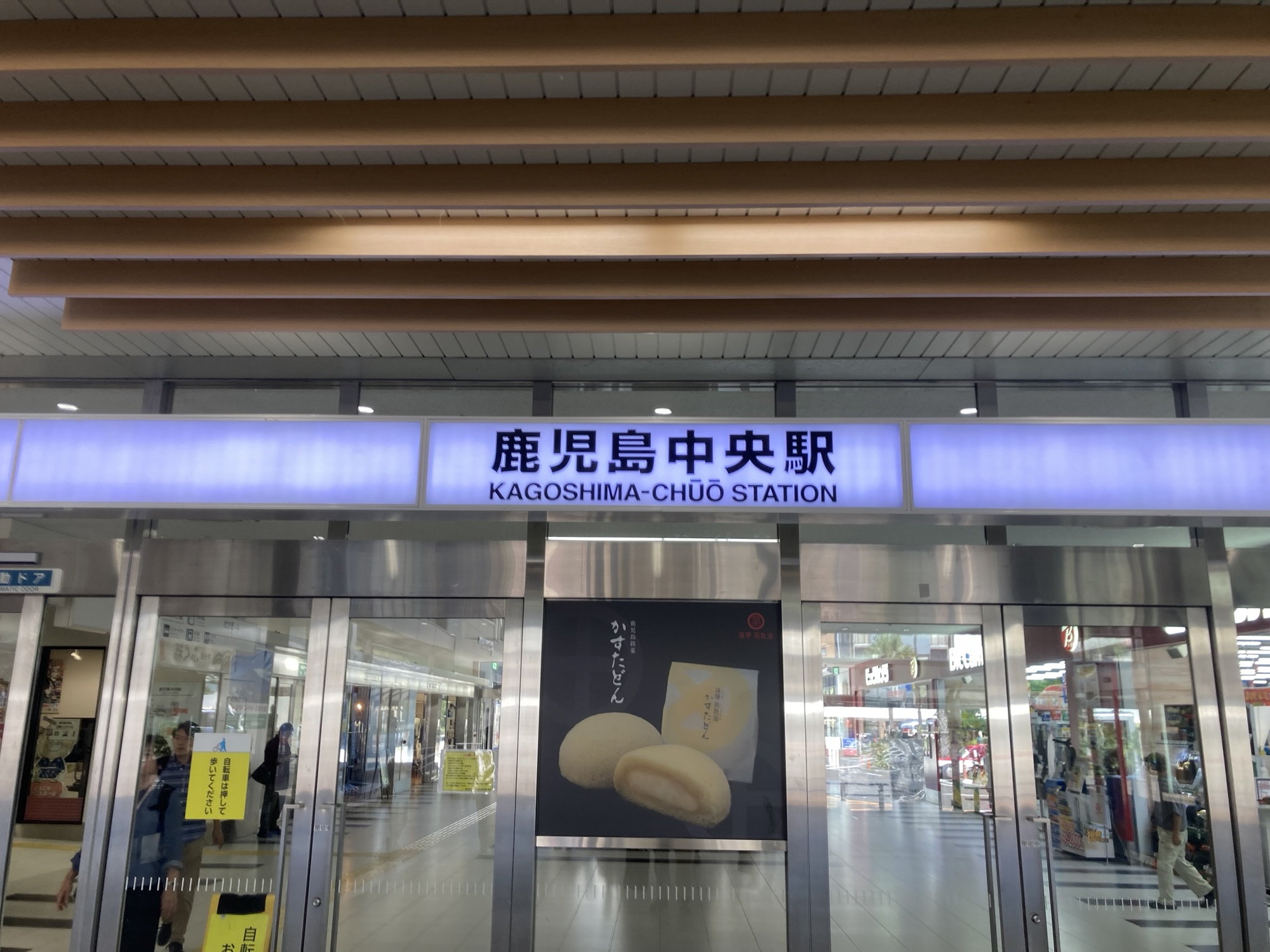
The Amami Okinawa Ferry Terminal can’t be reached well by public transport. Each option on google maps involves at least 30 minutes of walking. As port areas are notoriously pedestrian-unfriendly anyway, and the midday sun was beating down, I opted for a taxi. The journey took about 11 minutes and cost around 1,600 YEN (roughly 10 EUR).
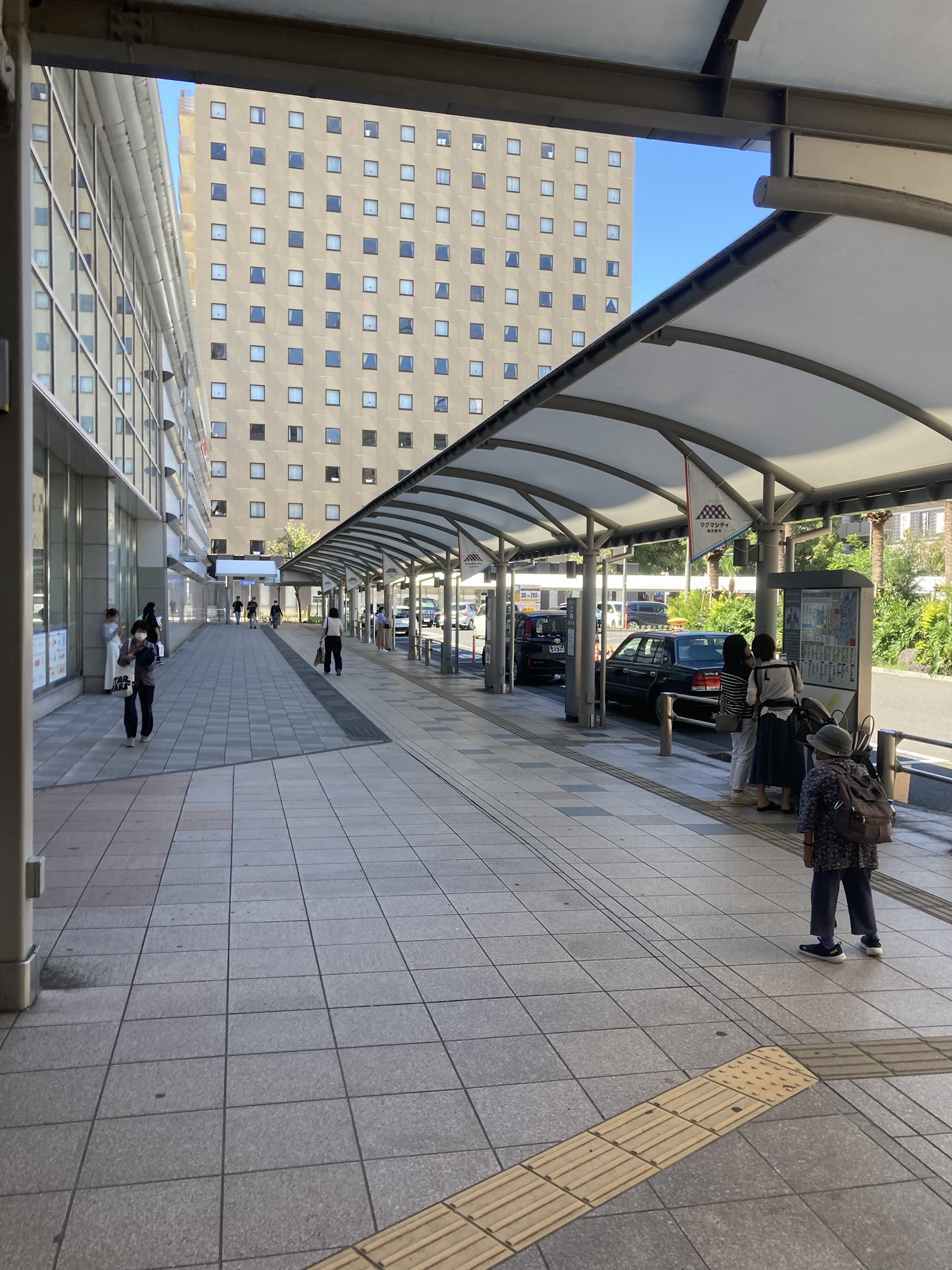
Make sure your taxi driver knows you’re headed to the New Port or the Amami Okinawa Ferry Terminal (which is often written as “Amami Okinawa Furu” in Japanese) to avoid any confusion. The terminal address is 45-1 Jonanch, Kagoshima City, Kagoshima Prefecture.
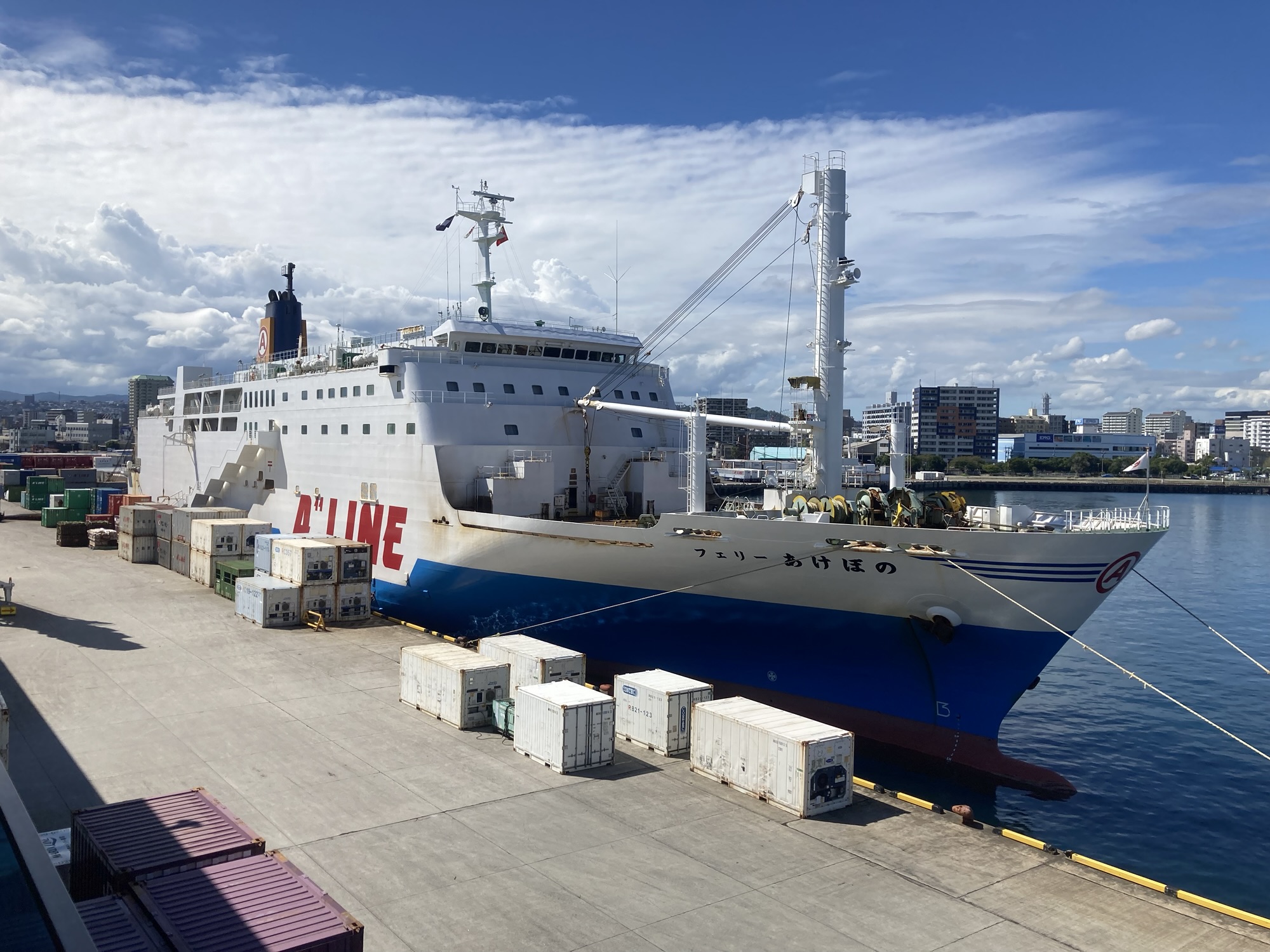
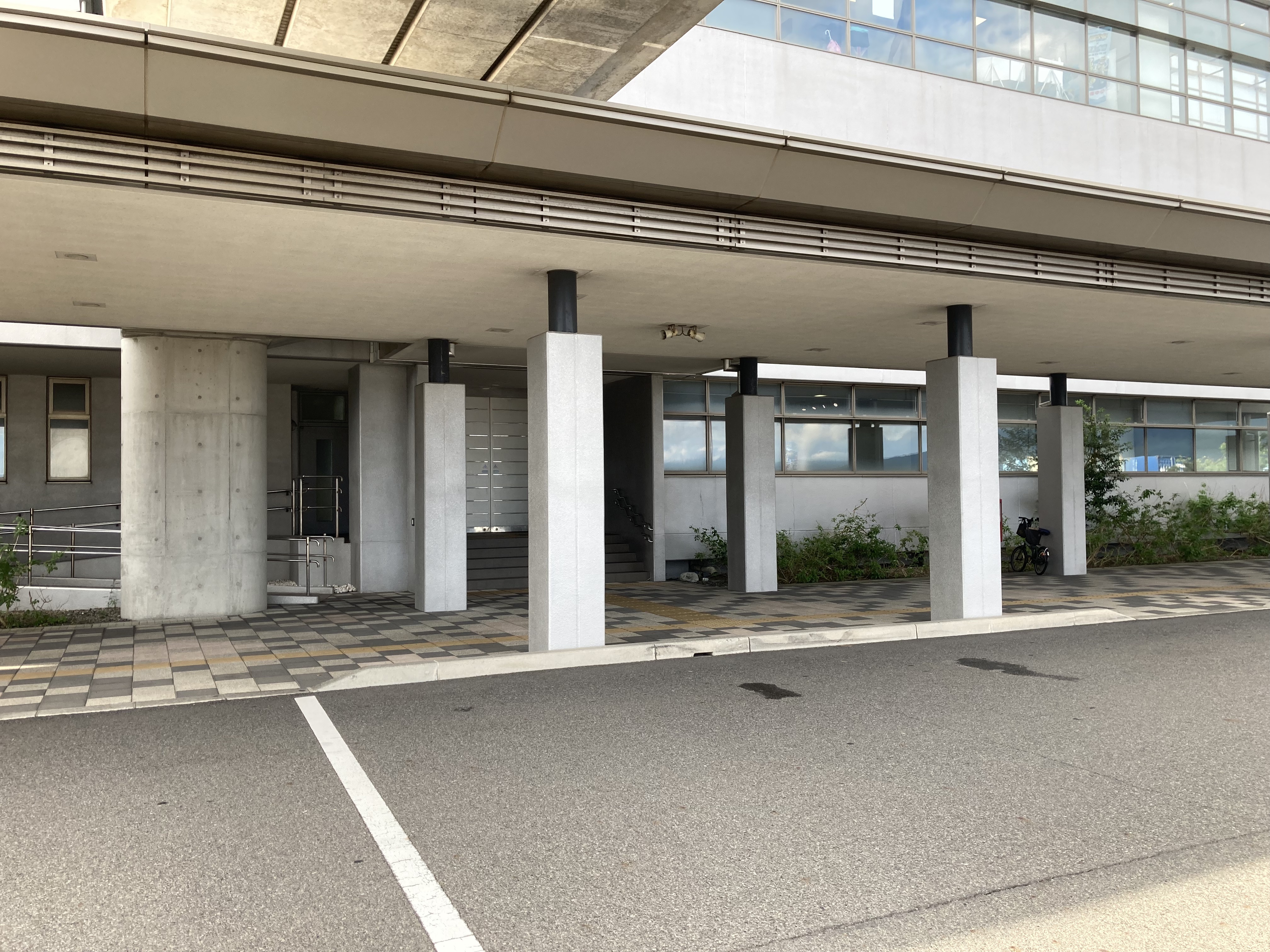
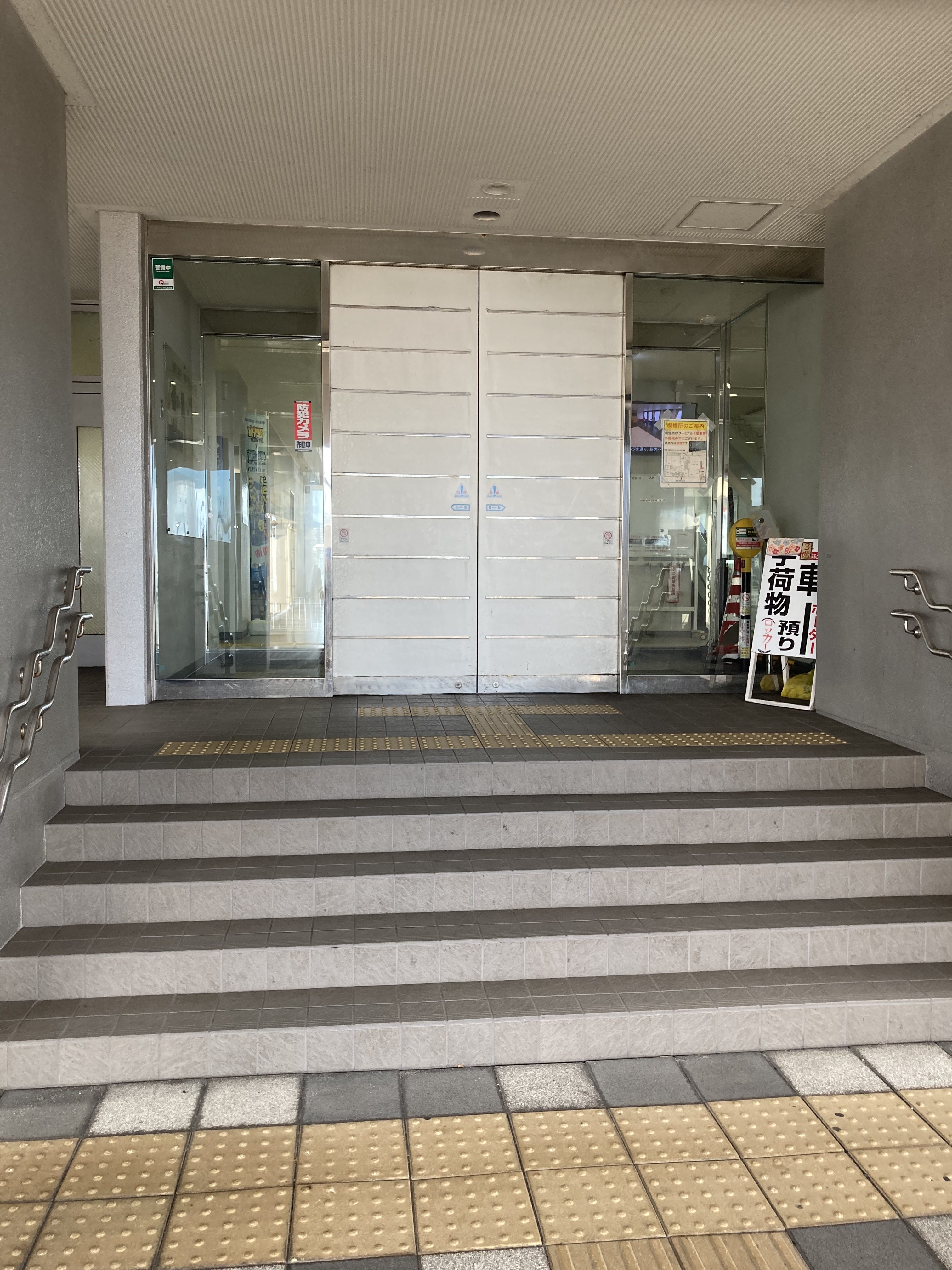
Approaching the terminal building, I got my first glimpse of the ferry I should soon be boarding. The taxi dropped me off right in front of the nondescript entrance and drove off. There is not much nearby, so make sure that you’ve got your stuff together before you head out to the terminal, as getting back to town is difficult.
Checking-in
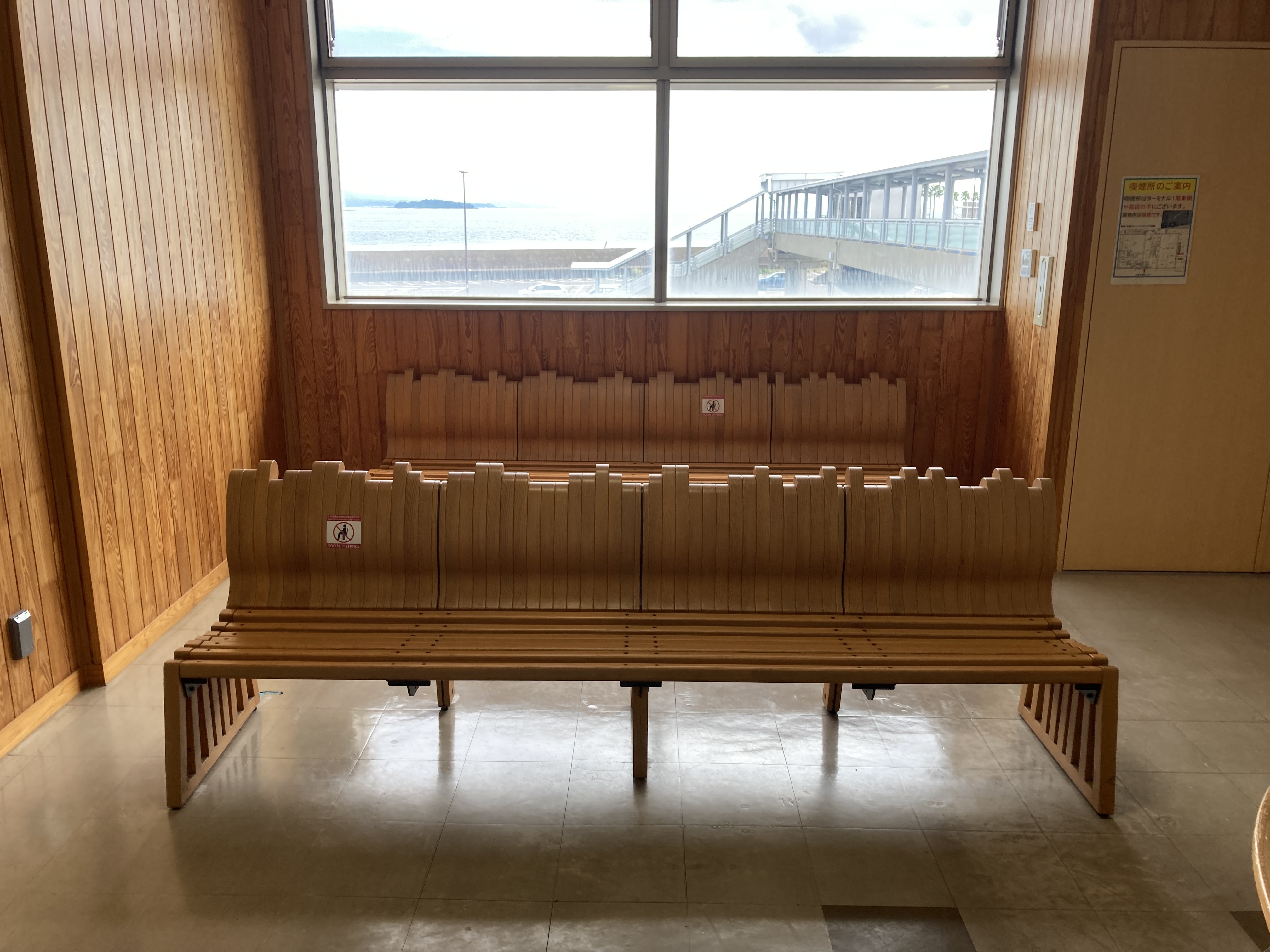
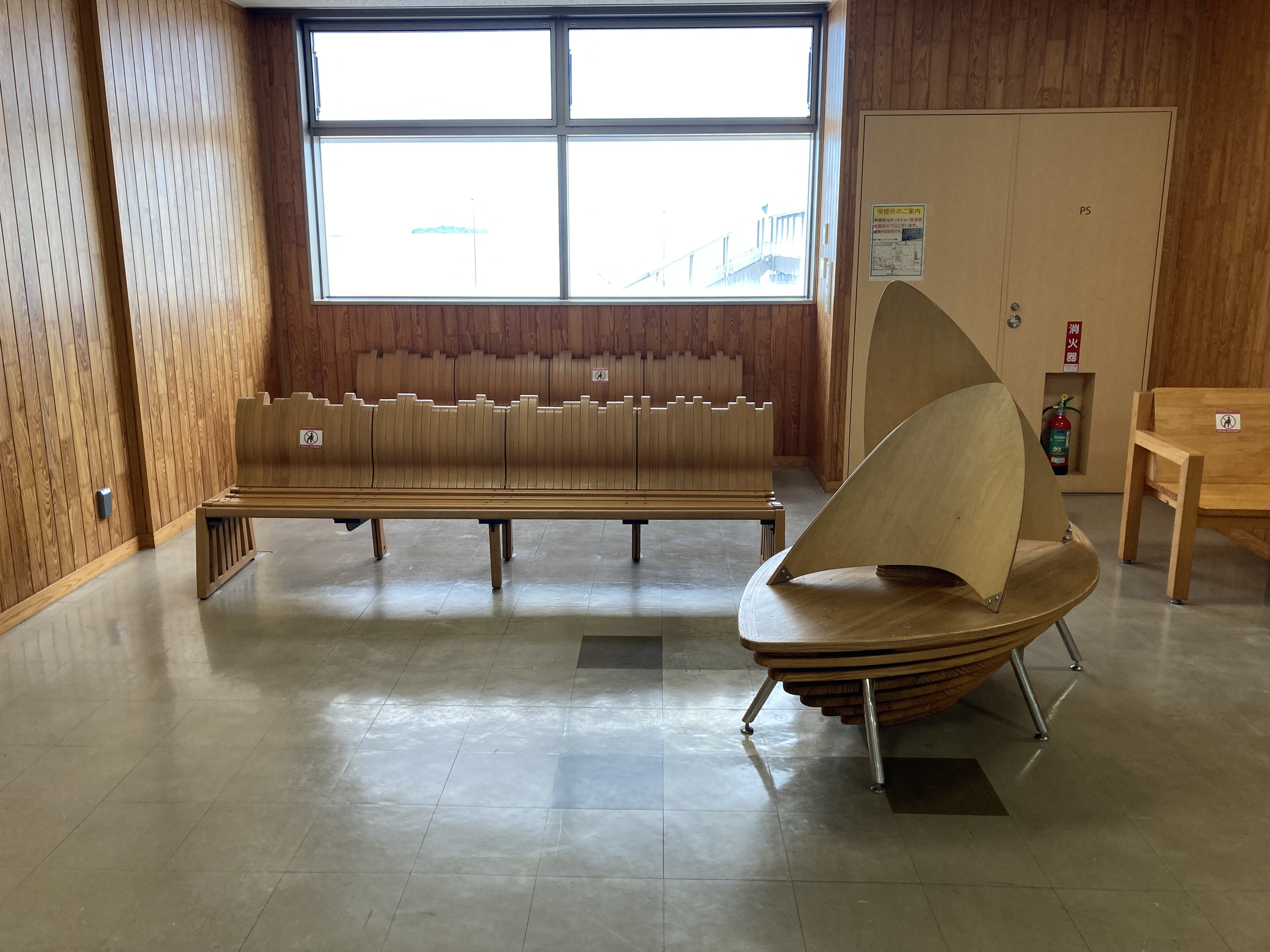
The Amami Okinawa Ferry Terminal is a modest, three-story building situated right next to the quay. There are a few vending machines, washrooms, seating areas, a staffed left luggage counter, and a very small kiosk.
The check-in process is a bit particular and somewhat different from western ferries. All passengers, even those with an existing reservation, are required to fill out a Boarding Application Form, which is provided on desks near the ticket office on level three. There are several different forms to fill out, depending on your ship, accommodation, on whether you bring a car or motorbike —so be ready for a bit of paperwork. The forms are partly in English, but a translation app will still be useful. There’s also a wheelchair-accessible desk with forms.
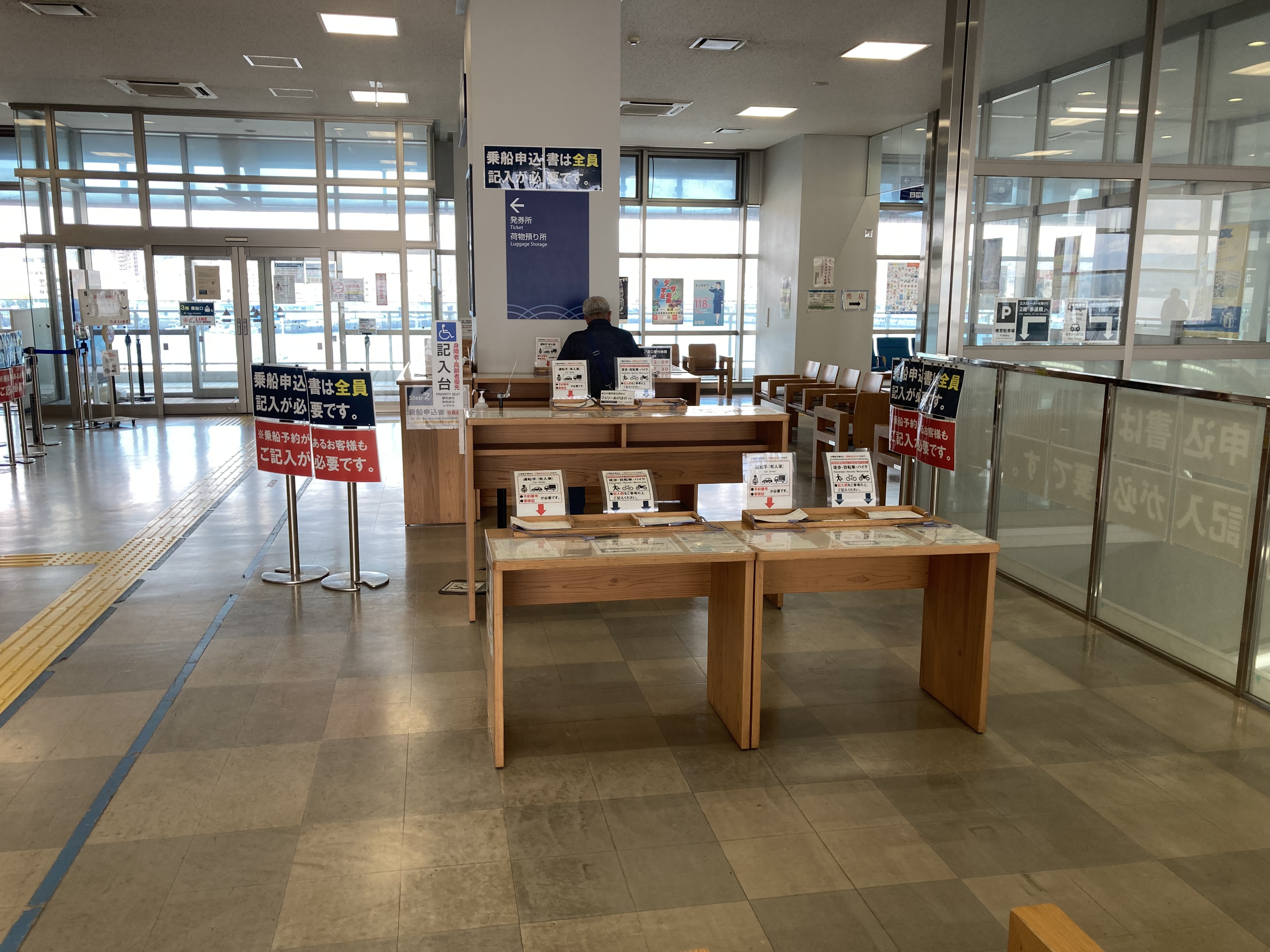
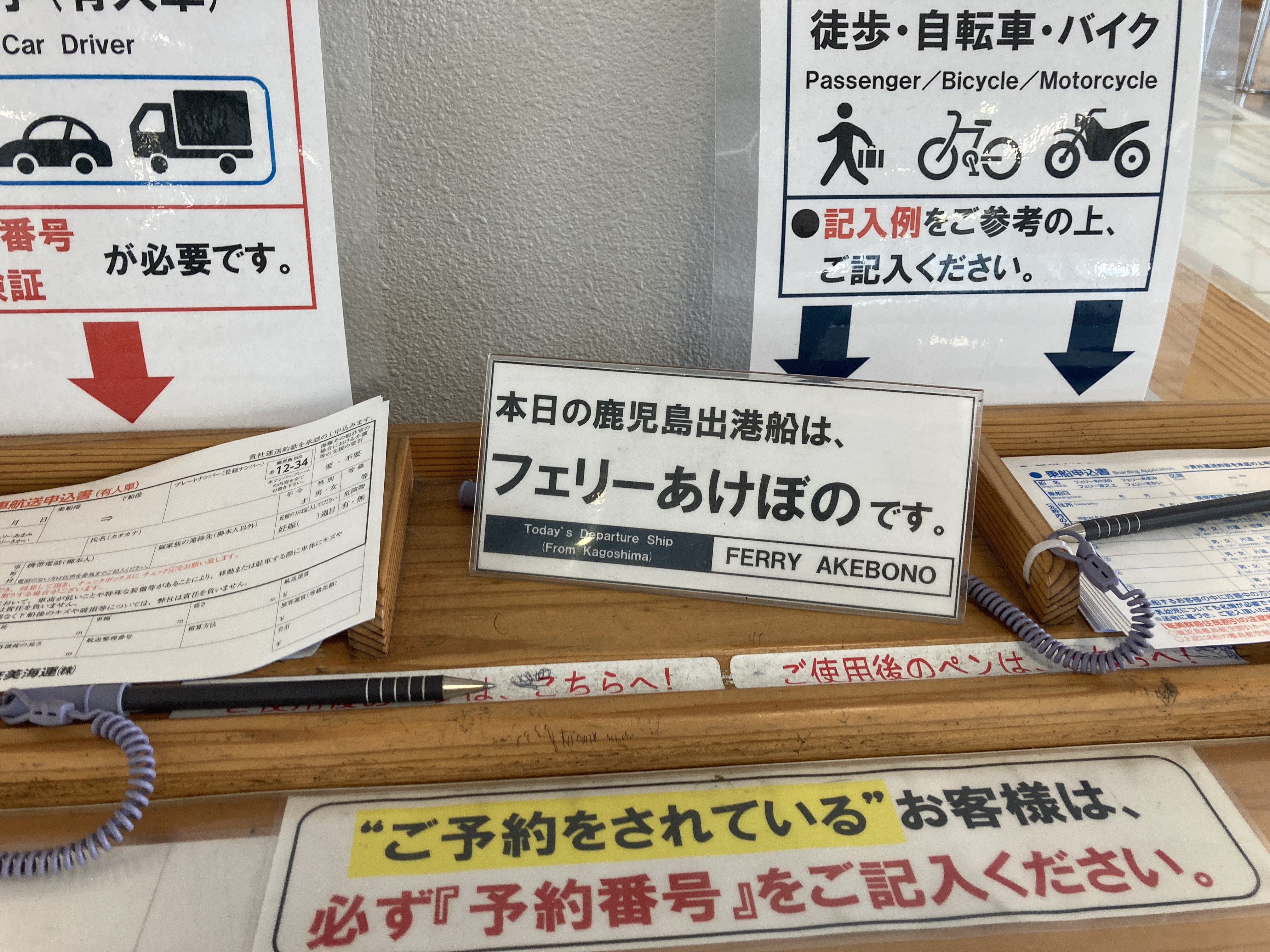
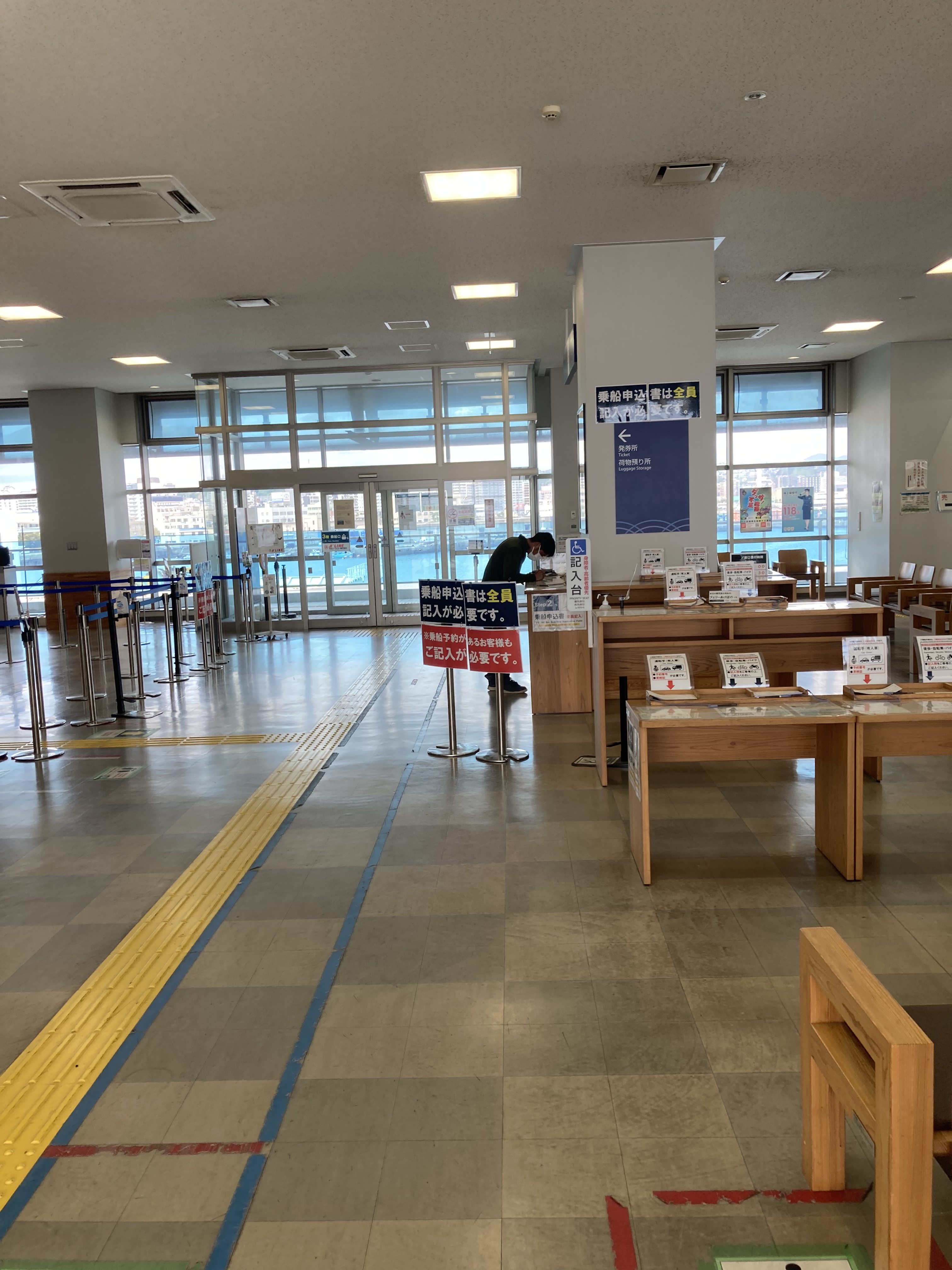
Once you’ve completed the forms, proceed to the ticket counter to exchange your paperwork for a boarding pass. Hold onto it for the whole trip as it will be collected upon arrival. I would have loved to add it to my collection very much, yet I draw consolation from the fact it will be registered, punched and filed for some 70 years or so.
Remember the 10-person dorm? That’s how the upgrade worked:
I came the German way: prepared. My Japanese teacher had written down some useful phrases for me, I had researched and memorized other vocabulary, and all my travel documents were printed out and carefully sorted into transparent envelopes. In a binder. Thus, I approached the counter and made my request in a lengthy, well-structured presentation – which apparently made absolutely no sense to the friendly customer service representative. After slowing down a bit my very patient counterpart and I gradually got there and my teacher’s tip “whenever you can’t find a word, try Japanizing the English term” worked magic and upegradu indeed scored me a cabin upgrade. If you’ve already made a reservation, make sure to bring a printed version of your reservation email in Japanese, as this will make the process smoother when requesting an upgrade. My upgrade cost me an additional 29,760 YEN, plus a small change-fee of 1,689 YEN—adding up to a total fare of 46,320 YEN for the crossing (288 EUR).
Ship and Operating Company
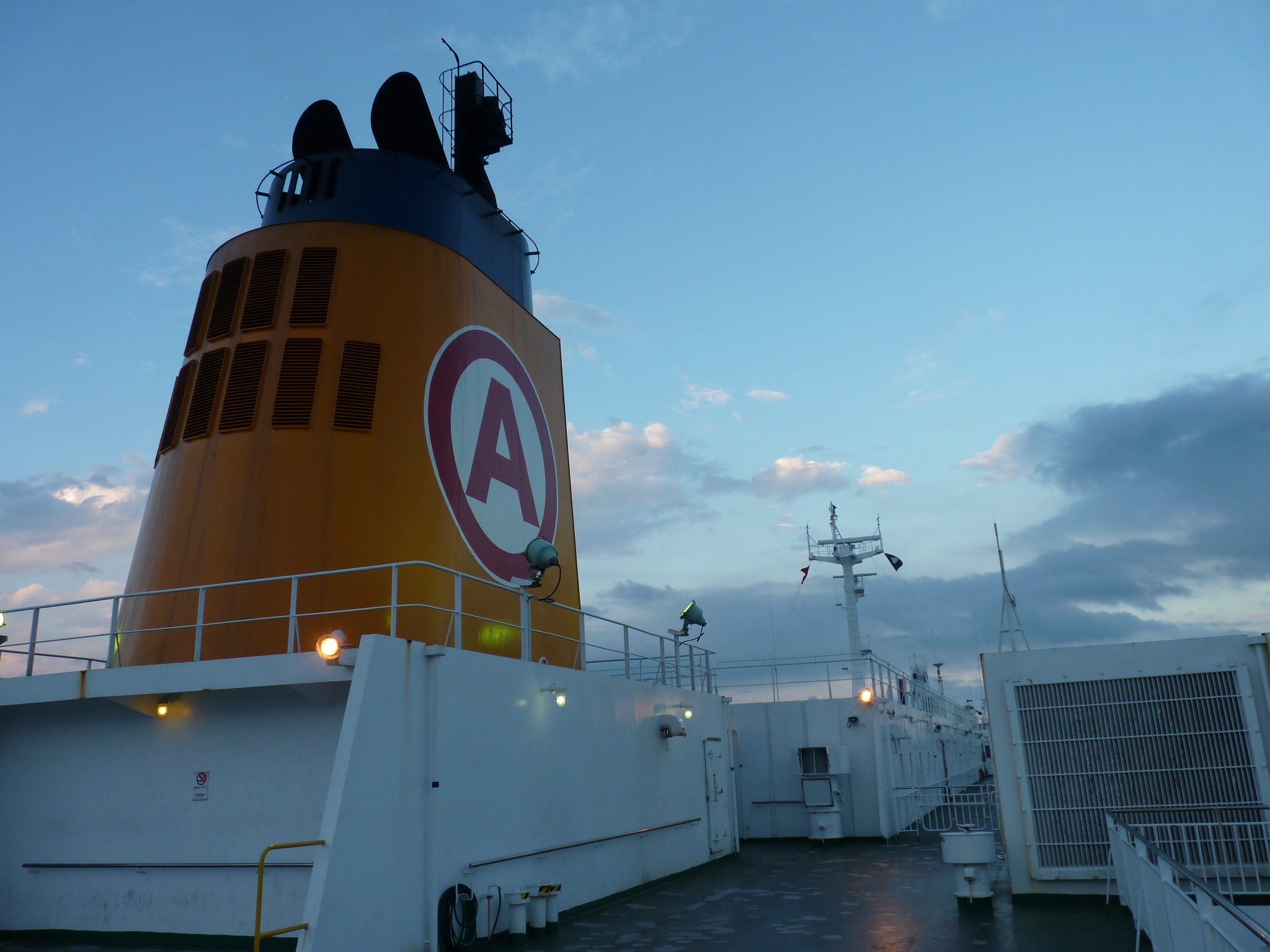
The Akebono is a relatively small vessel with a gross tonnage of just over 8,000. Built in 2007/08 by Mitsubishi Heavy Industries, this ferry has been servicing the Kagoshima–Okinawa route ever since its launch in 2008. It can accommodate up to 682 passengers, 50 trucks, and 76 passenger vehicles.
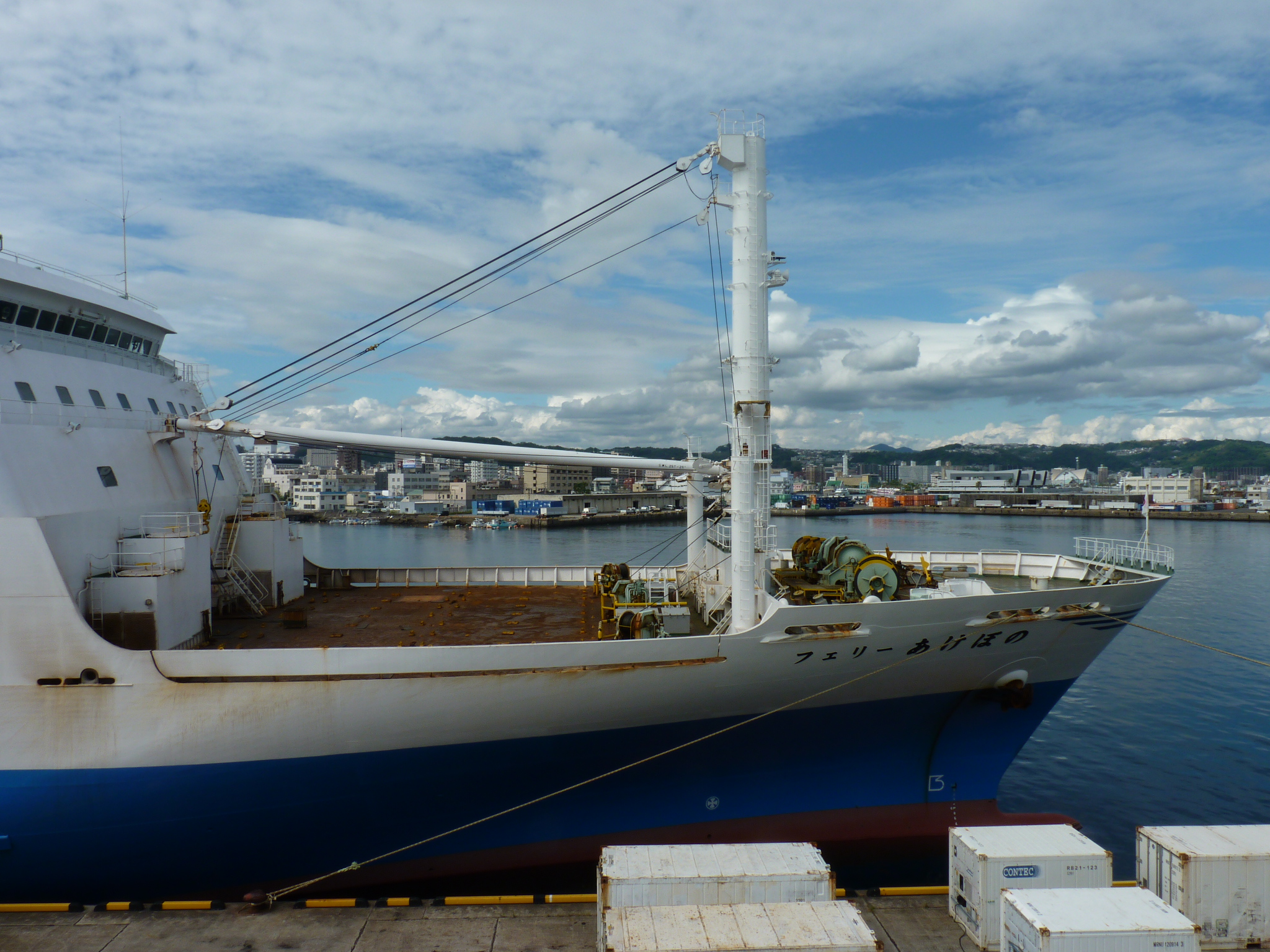
With its forward hoist crane Akebono looks more like one of those small passenger-cargo vessels that were once common on routes to remote islands, such as the RMS St. Helena or those Seebäderschiff vessels that serve islands on the North and Baltic Sea.
On Board
Facilities, Restaurants, Cabin, Crew, Fellow Passengers
The Akebono has two car decks and three passenger decks. Almost all passenger facilities are located on deck 4, which houses the reception desk, a cafeteria, a small shop, and lots of vending machines. Deck 5 features a smoking room, along with additional seating areas, while the open-air deck 6 is an excellent spot for fresh air, though there aren’t many comfortable places to sit outside. Unfortunately, the ferry also doesn’t have outdoor seating or deckchairs, so the only seating outdoors is on the stairs.
According to the website Akebono’s design concept aims for a calm, wood-grainy atmosphere – the sister ship Naminoue apparently is Scandinavian – however, I found the interior more functional than cozy and a bit bland. The public areas were spotless but showed their age in places and you could tell that this is a hard-working ship that hoists tens of thousands of islanders and their guests up and down Route 58.
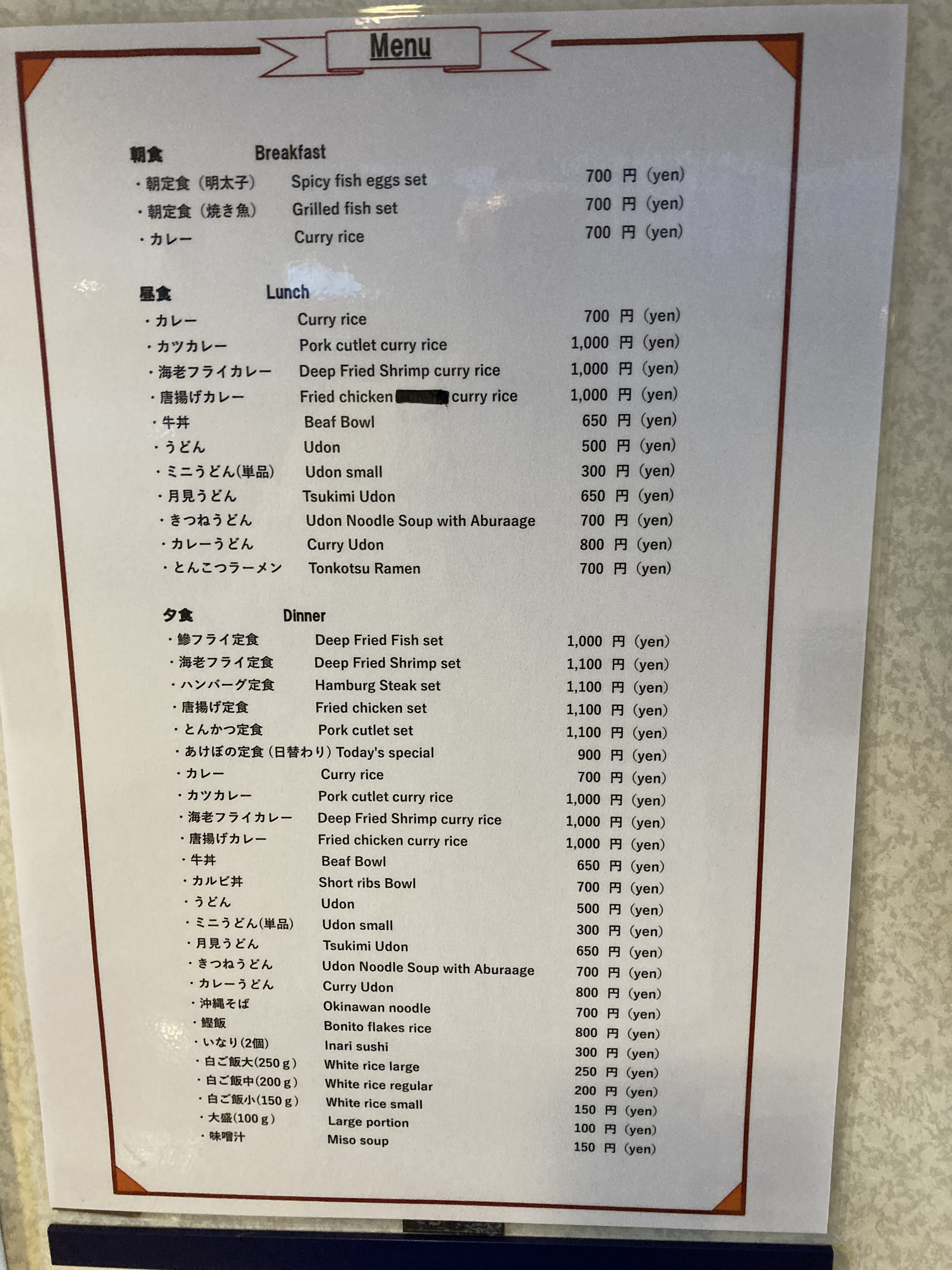
The cafeteria offers a range of simple but satisfying meals, including udon, curry, and ramen dishes. Breakfast is a simple affair with just three choices on the menu. Lunch and dinner menus feature more options.
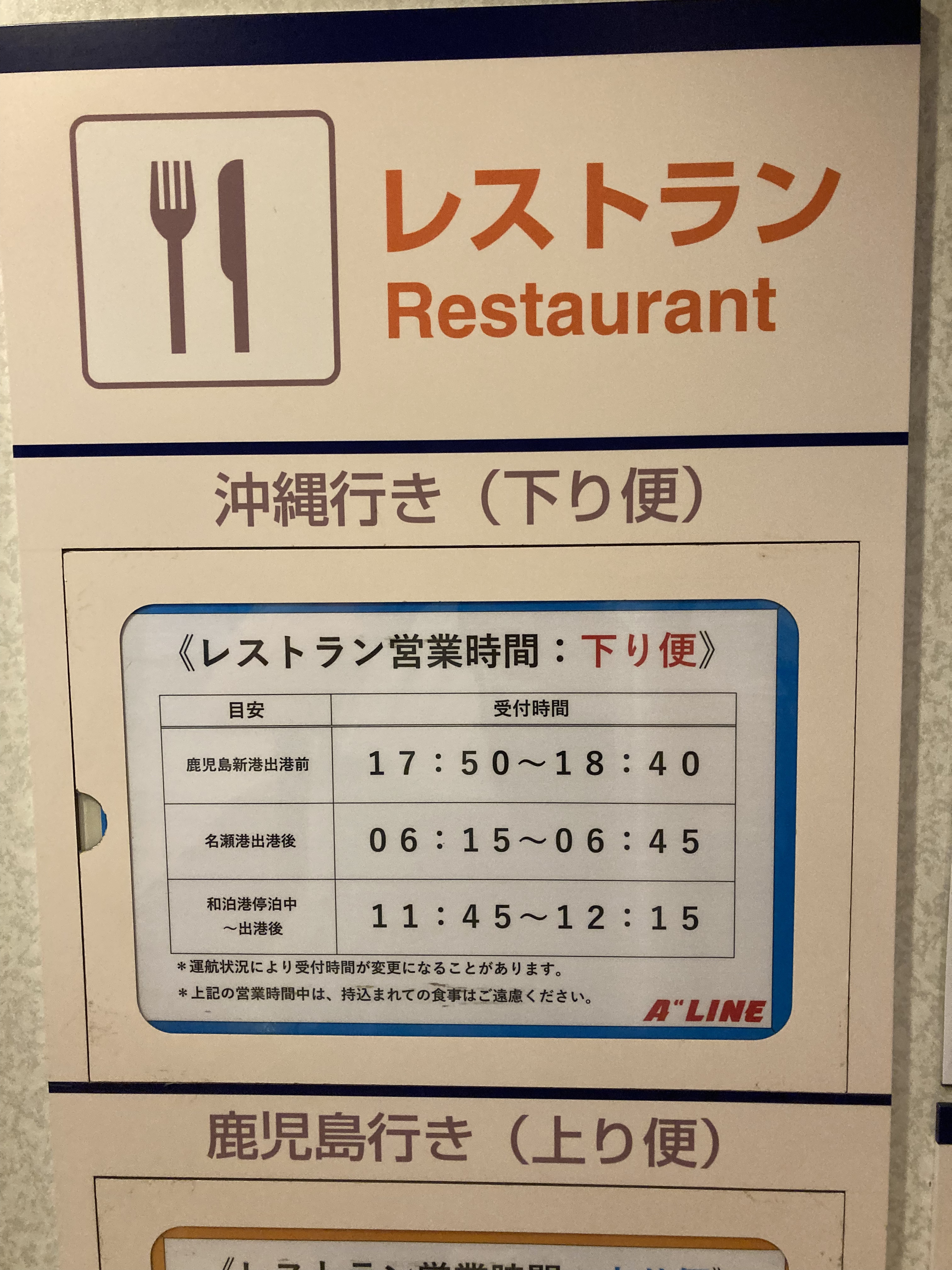
Opening times of the restaurants are somewhat limited with about 40 minutes per meal. Also, there is no dinner service before arrival in Naha.
The food is simple but delicious and very affordable, with most meals priced between 500 and 900 Yen (around 3 to 6 Euros).
I skipped dinner after departure in Kagoshima, as I had plundered the konbini at the train station, but after watching the sub-tropical sunrise over Naze the next morning, I went straight for the breakfast sitting at 6:40 am.
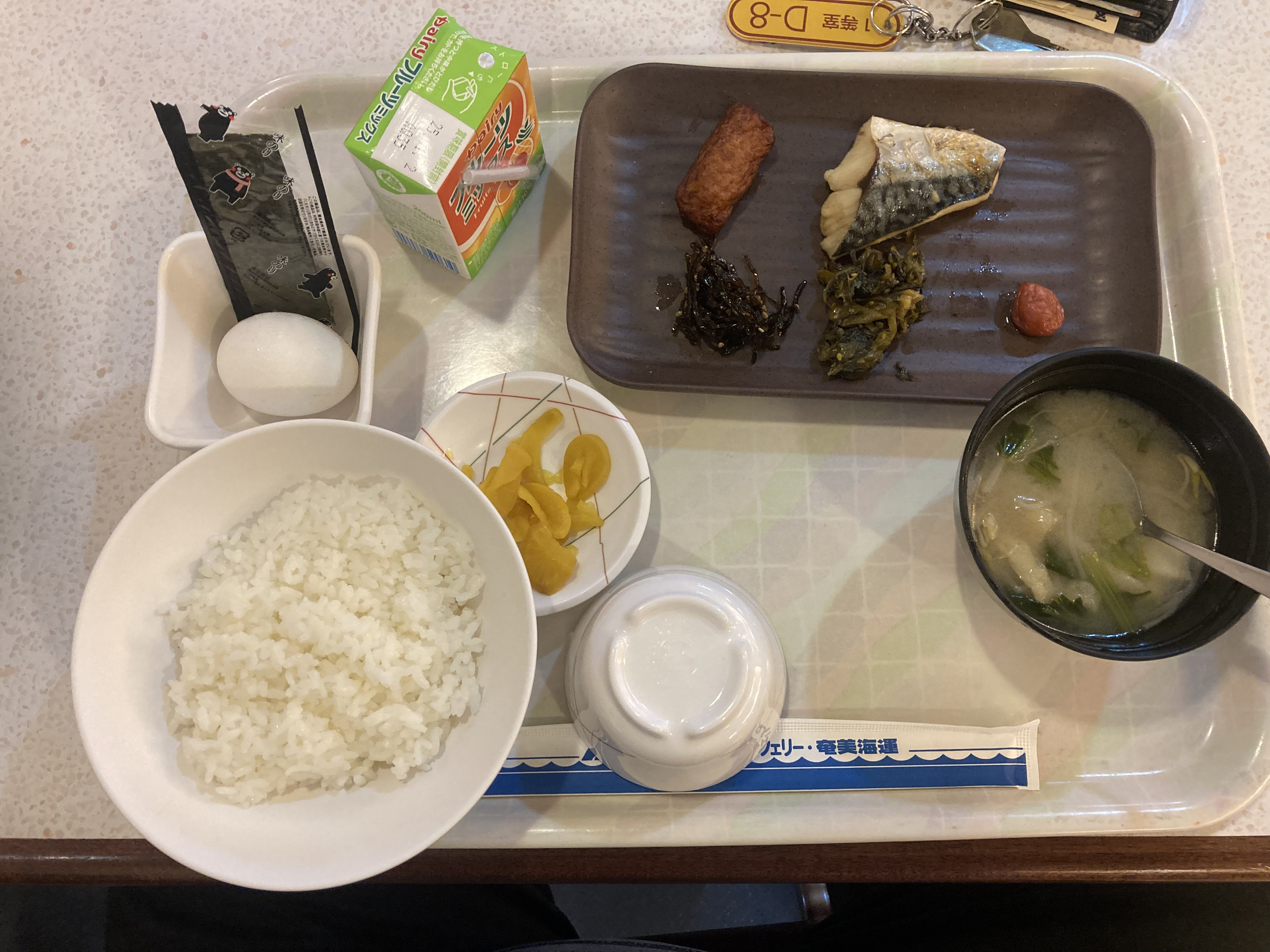
The grilled fish set was a very pleasant meal with grilled mackerel, rice, an egg, pickled vegetables and miso soup. You can top up the soup from a dispenser. The food is relatively affordable, with most meals between 500 and 900 YEN (around 4 to 6 Euros). The restaurant doesn’t serve coffee, but you can get a very decent cup from the reception desk for a nominal fee (I think it was 120 YEN).
I also had a delicious bowl of ramen for lunch, but forgot to take a photo. Guess I was hungry.
The little shop offers amenities for your journey, snacks, drinks, microwave dinners and souvenirs. I loved the range of choices, as so many ferry companies in Europe stopped producing decent merch. There were shirts, hats, games and I got myself a small towel and some stickers.
While I felt that the public spaces lacked a bit of charm, my cabin was cozy and comfortable. It was designed to accommodate up to four passengers on two bunk beds. Next to the beds there was an open tatami-style lounge area with a low table and a sideboard.
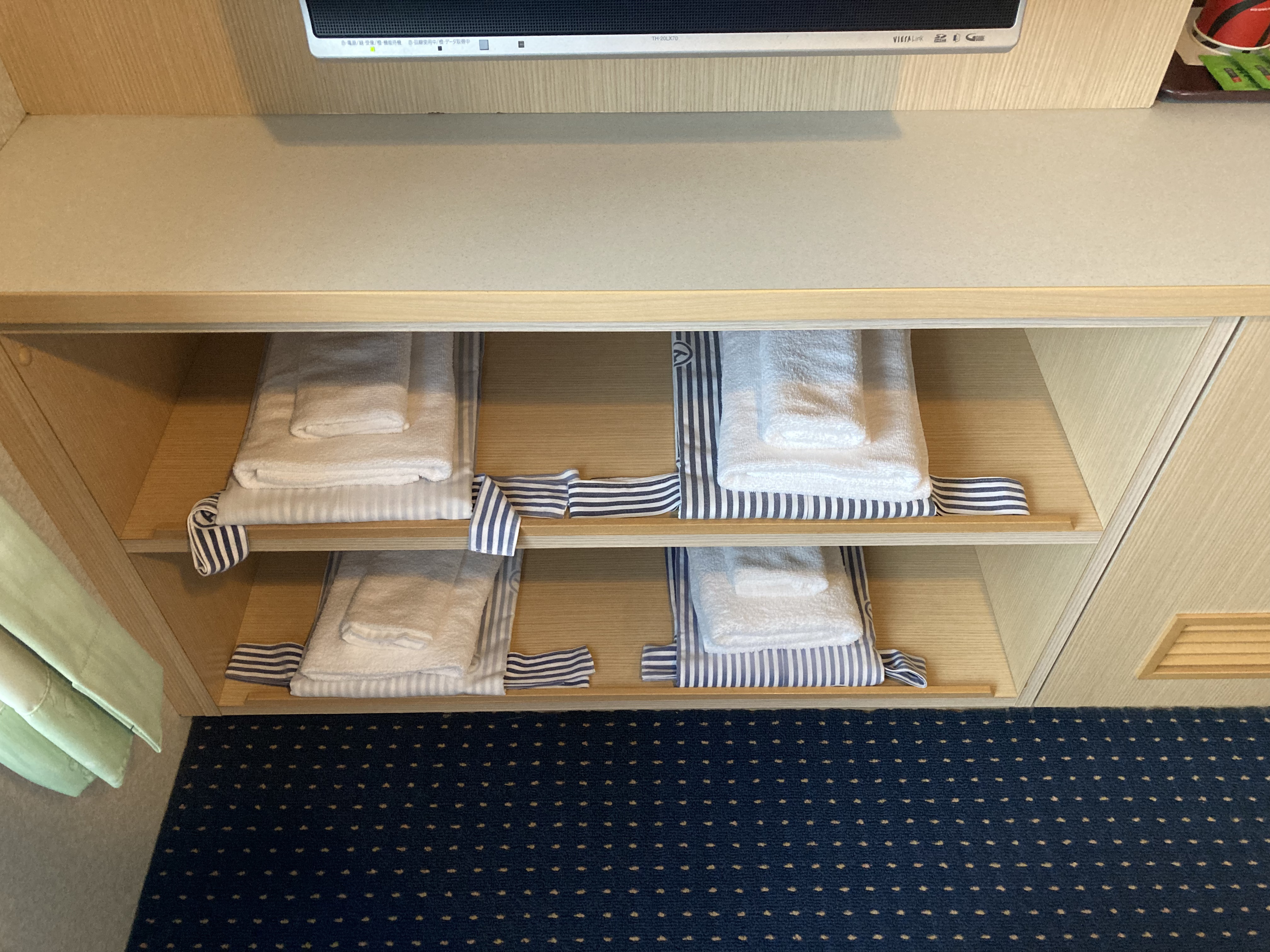
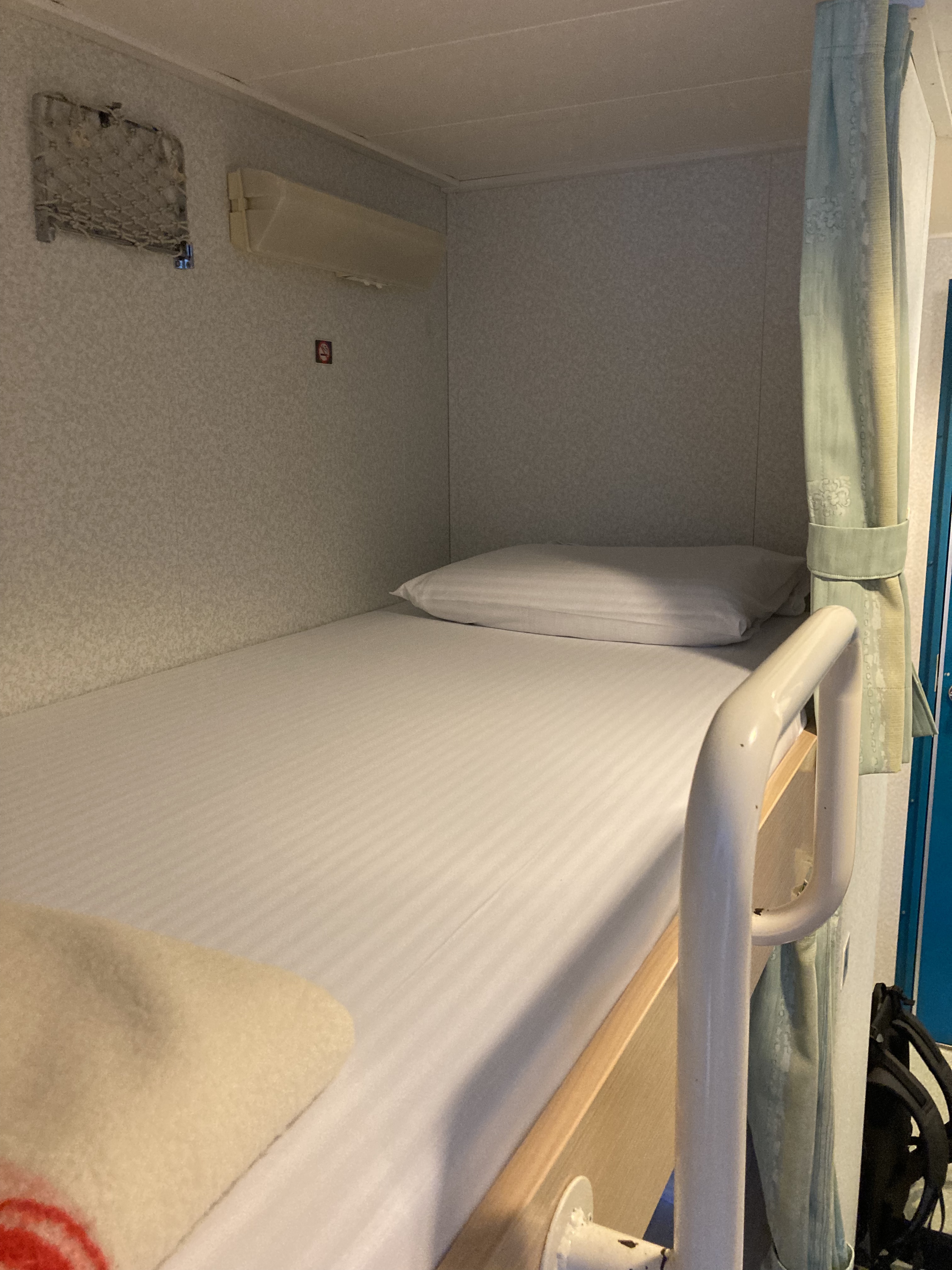
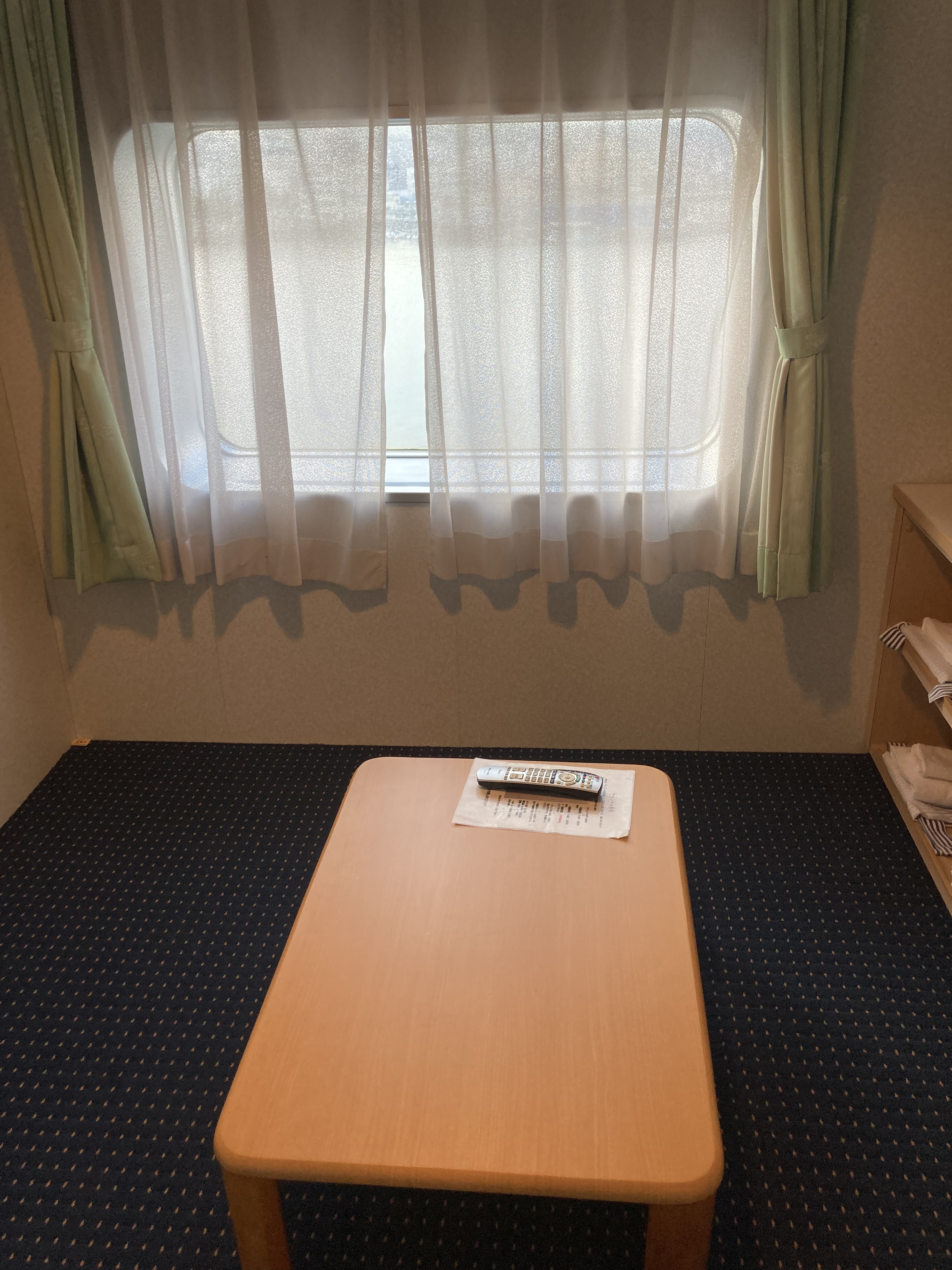
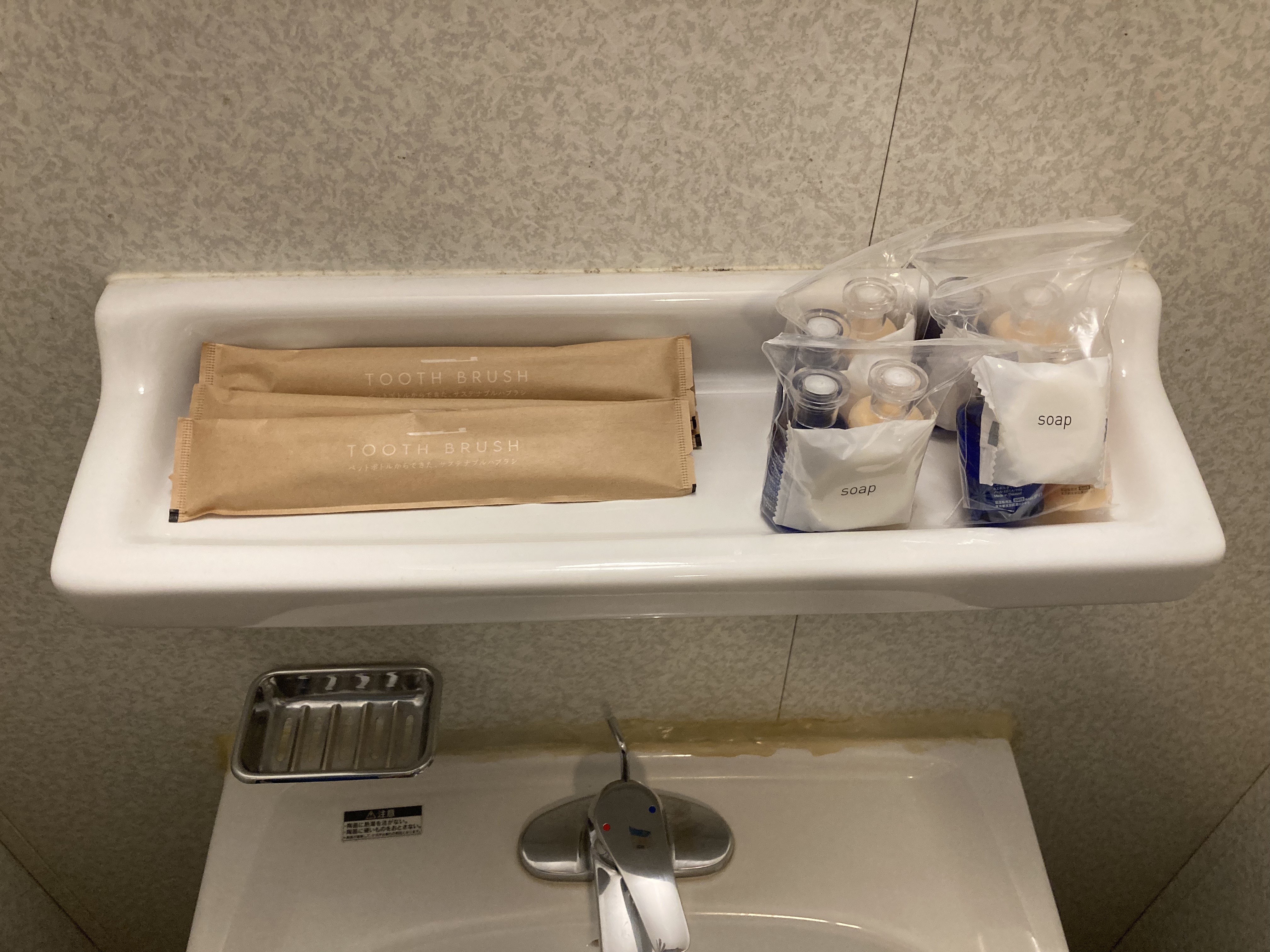
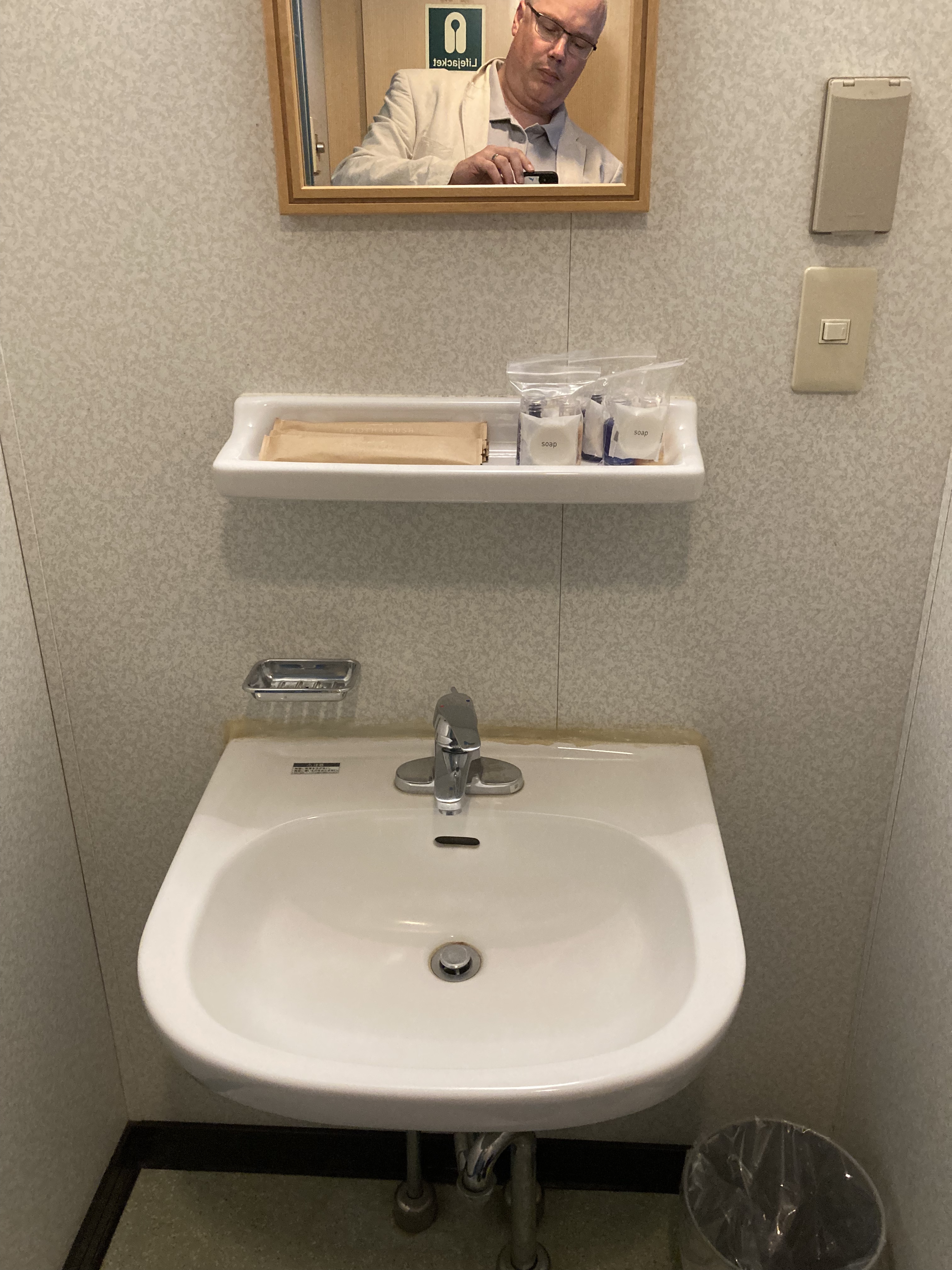
Yukata bathrobes are provided as well as toiletries and one small towel per passenger. The entry area of the cabin features a washbasin but there is no en-suite bathroom. I enjoyed my lodgings very much on this trip and enjoyed chilling there with a beer and a pack of Japanese crisps (chicken consomme, my favorite flavor). Not having the bathroom in the cabin was OK, as clean toilette were just across the hallway.
The communal shower rooms were on the other side of the ship. They were a bit *cough* rustic and could really use an overhaul.
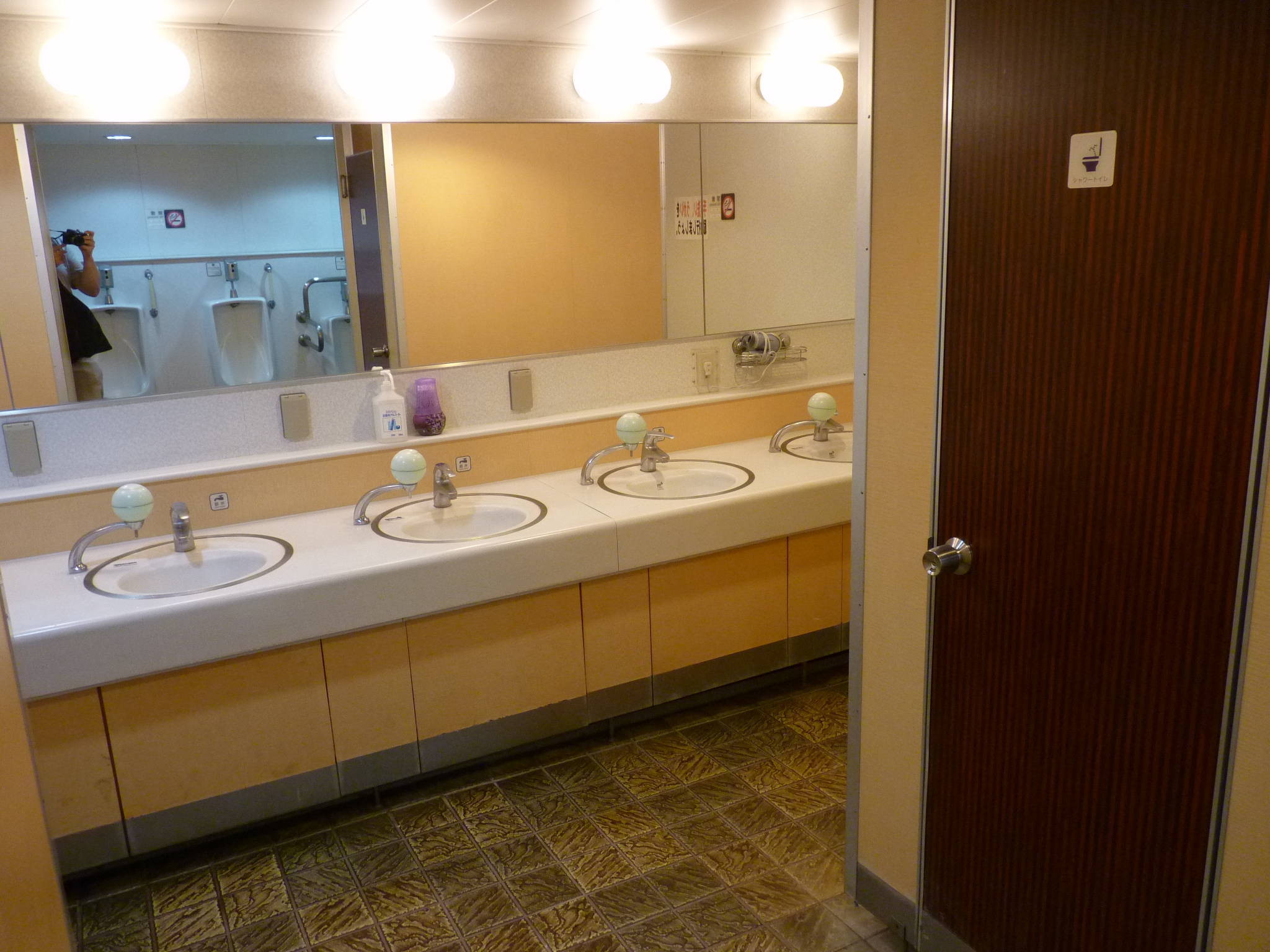
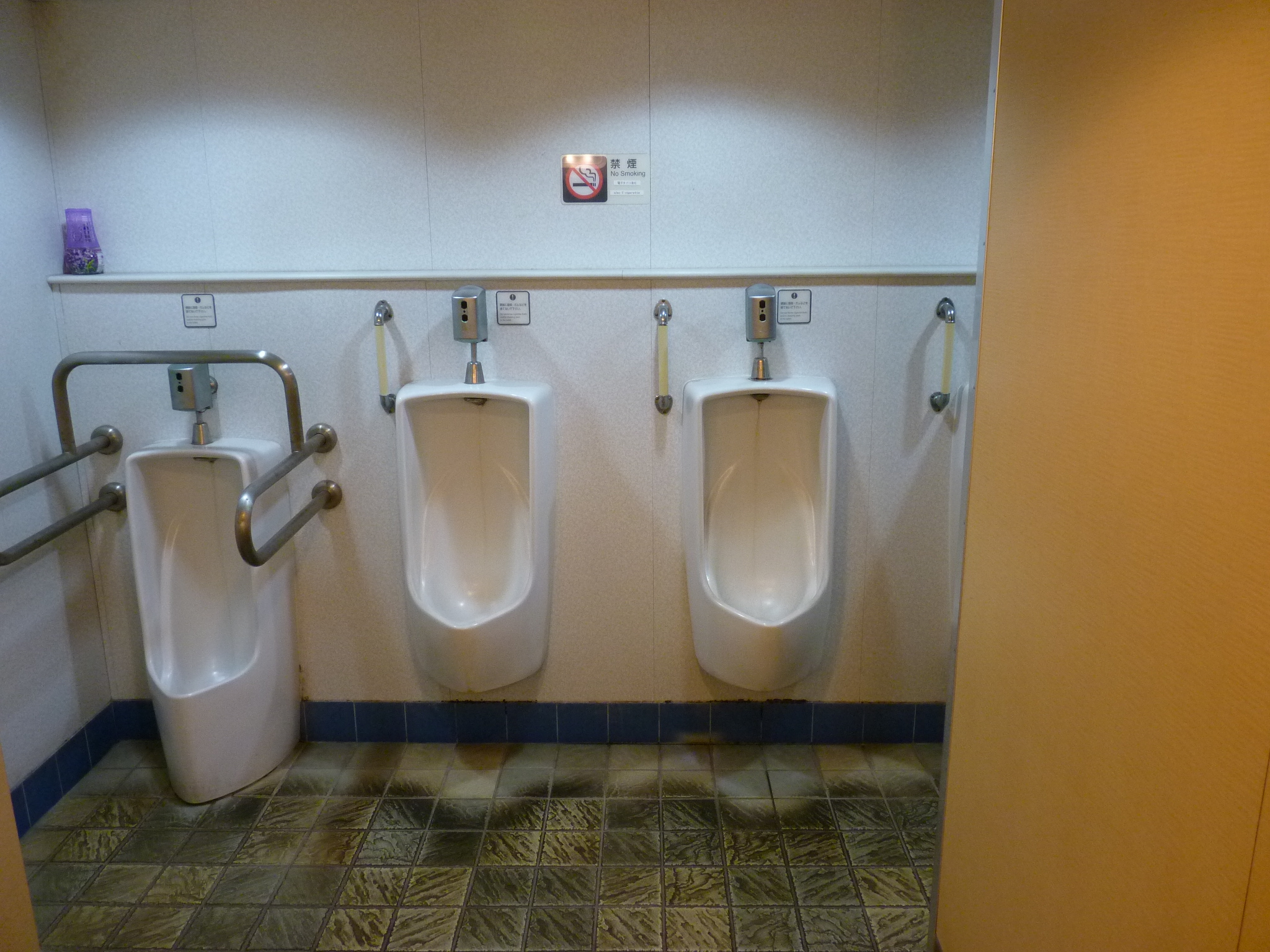
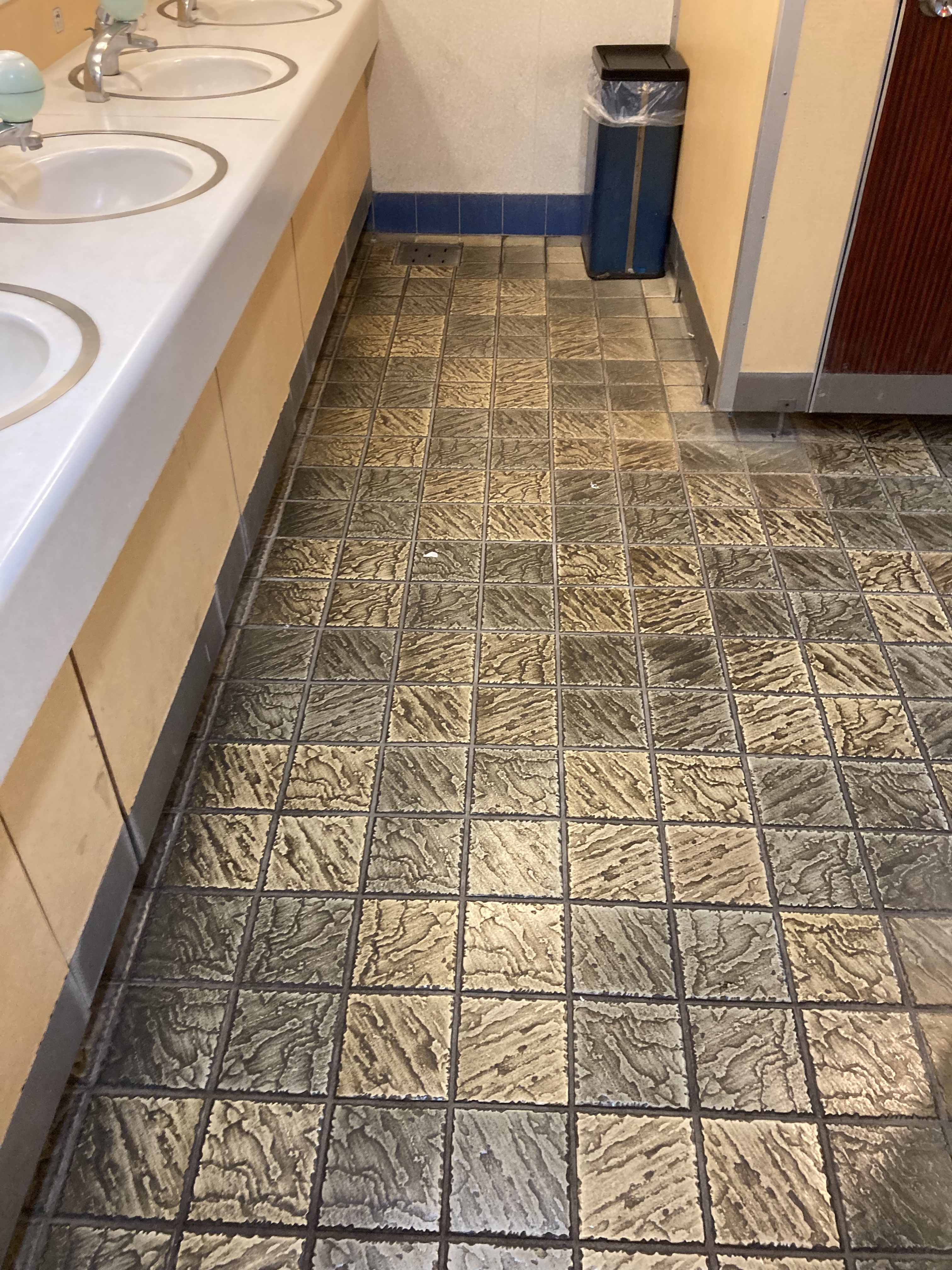
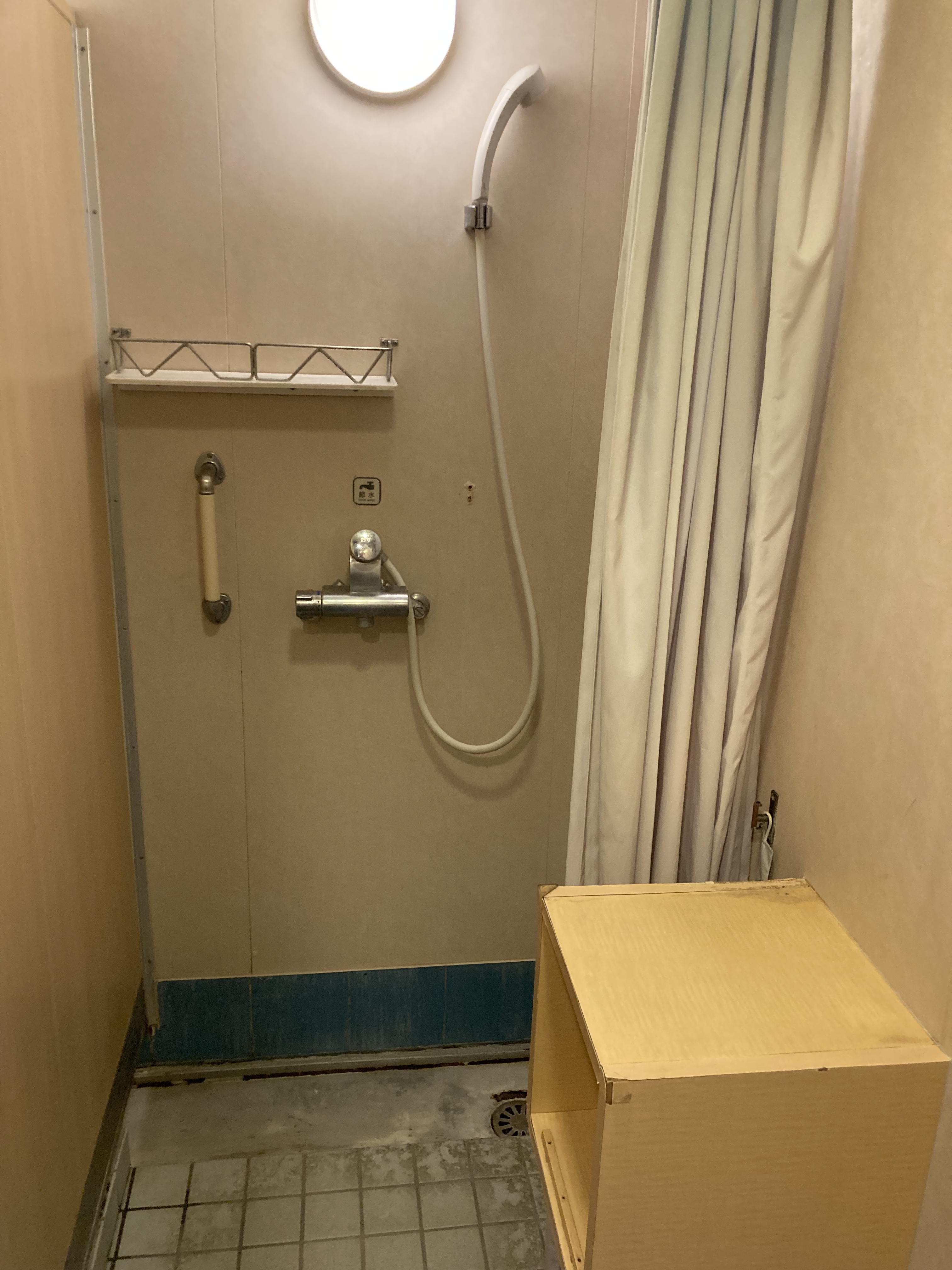
A Line’s crew was friendly and helpful throughout. I particularly liked the good-humored kitchen crew. Upon disembarkation in Naha the crew put forgotten items from the cabin on display on the reception counter so that passengers could pick them up. Amazing!
Fellow passengers were a mix of locals and travelers, some of whom appeared to be heading for business, while others seemed like tourists, like myself. There was a teenage archery team with huge bows and some golf players as well.
Route
During the pleasant 26-hour crossing, the ferry makes several stops at islands of the Amami Sea. The first leg Kagoshima–Naze is the longest, taking about eleven hours.
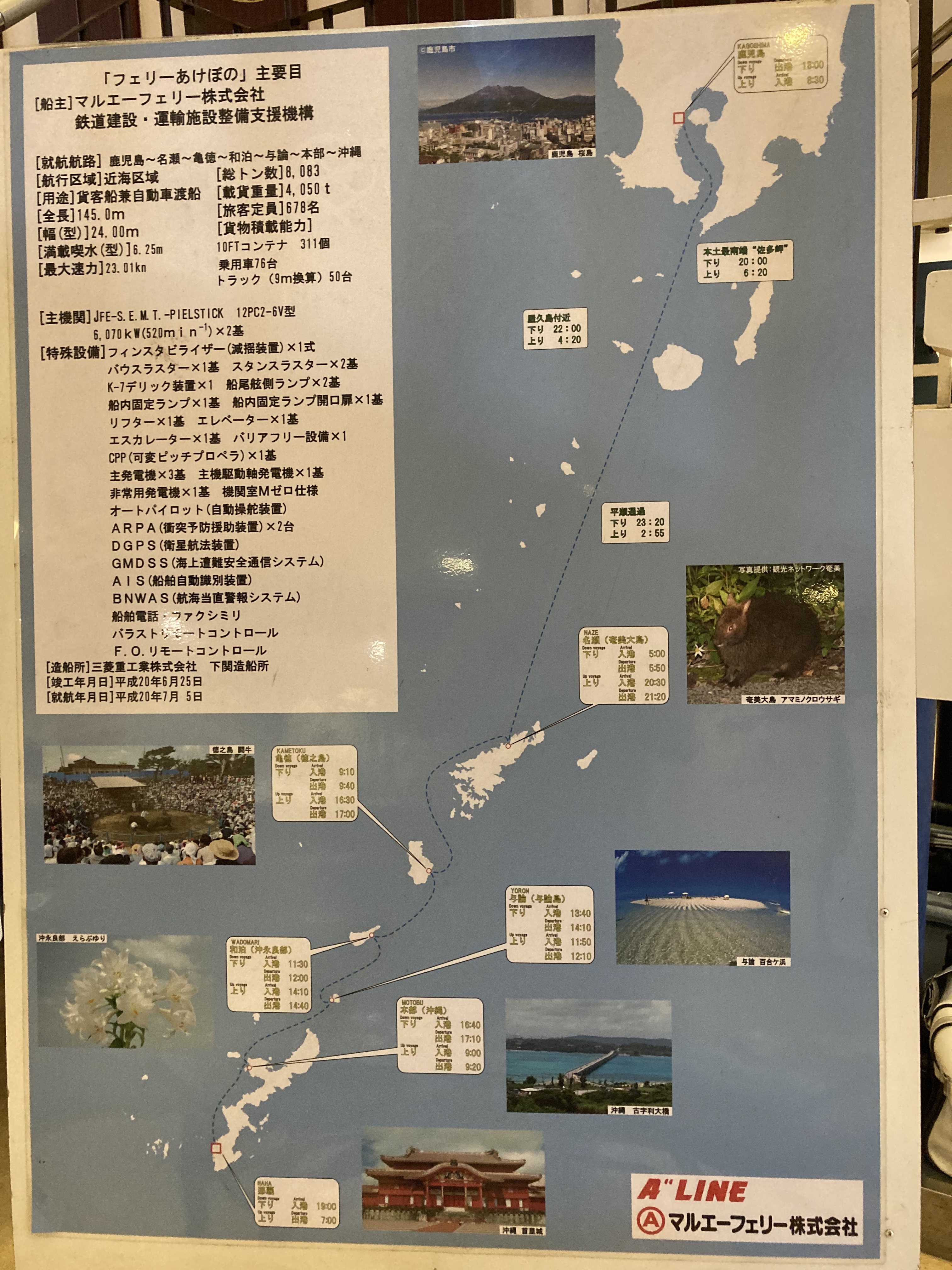
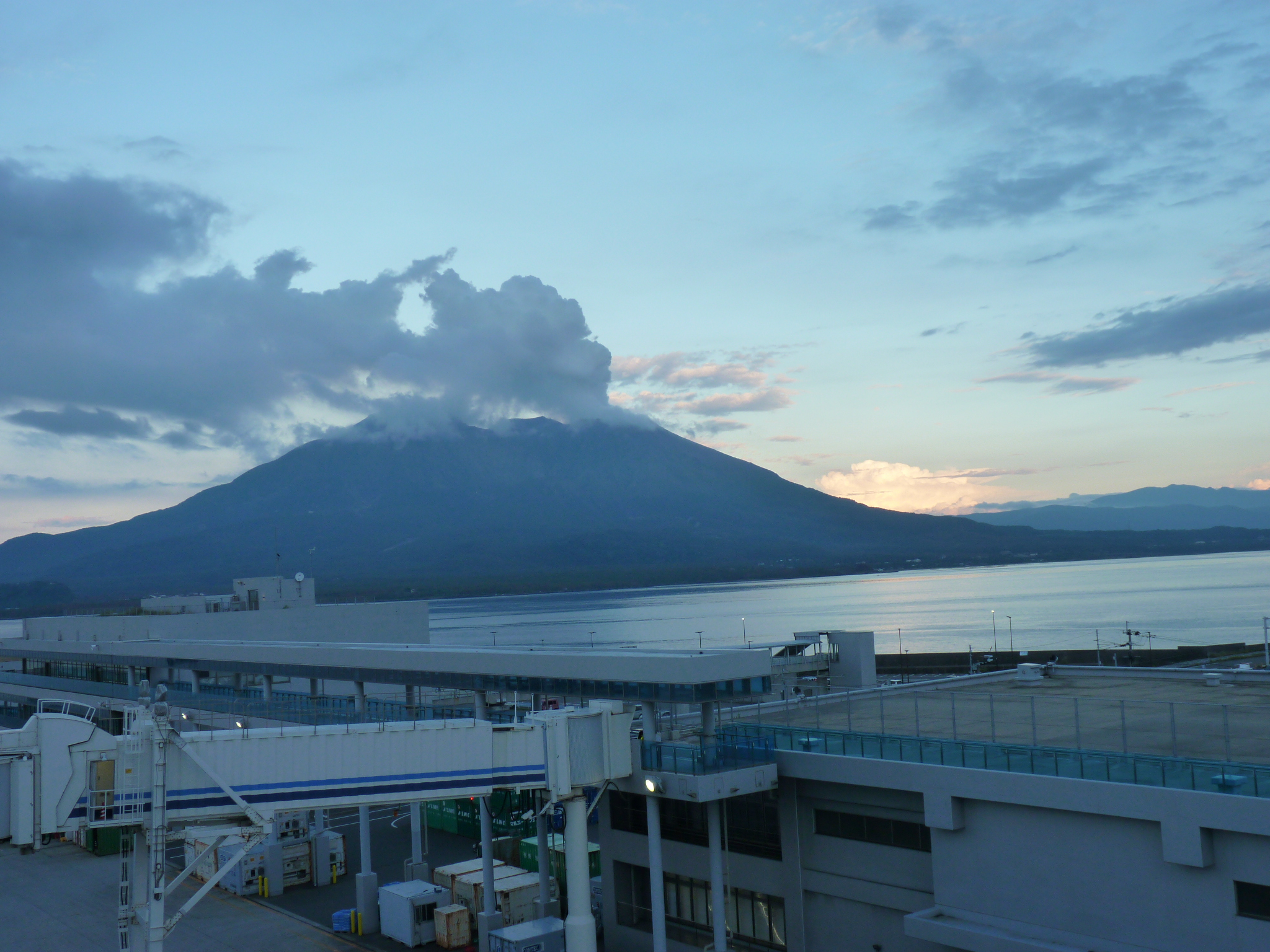
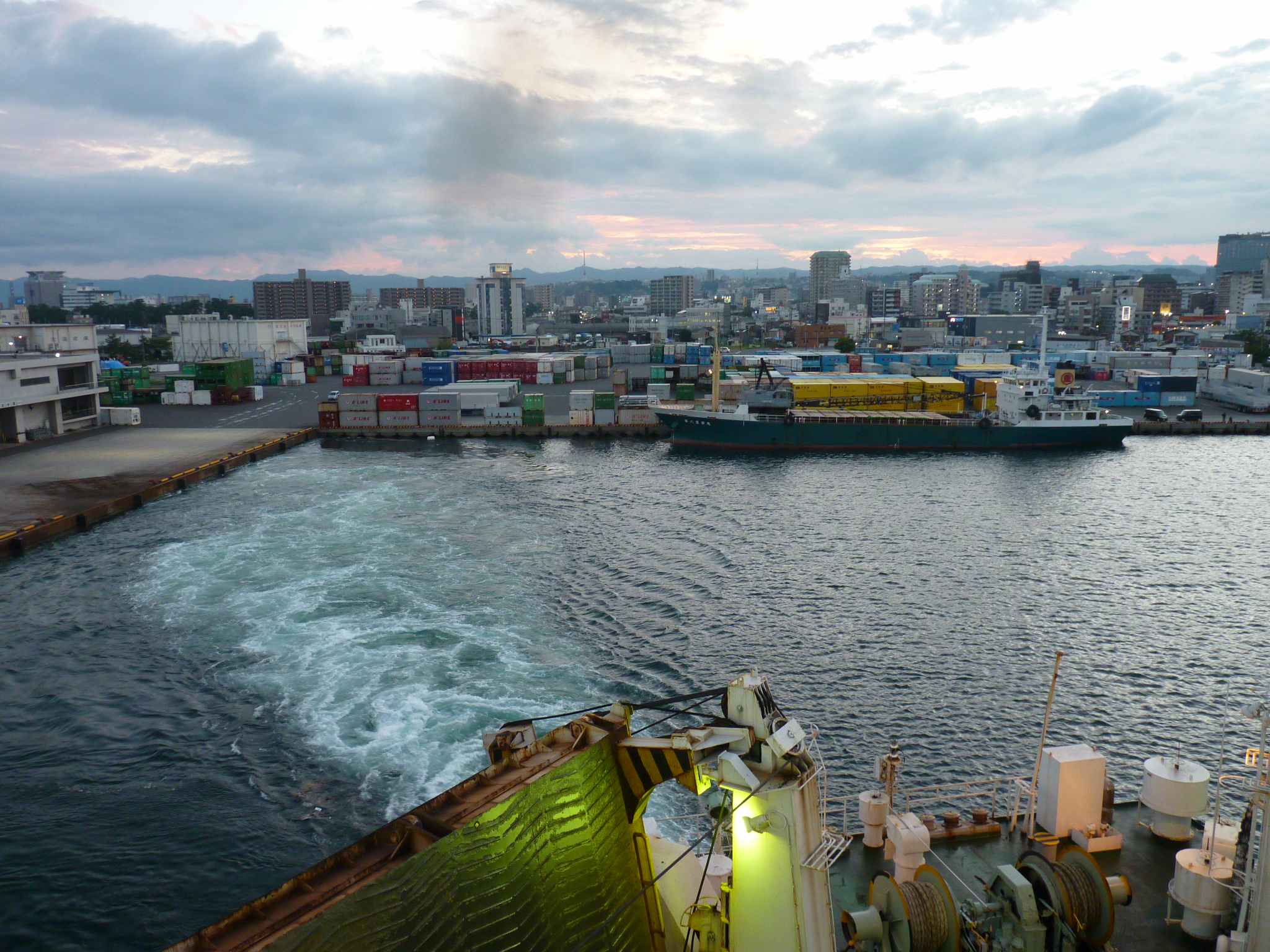
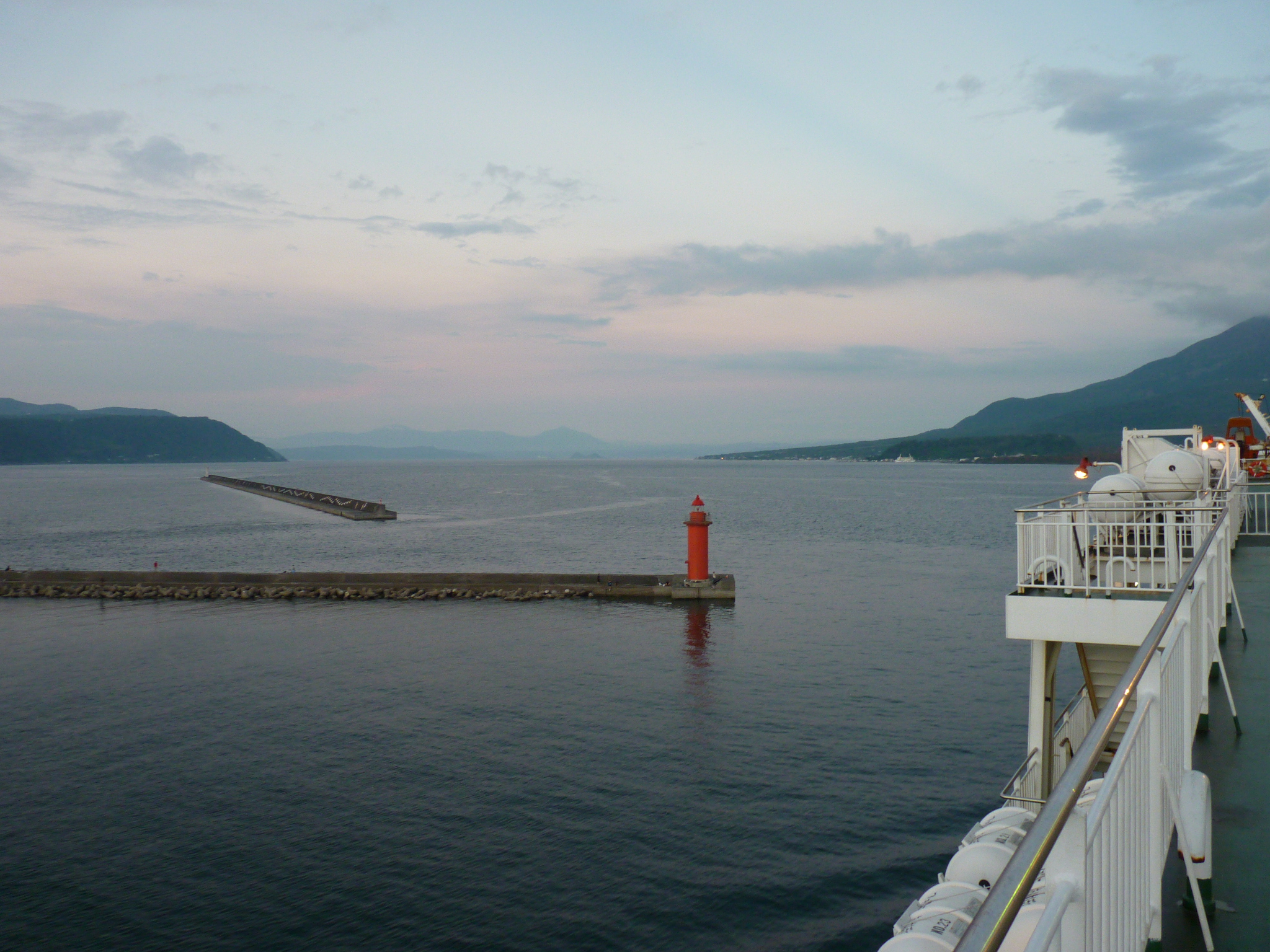
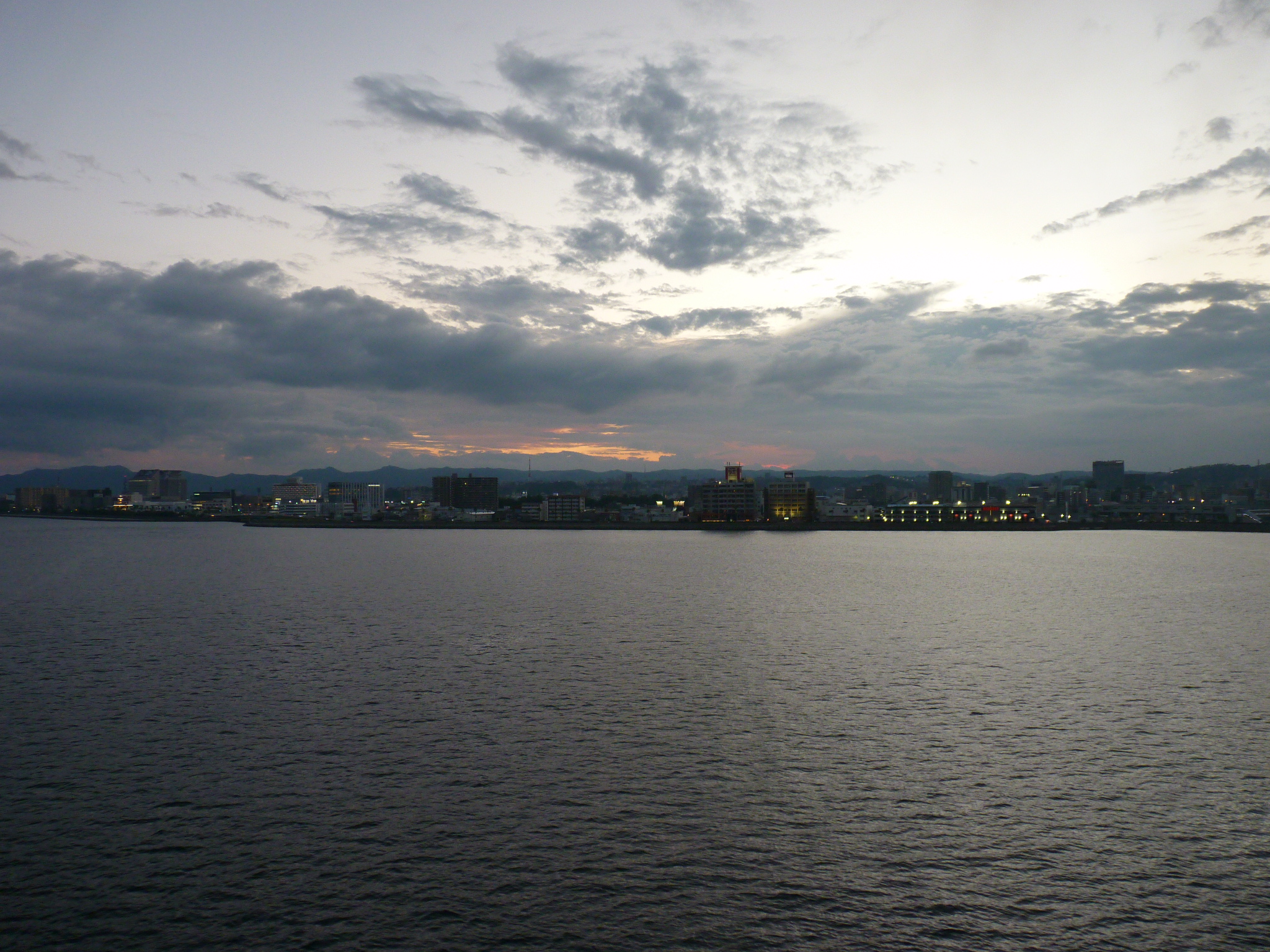
Night fell when we left Kagoshima Port, so we got only glimpses of the mighty, and active, volcano Sakurajima that towers over Kagoshima Bay. The next hours passed in darkness, as the Akebono ploughed its way through the waves of the East China Sea.
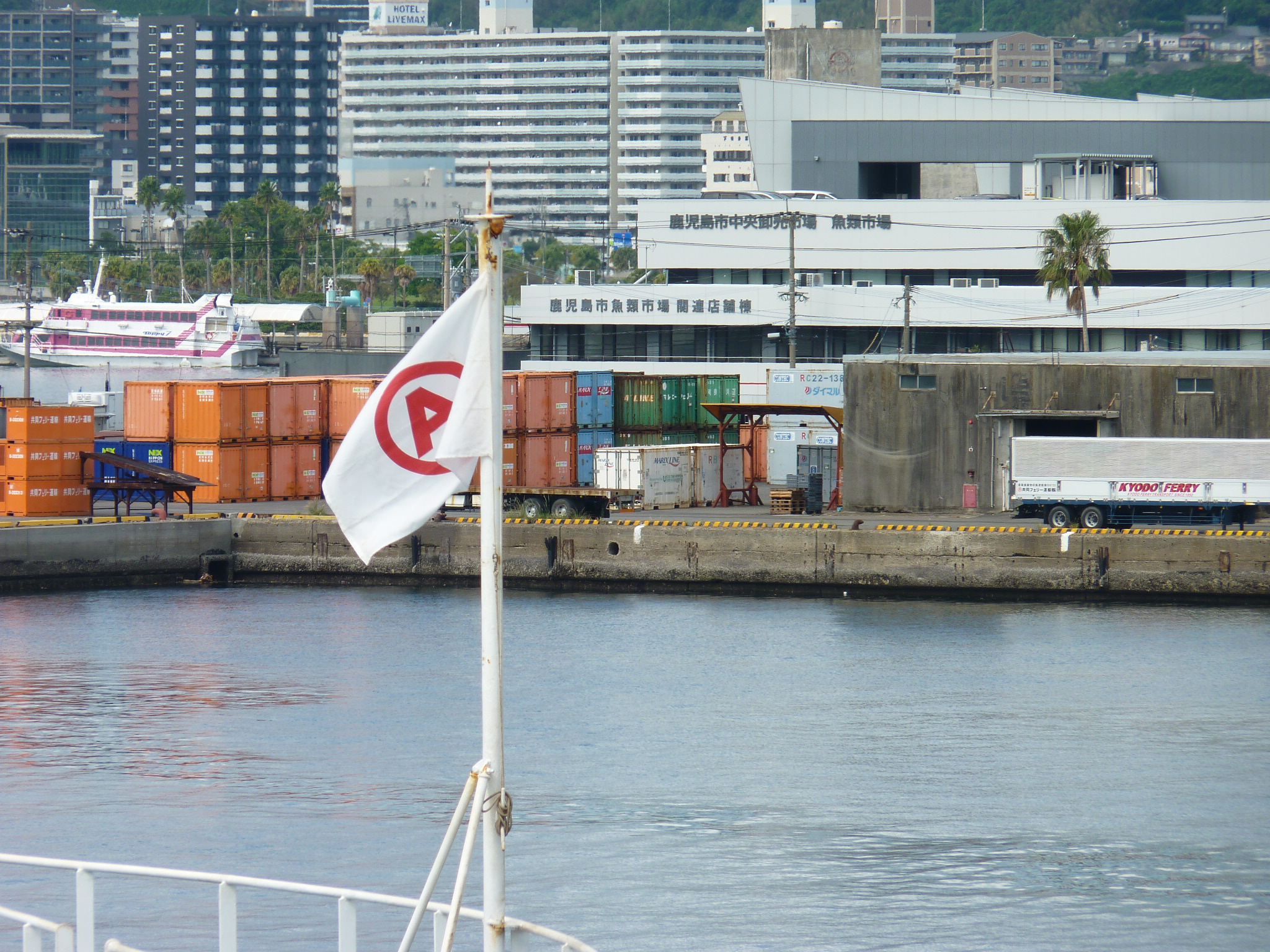
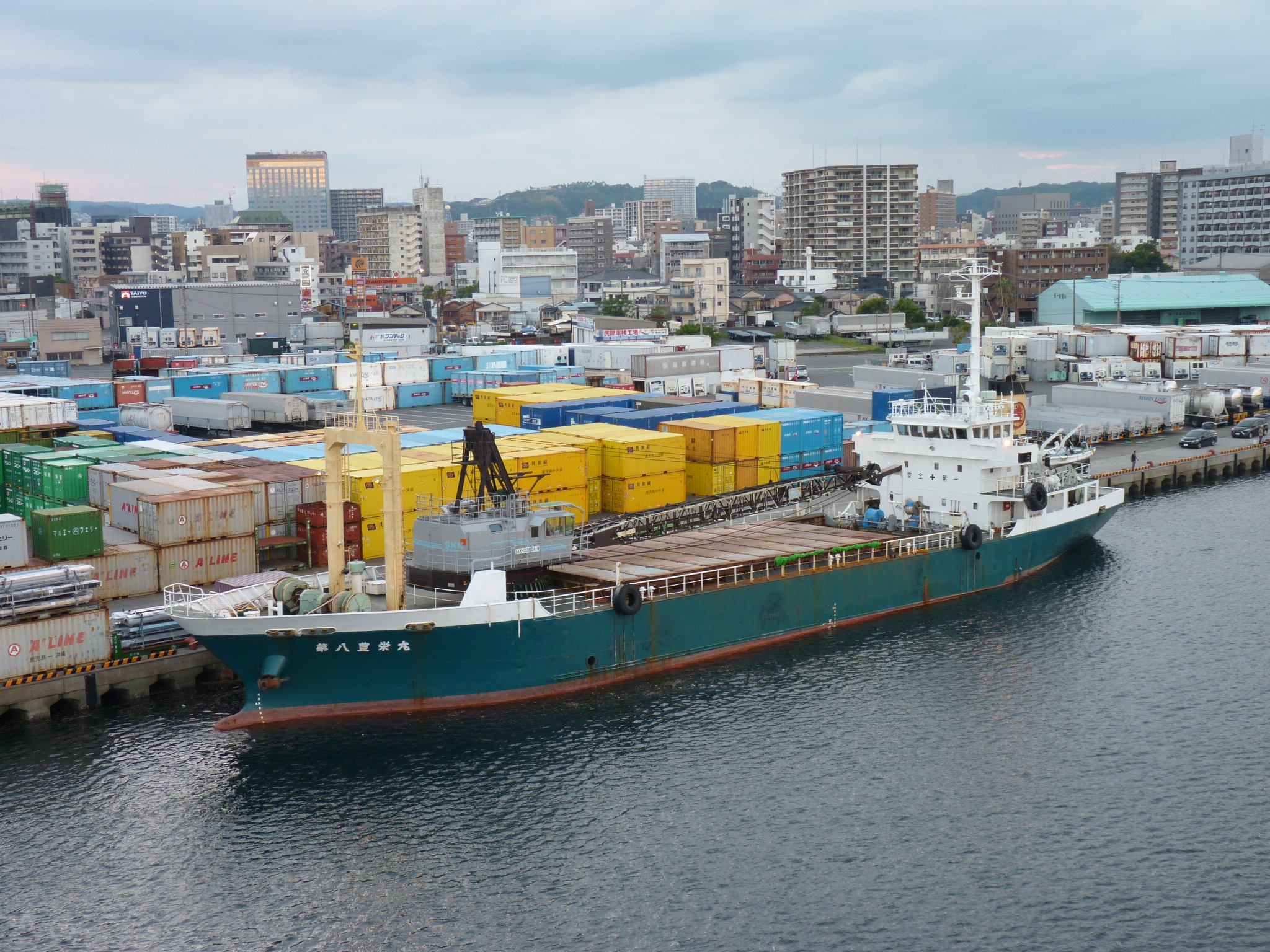
We reached the first stop Naze on Amami-Ōshima in the early morning and from the moment I entered up to the sun deck I could feel that the ship had followed a due southerly course during the night, with the air feeling tropical and heavy with dampness.
The harbor is at the end of a narrow bay nestled between forested hills. While the port came to life, discharging containers and loading new ones, the sky changed from a dark navy to blue velvet with pink cumulus clouds. A most beautiful morning.
As the ship continued along the northern coast of the island after a 50-minute stop in Naha, more fellow passengers came up to the top deck to watch the glorious sunrise.
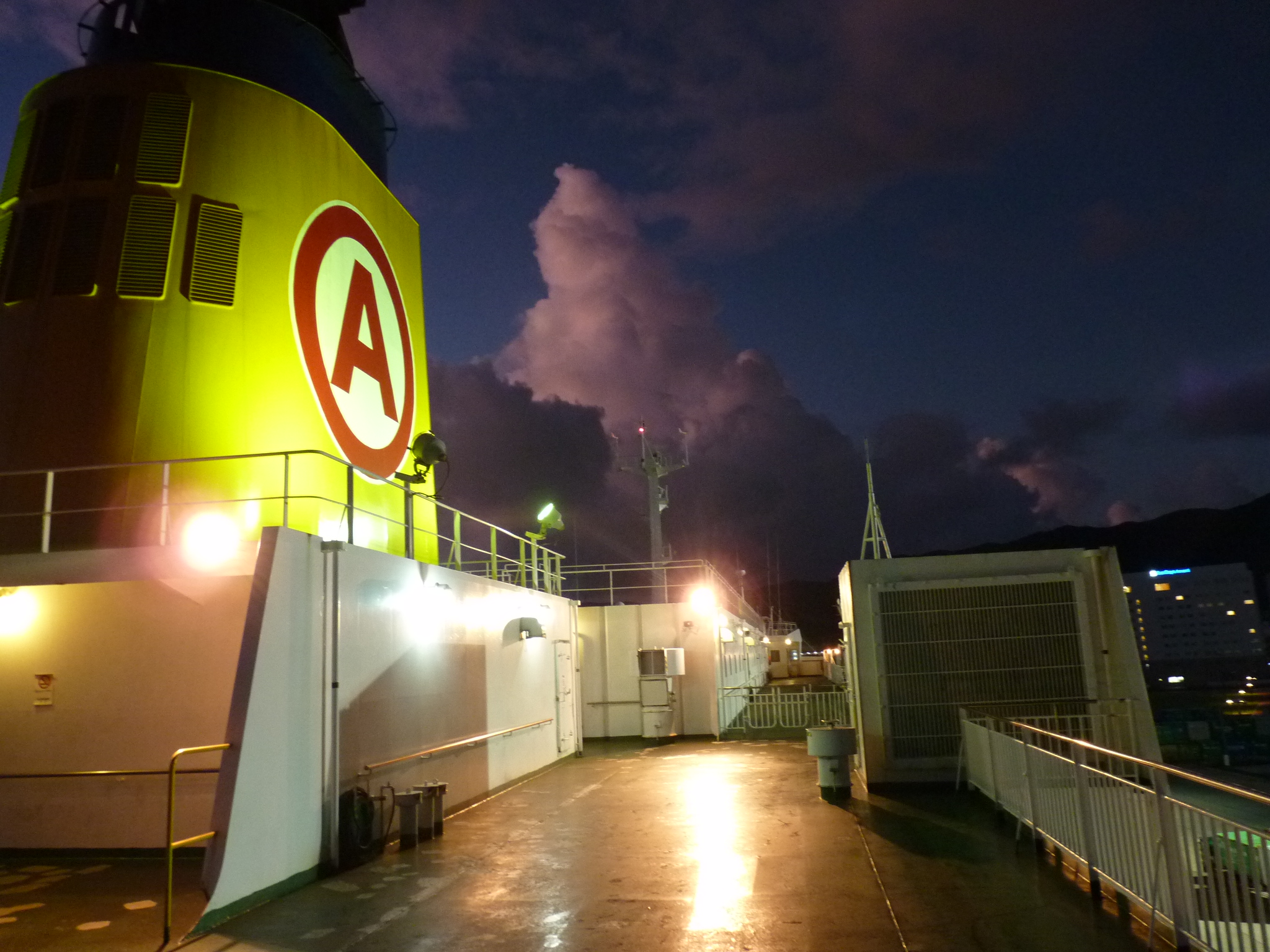
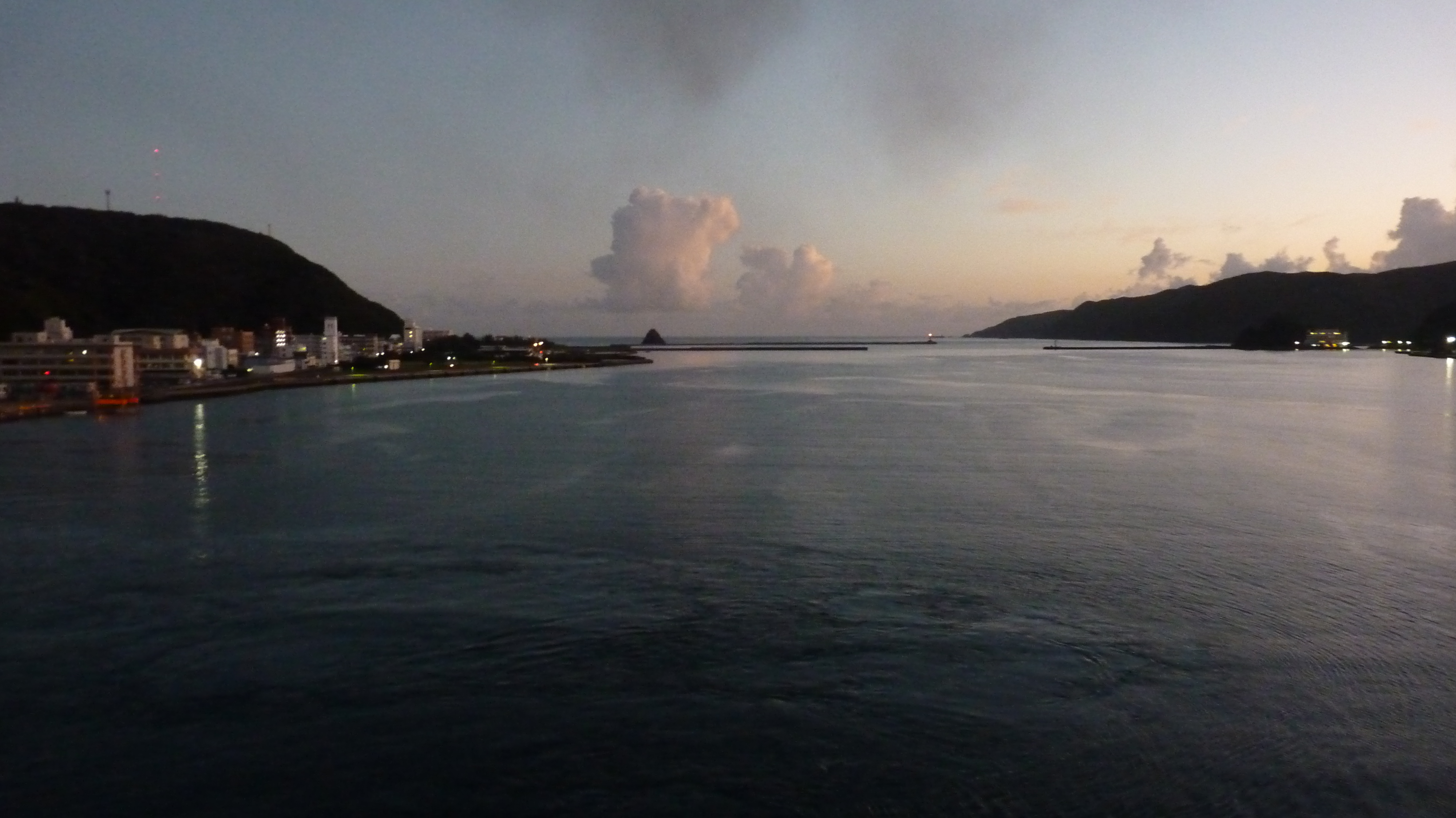
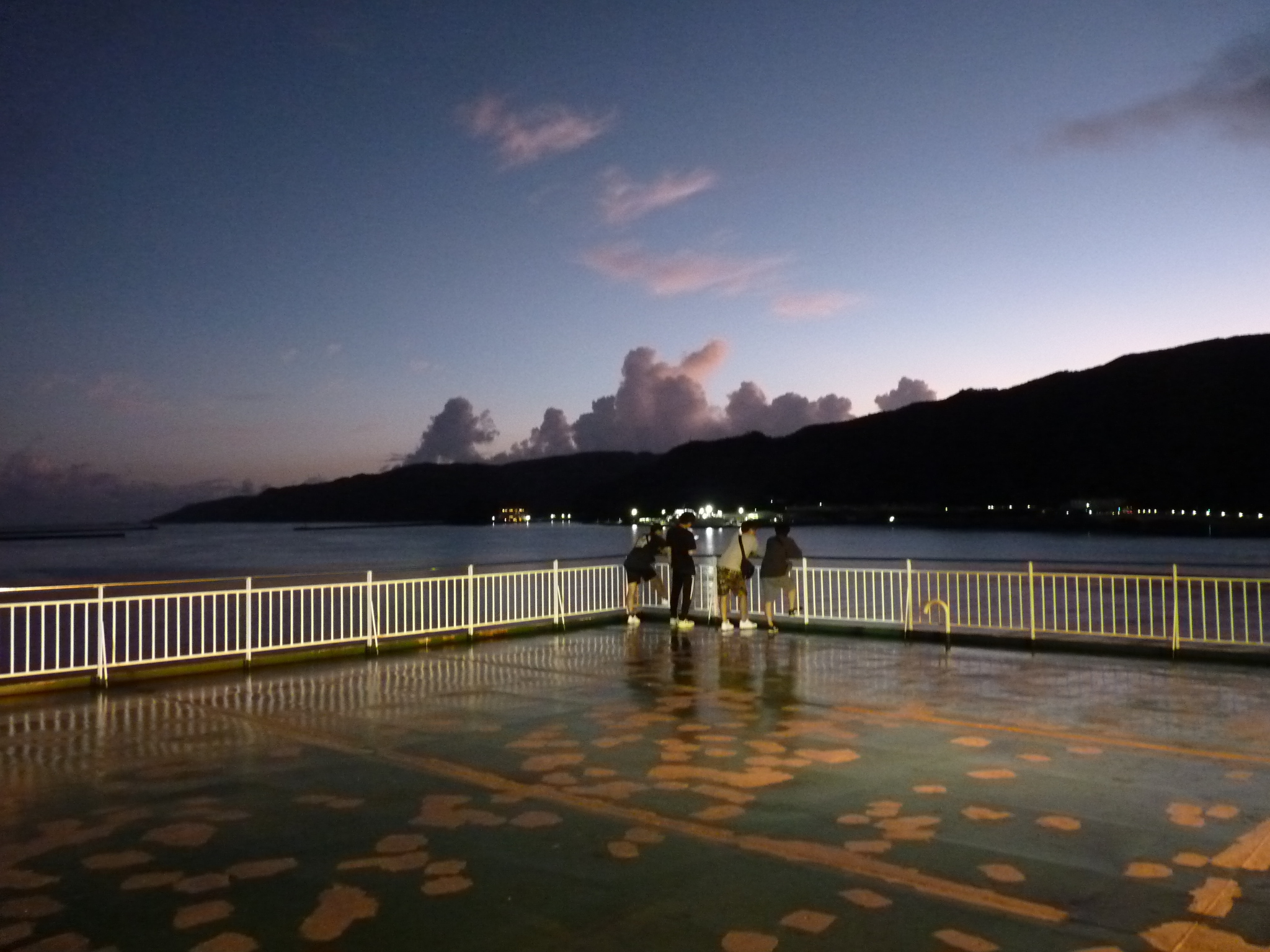
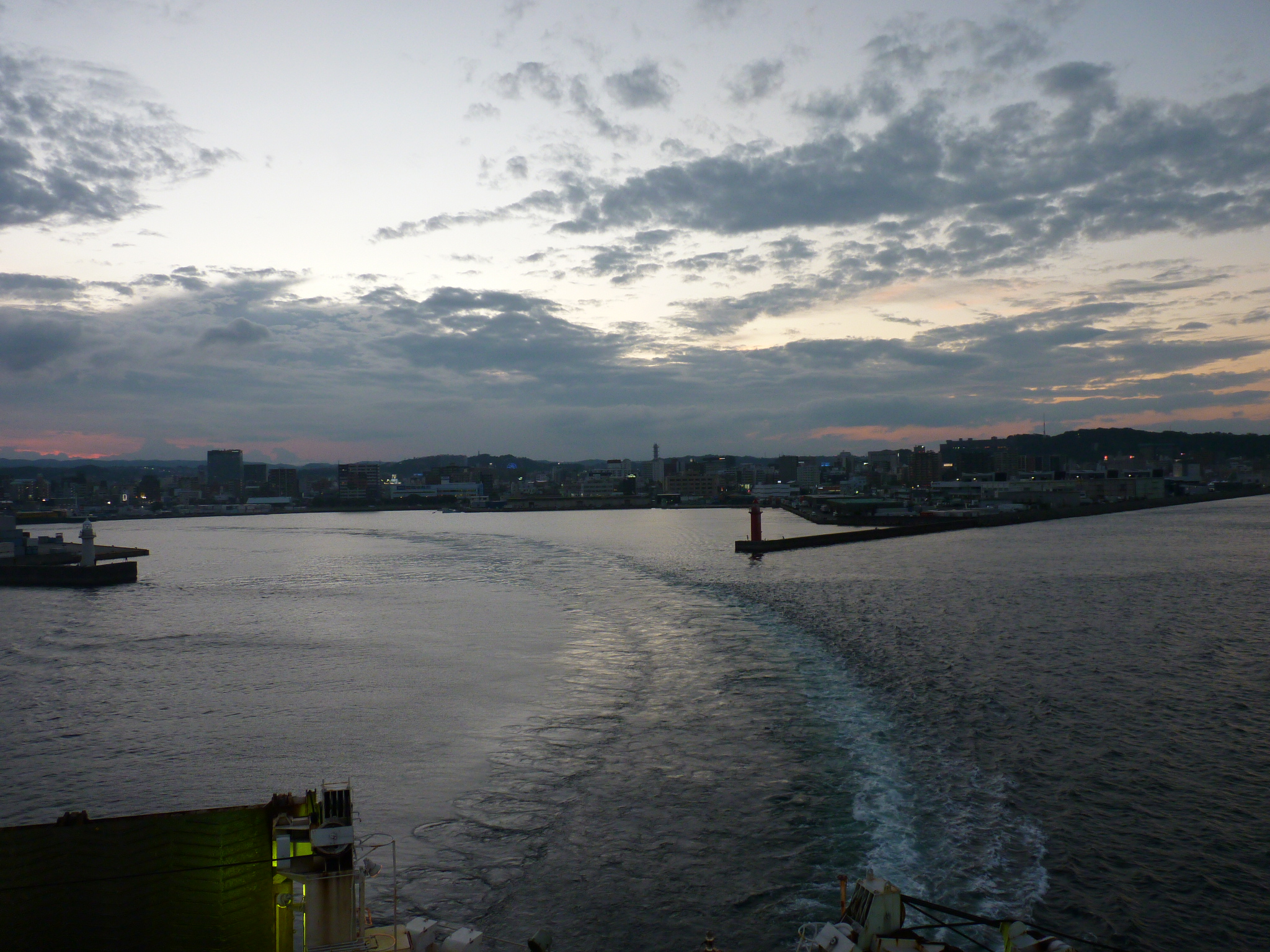
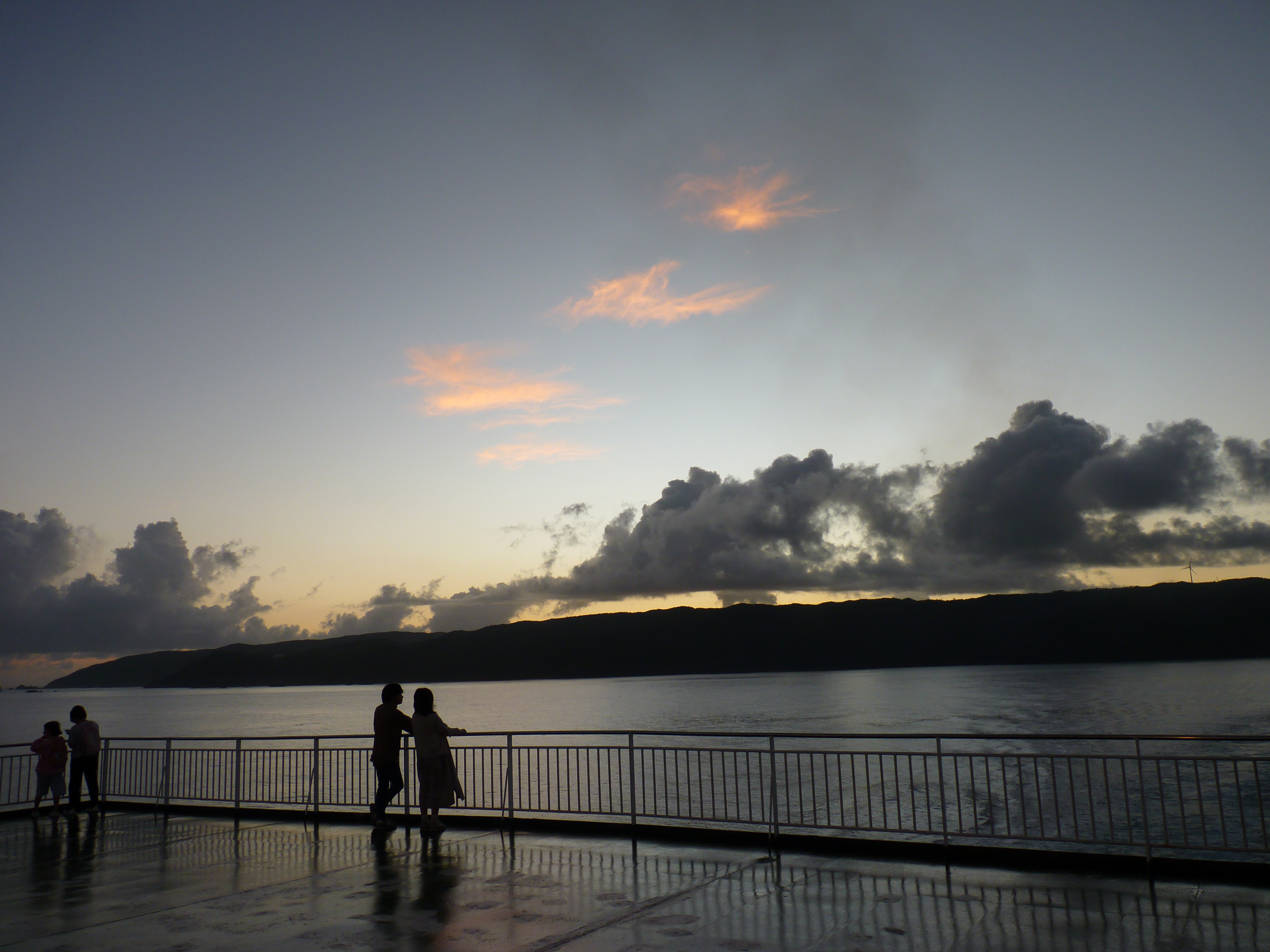
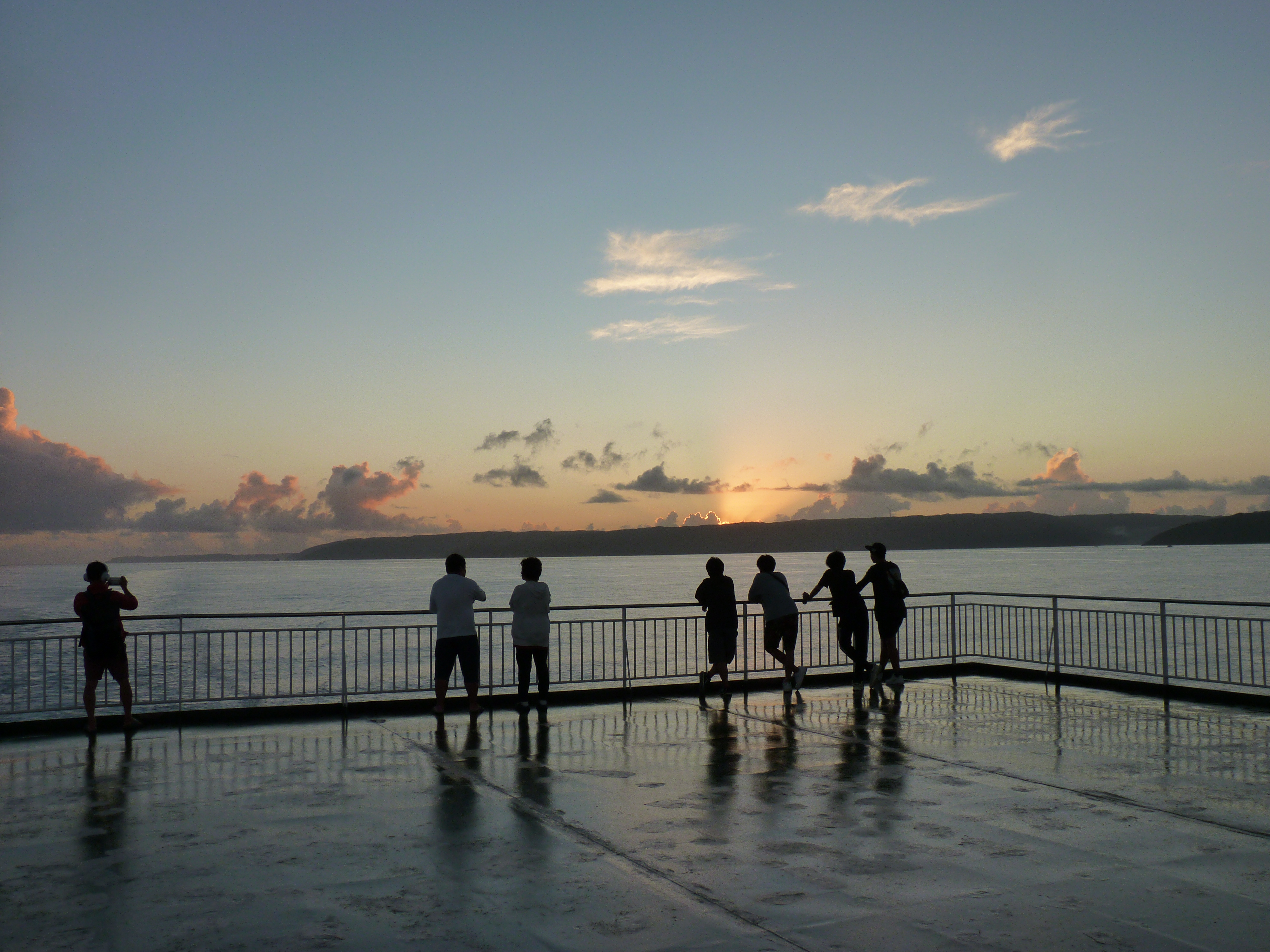
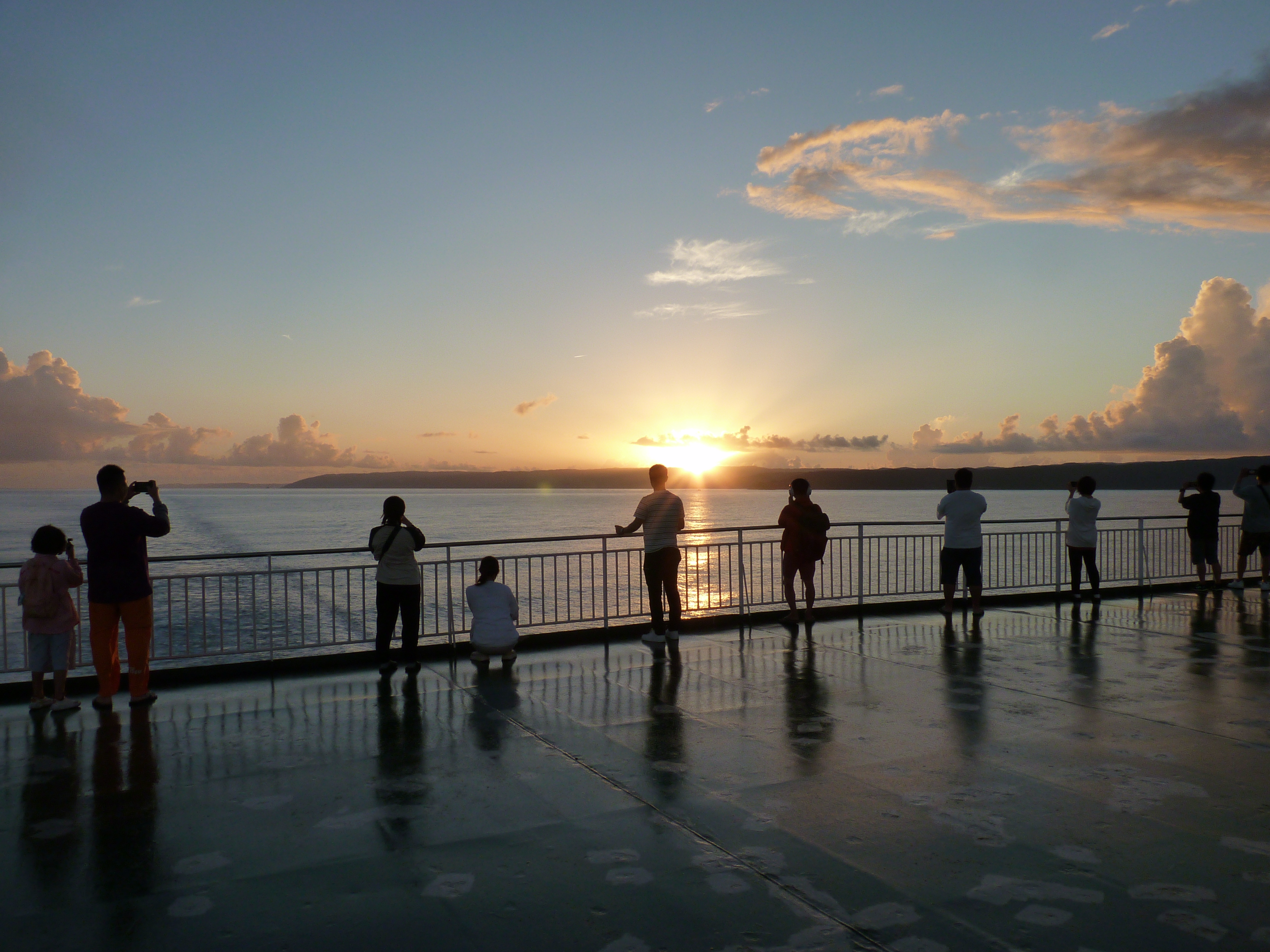
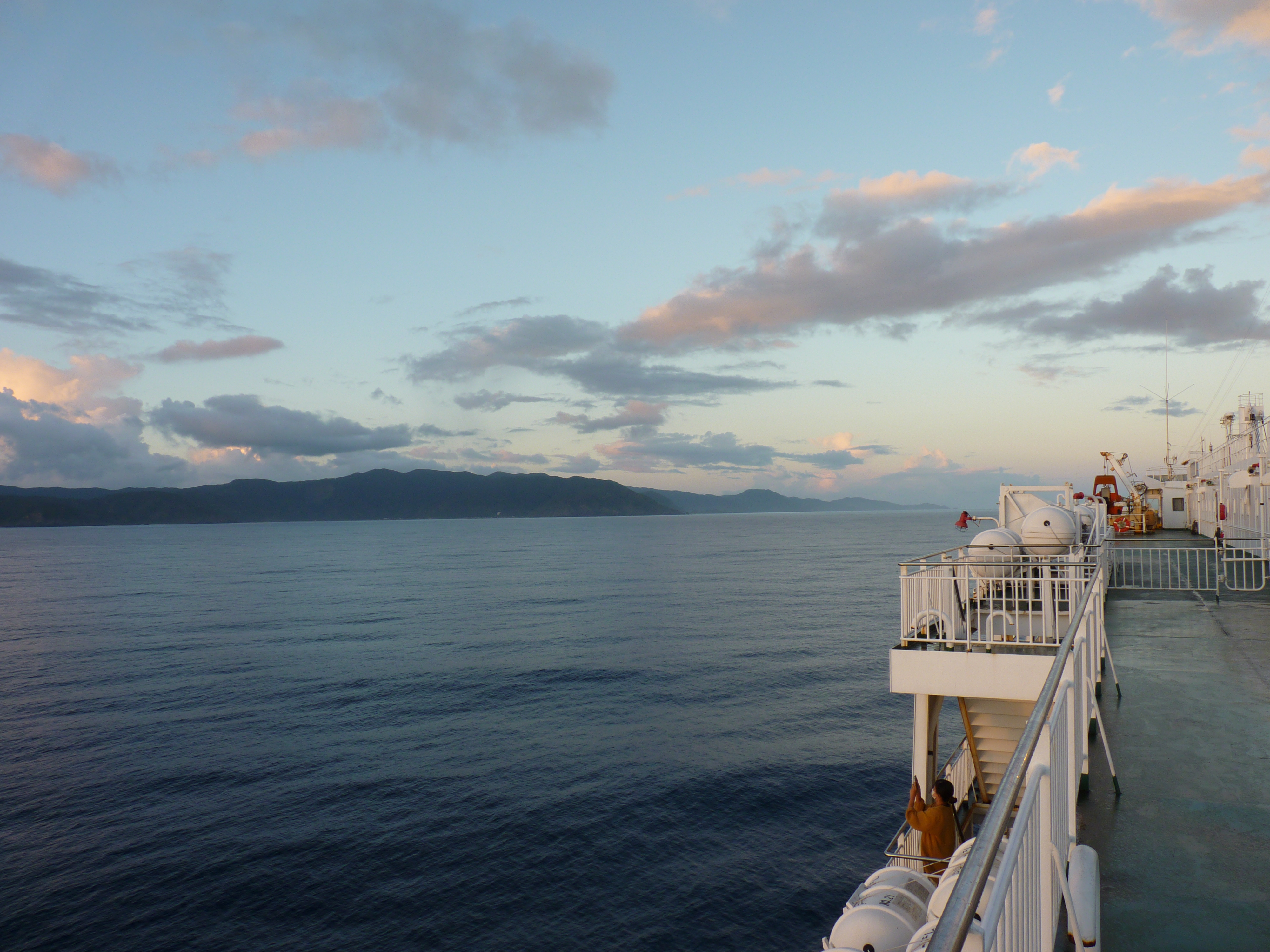
The crossing to Kametoku is the second longest on the trip and took about 3 ½ hours on one of the watery stretches of Route 58, which remained calm on this October morning. Fish and turtles could be seen in the crystal-clear waters of the Kametoku port. The stop there is brief, taking only 30 minutes.
While the ferry followed the coast for a while, I pondered how similar towns on remote islands look from afar. There always are some high voltage lines coming down from a hill, always an ugly prefabricated apartment compound on the outskirts and an urban looking stretch of autobahn, which will narrow down to a small island road, Route 58 in that case, after a few kilometers. Subtropical and lush as it was, Kametoku reminded me of Thorshavn on the Faeroe Islands somehow.
Wadomari was next and the final destination for the golf aficionados on board as the islands apparently has a special golf course. The teenage archers also get off and I hoped both groups wouldn’t run into conflicts later in the day.
There was quite a bit of coming and going between the islands and the atmosphere became more busy during the day. Passengers who took the shorter sections of the trip filled the open seating spaces and the cafeteria. Past mid-day the outdoor deck areas were getting quite warm, especially when the ship was moored in port, so most of the passengers remained indoors.
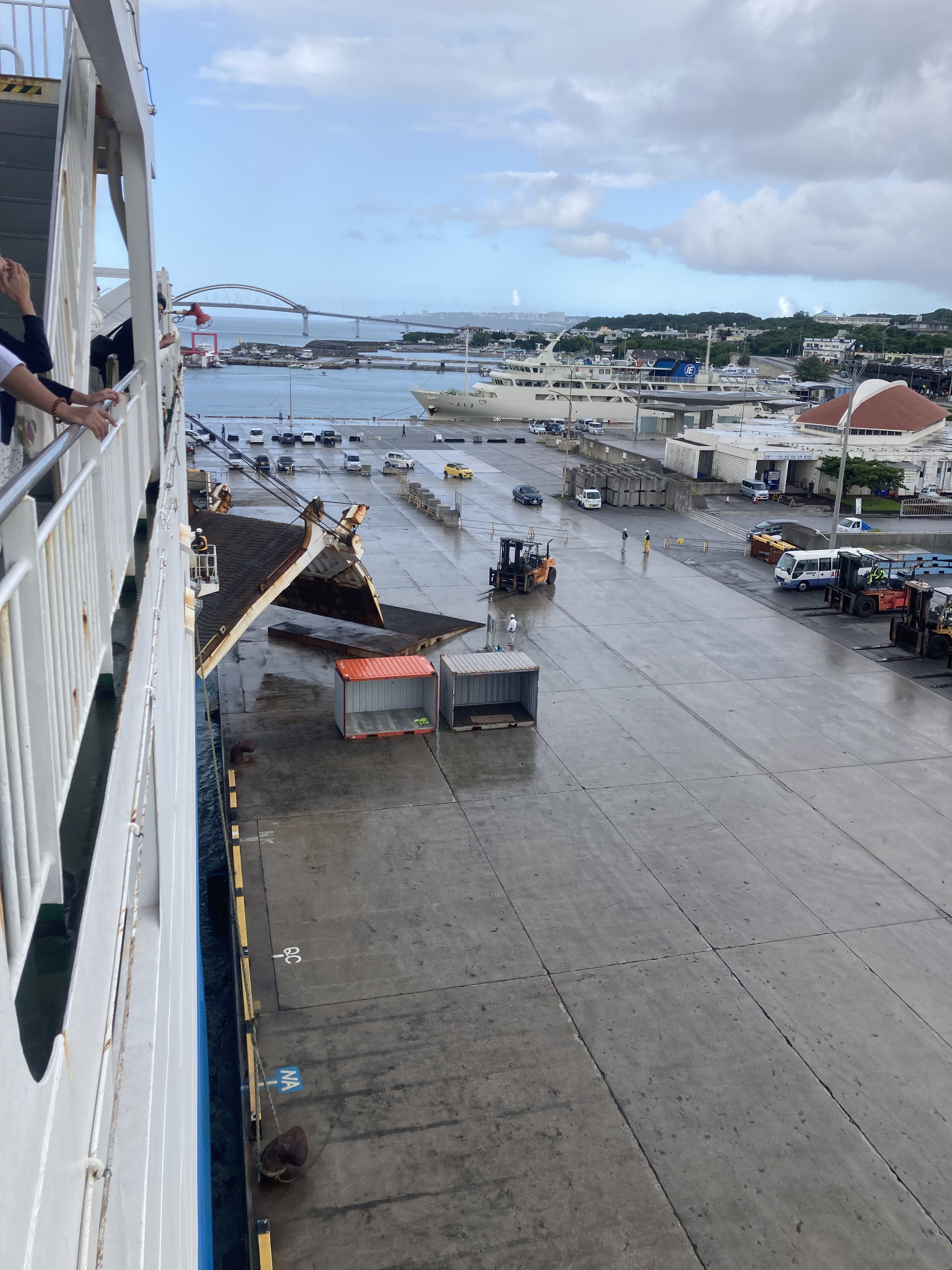
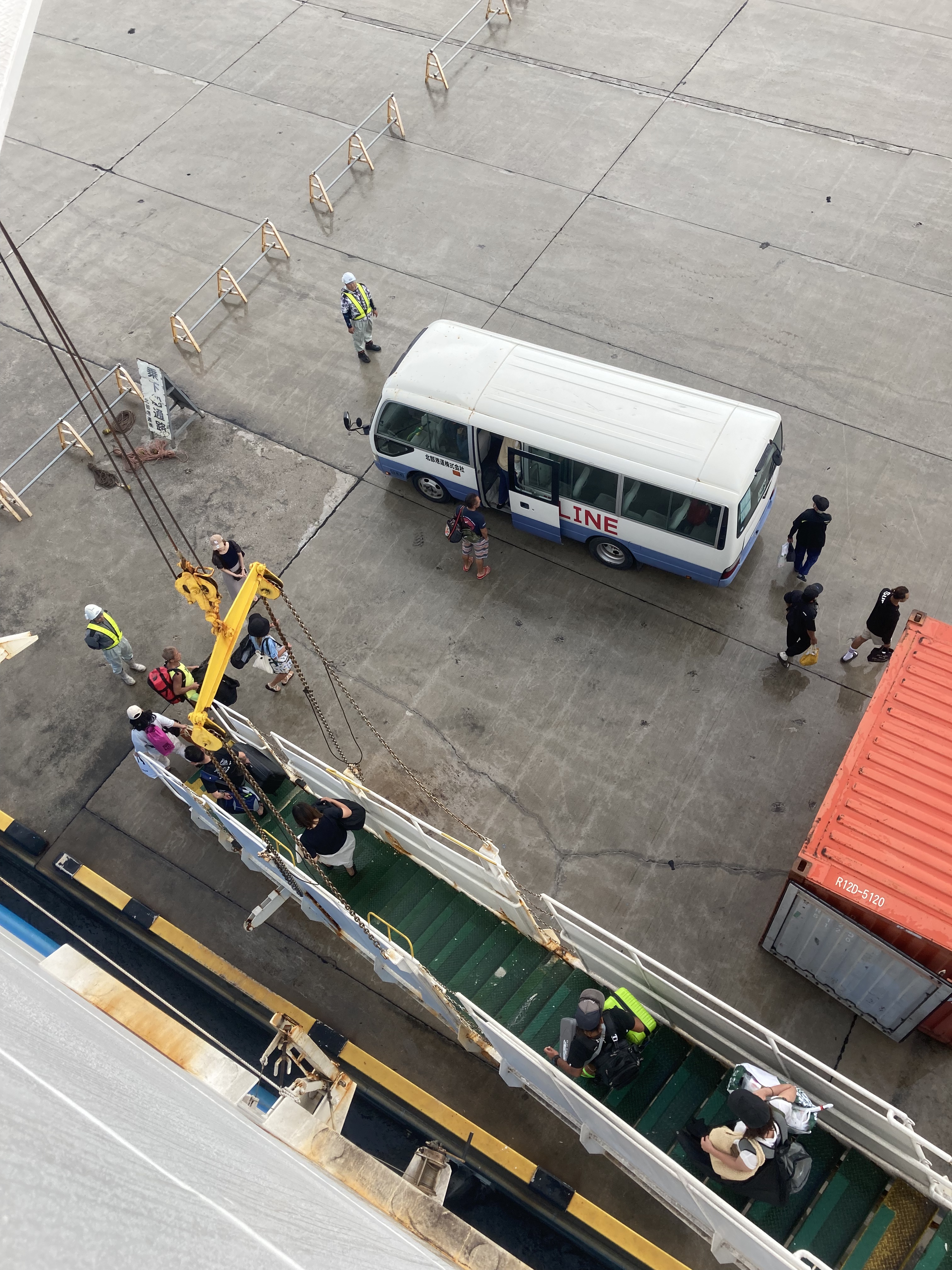
Port operations were always busy with forklifts rushing in and out of the ship to load and unload cargo containers in most ports.
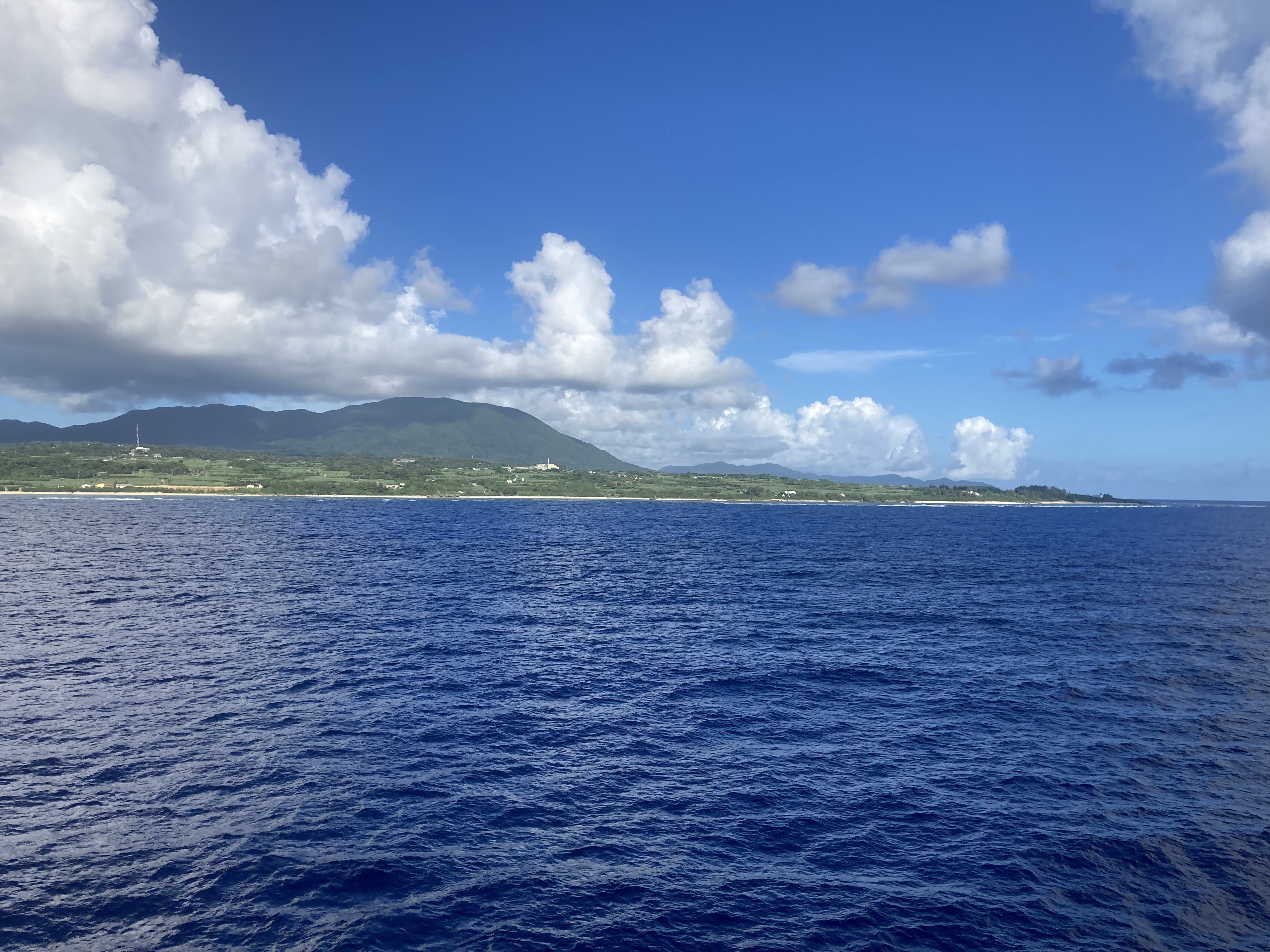
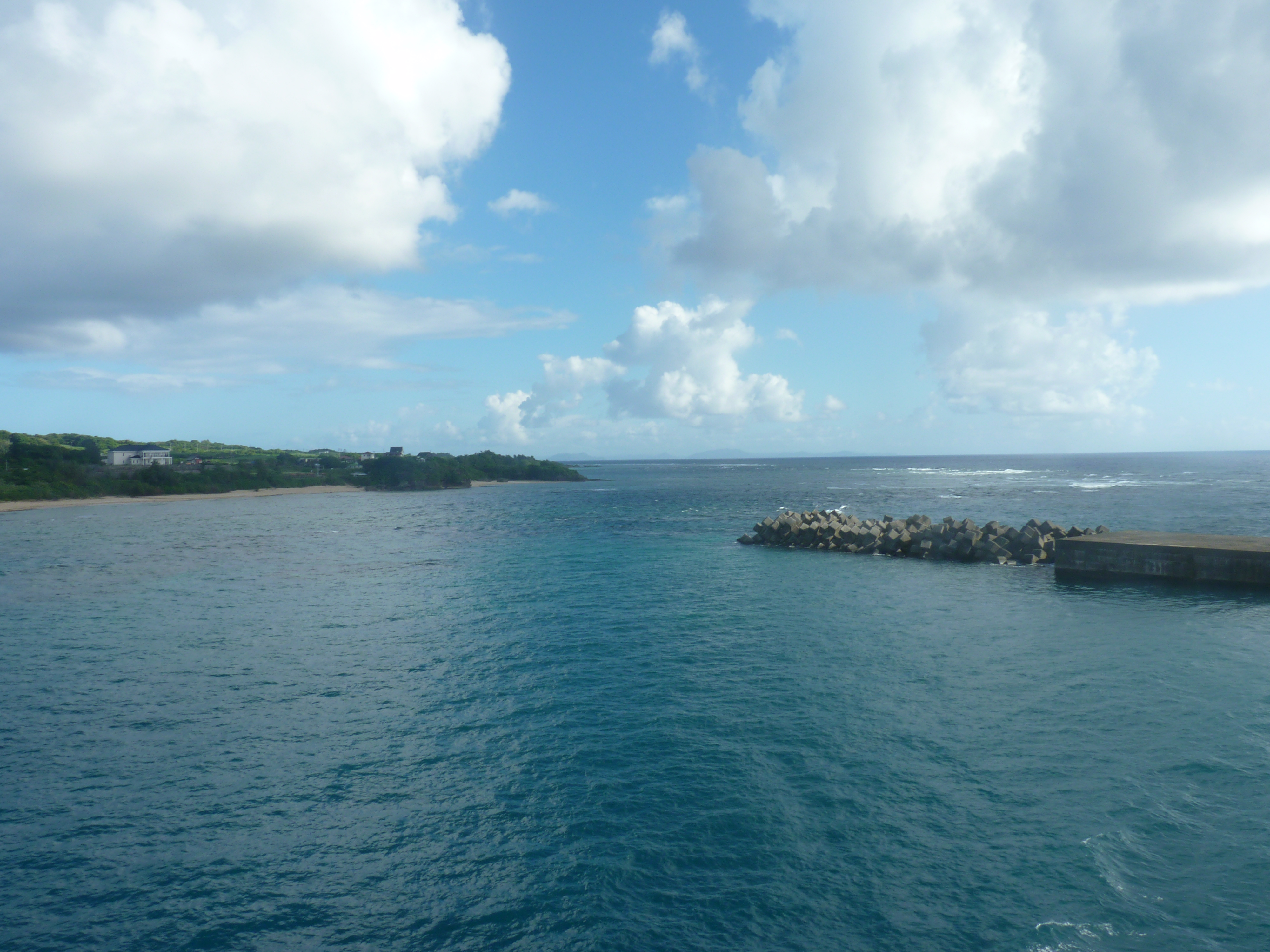

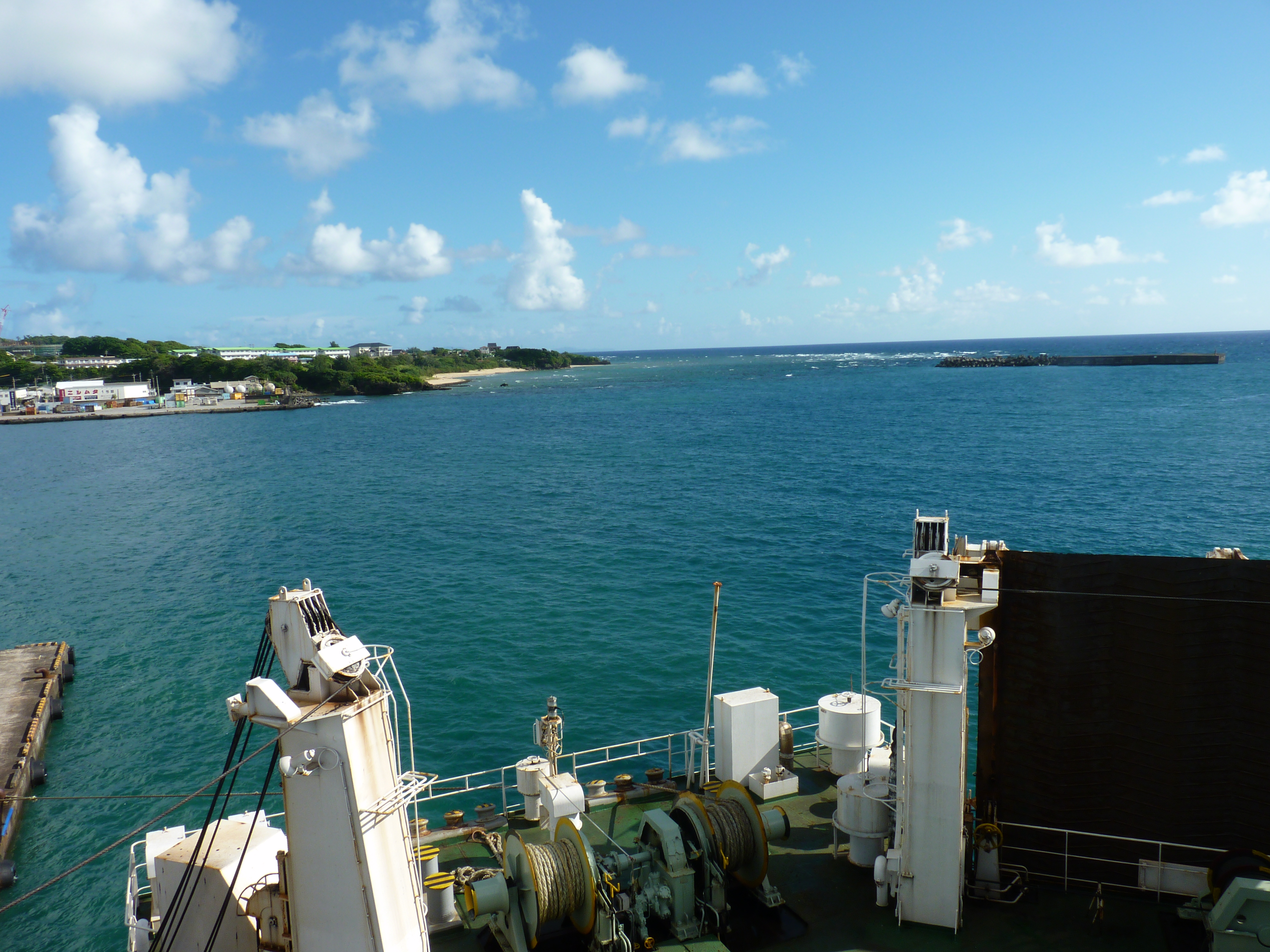
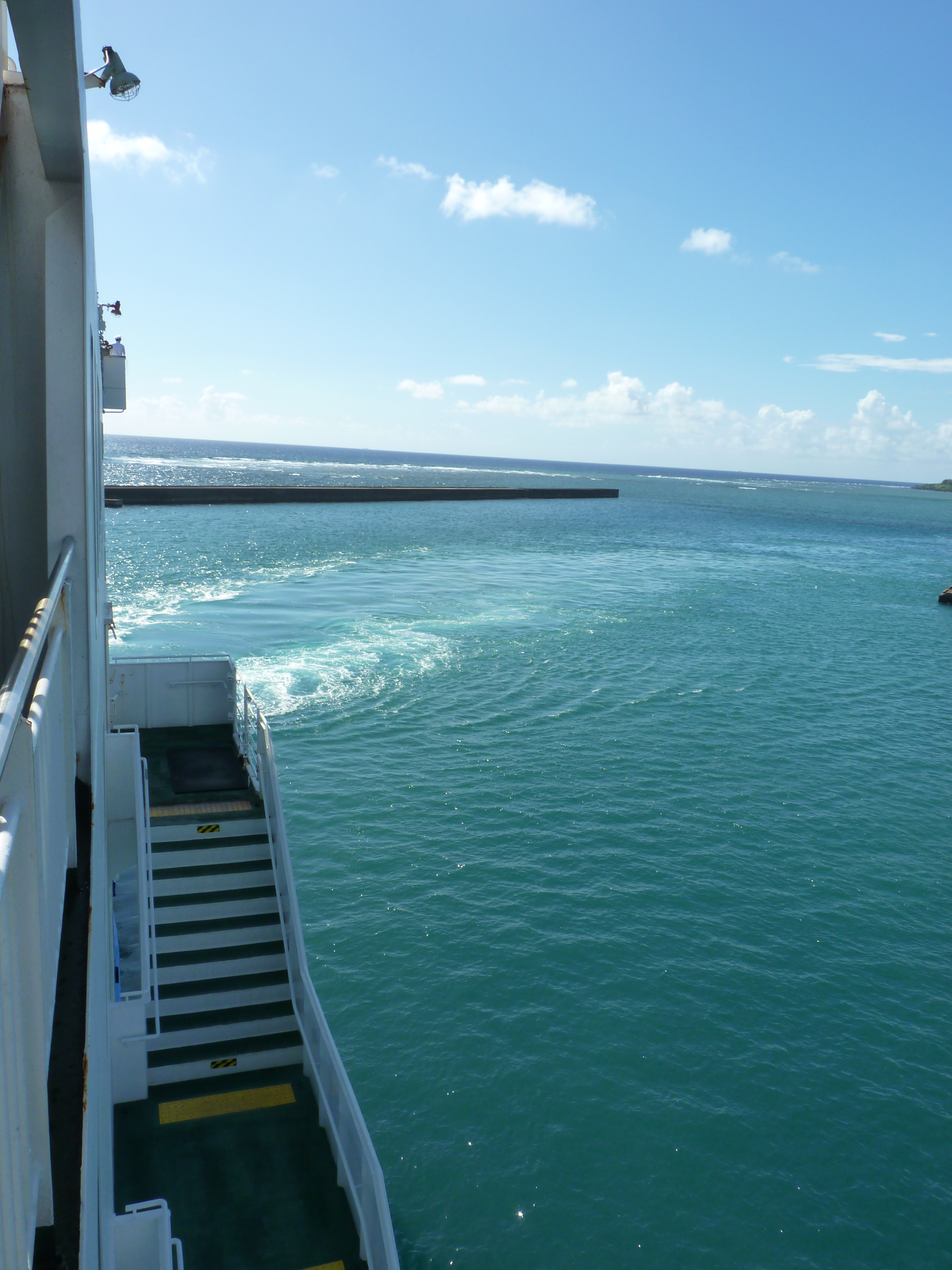
After a short hop the ferry reached Yoron and its’ tiny port. The green hills, bright beaches and turquoise waters and the open passenger waiting structure looked distinctly tropical to me, even though technically the Amami Sea still is in the sub-tropical zone.
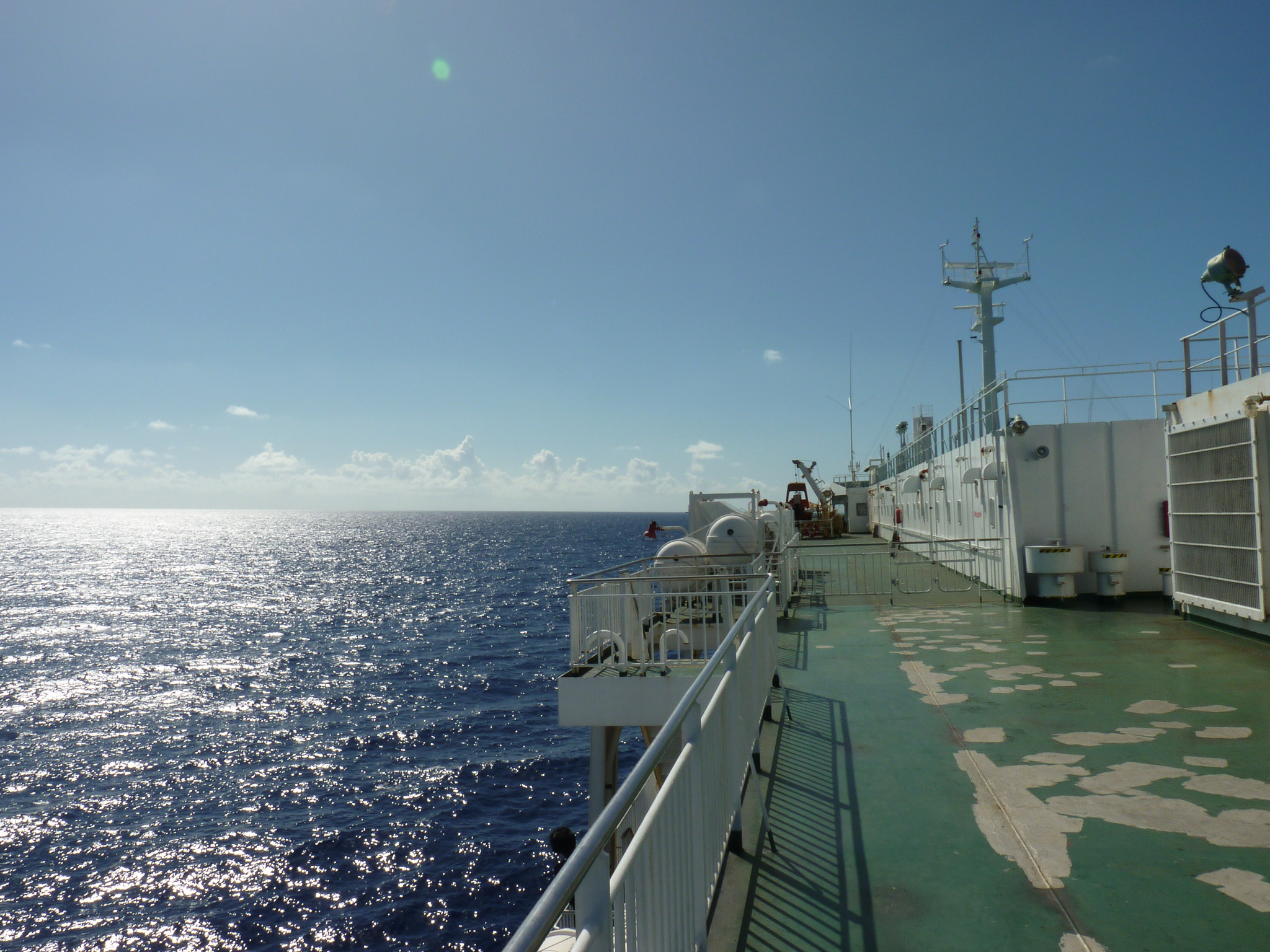
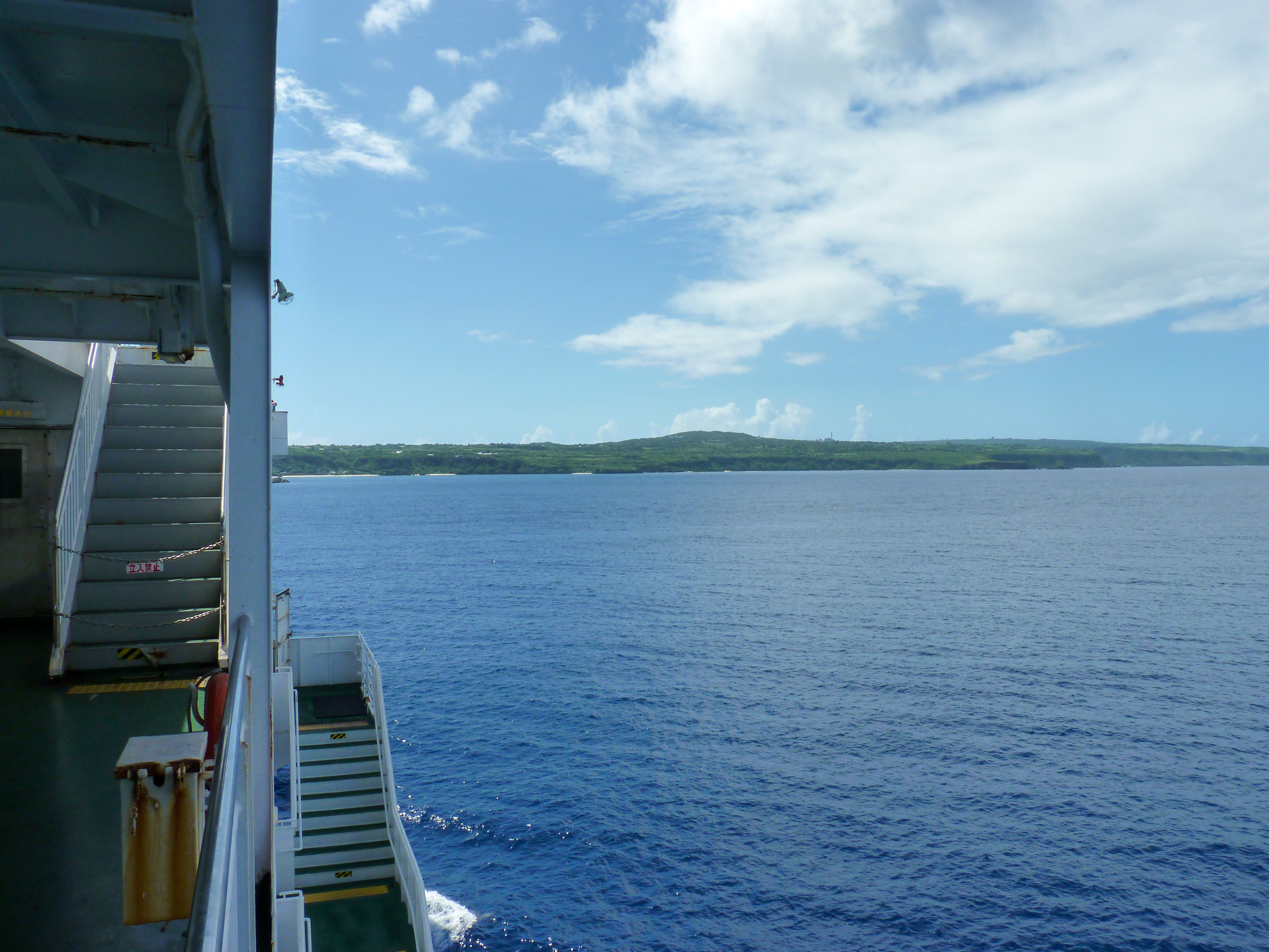
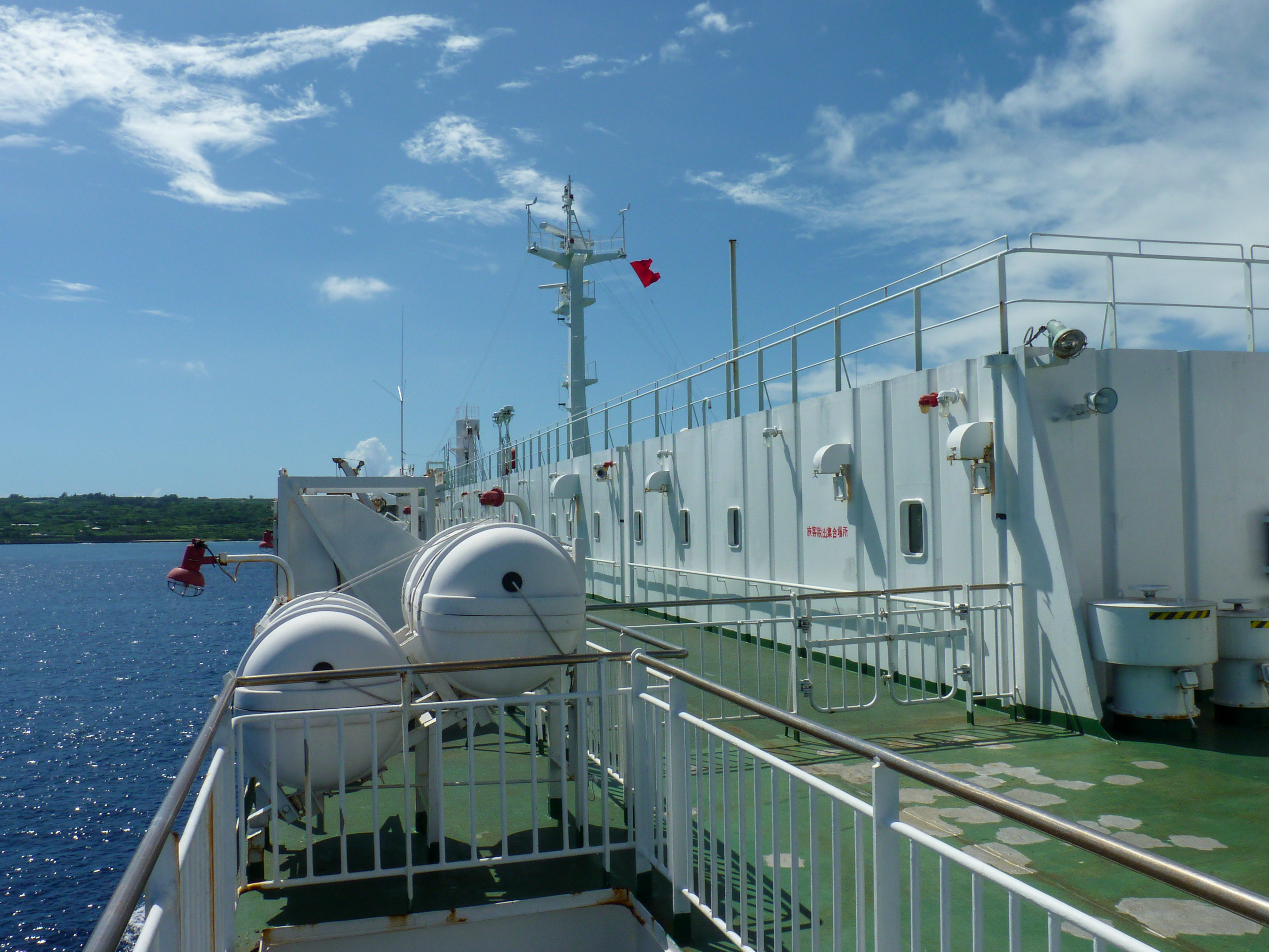
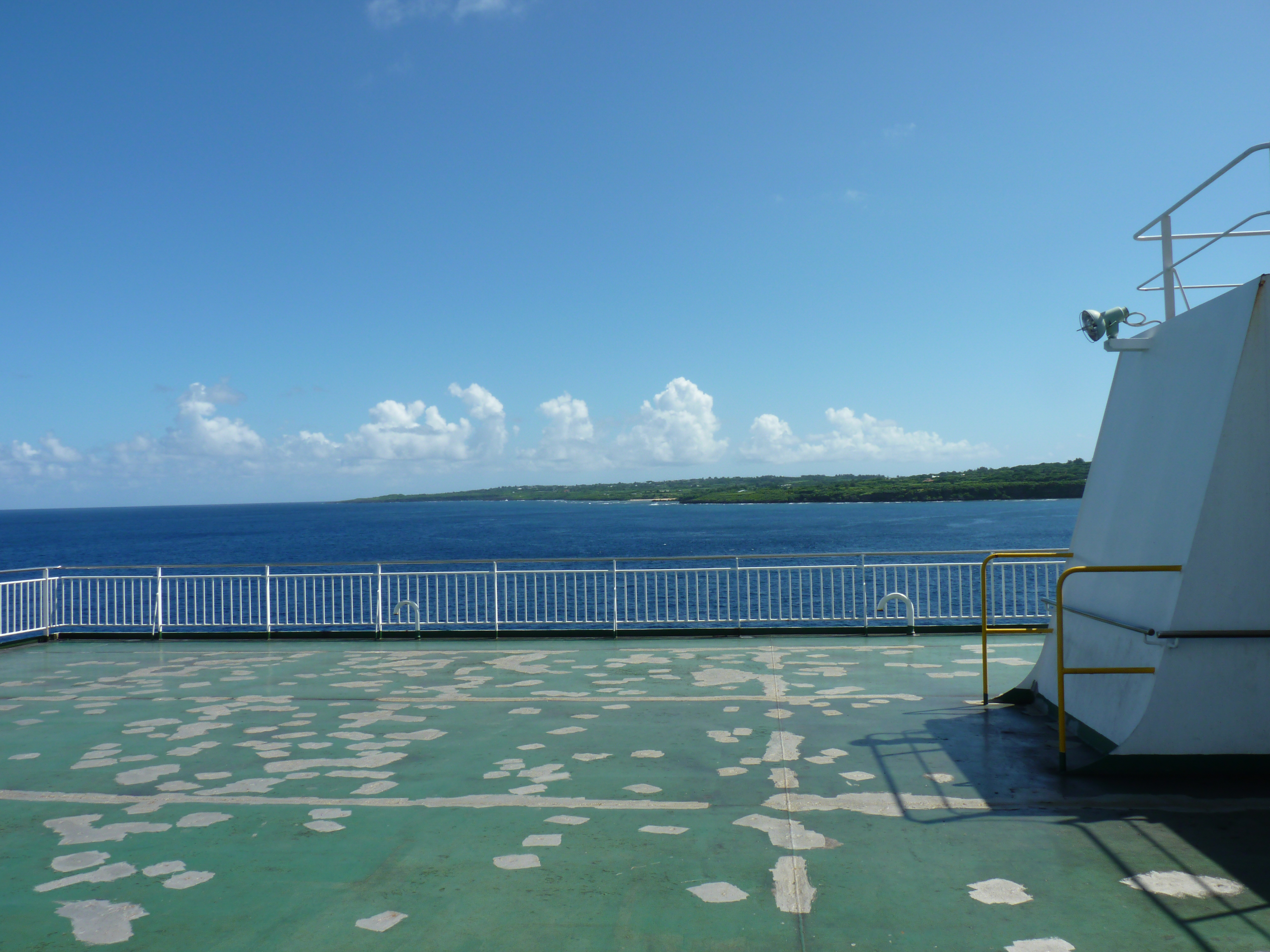
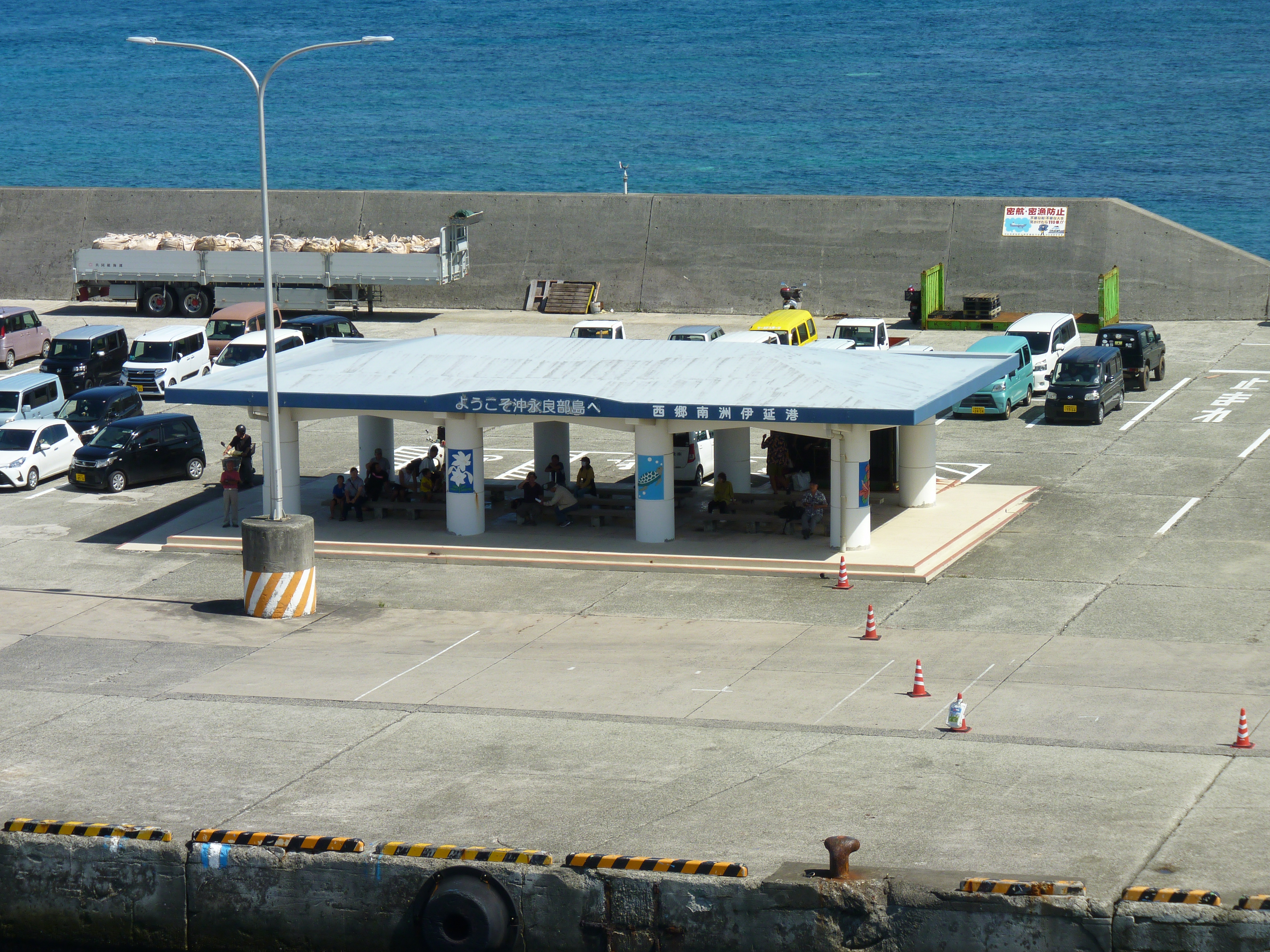
The sky grew overcast during the afternoon and showers of warm rain came down occasionally. They didn’t disturb the experience much and made for some more dramatic pictures and a beautiful rainbow as we approached Motabu, which already is on Okinawa. The rain was also a welcome excuse to retire to my comfortable cabin for a nap.
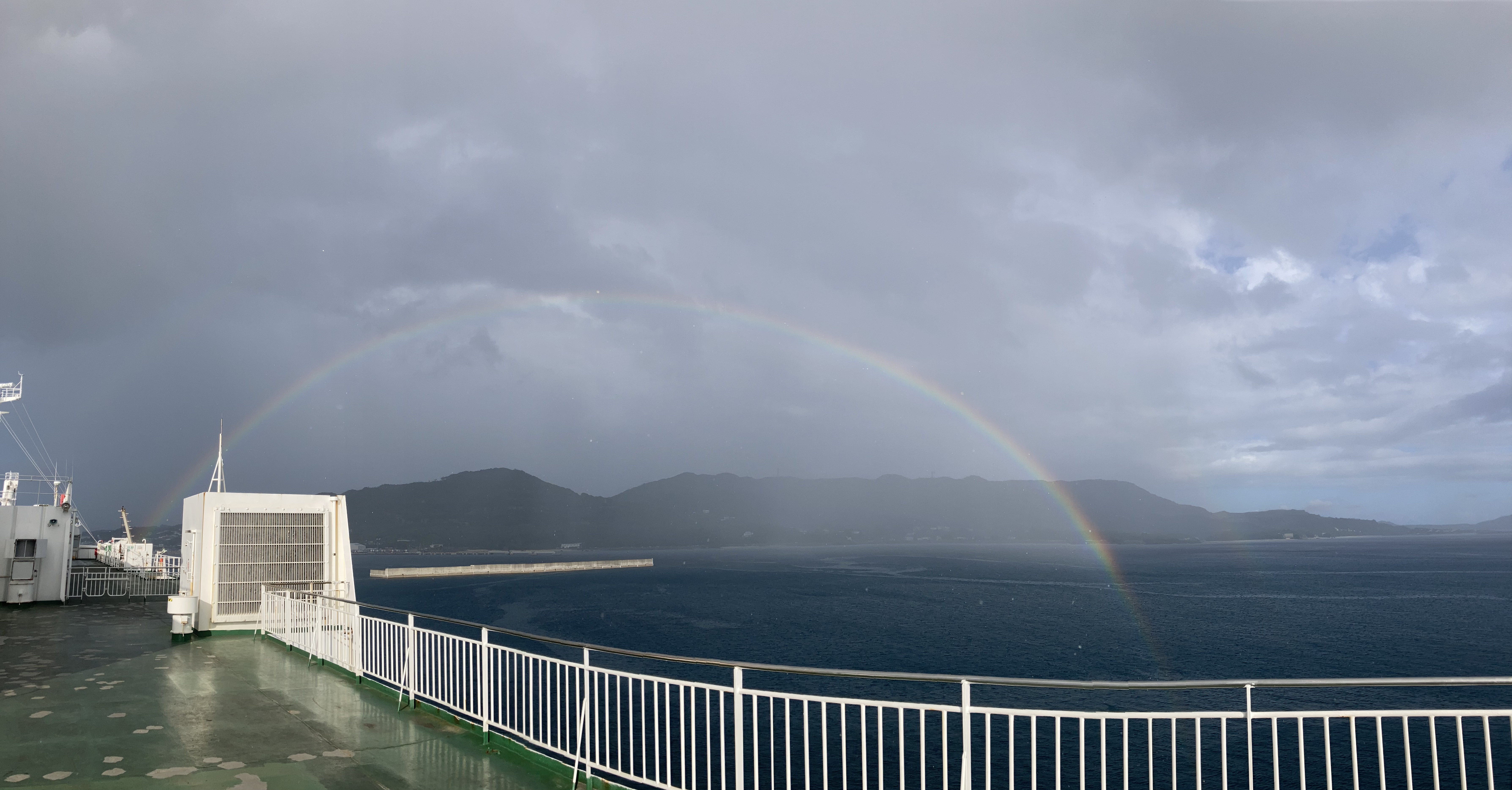
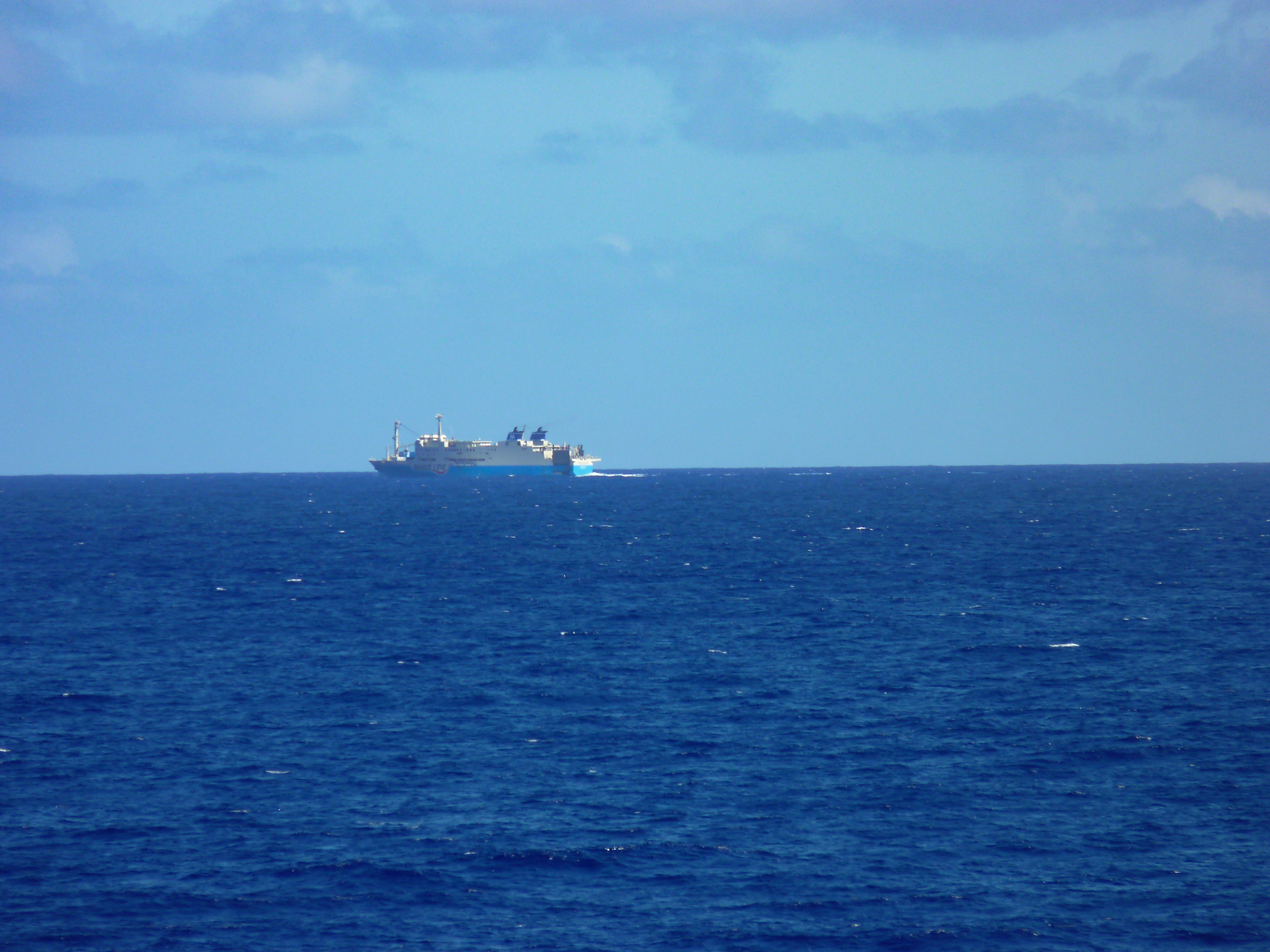
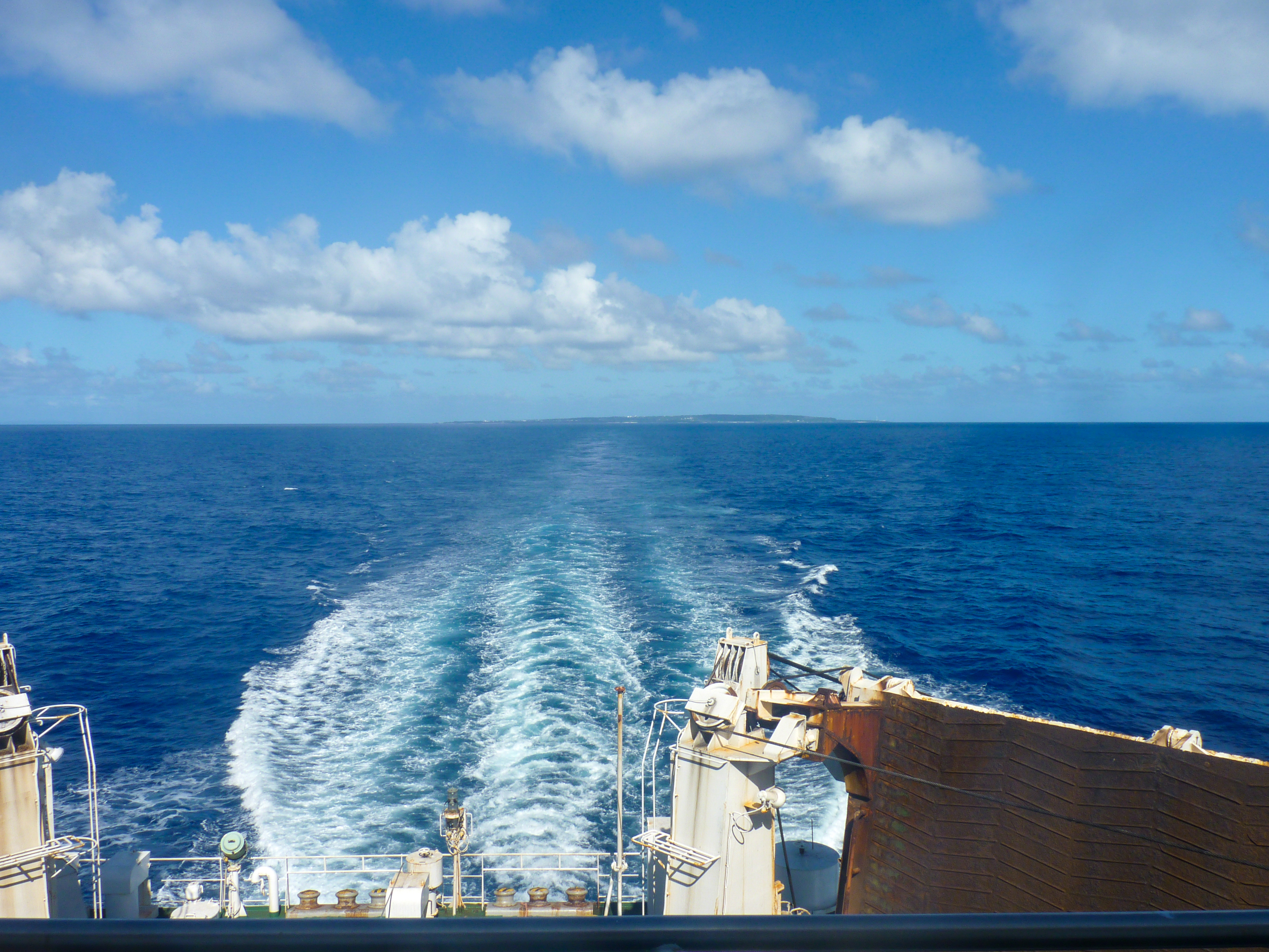
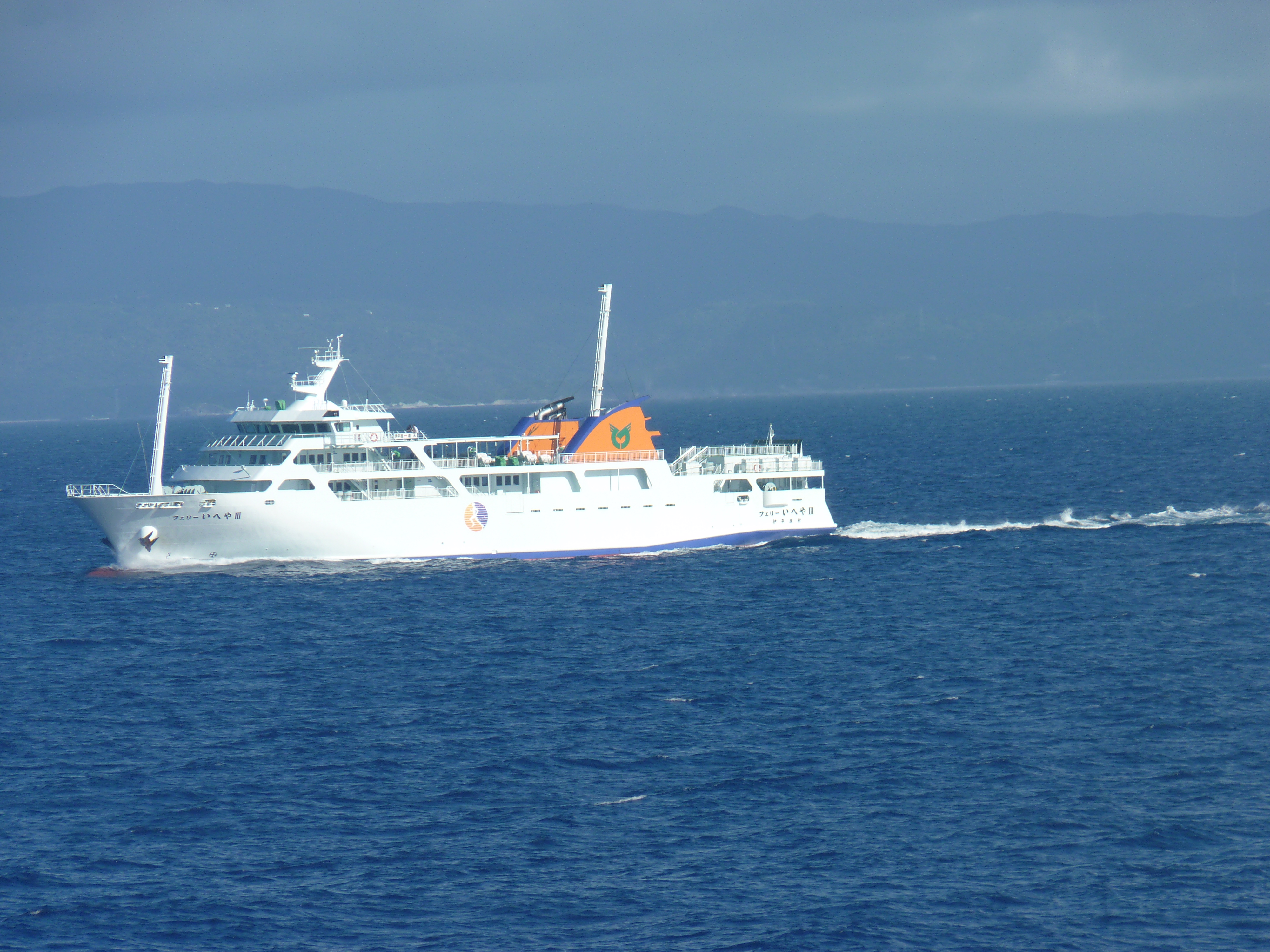
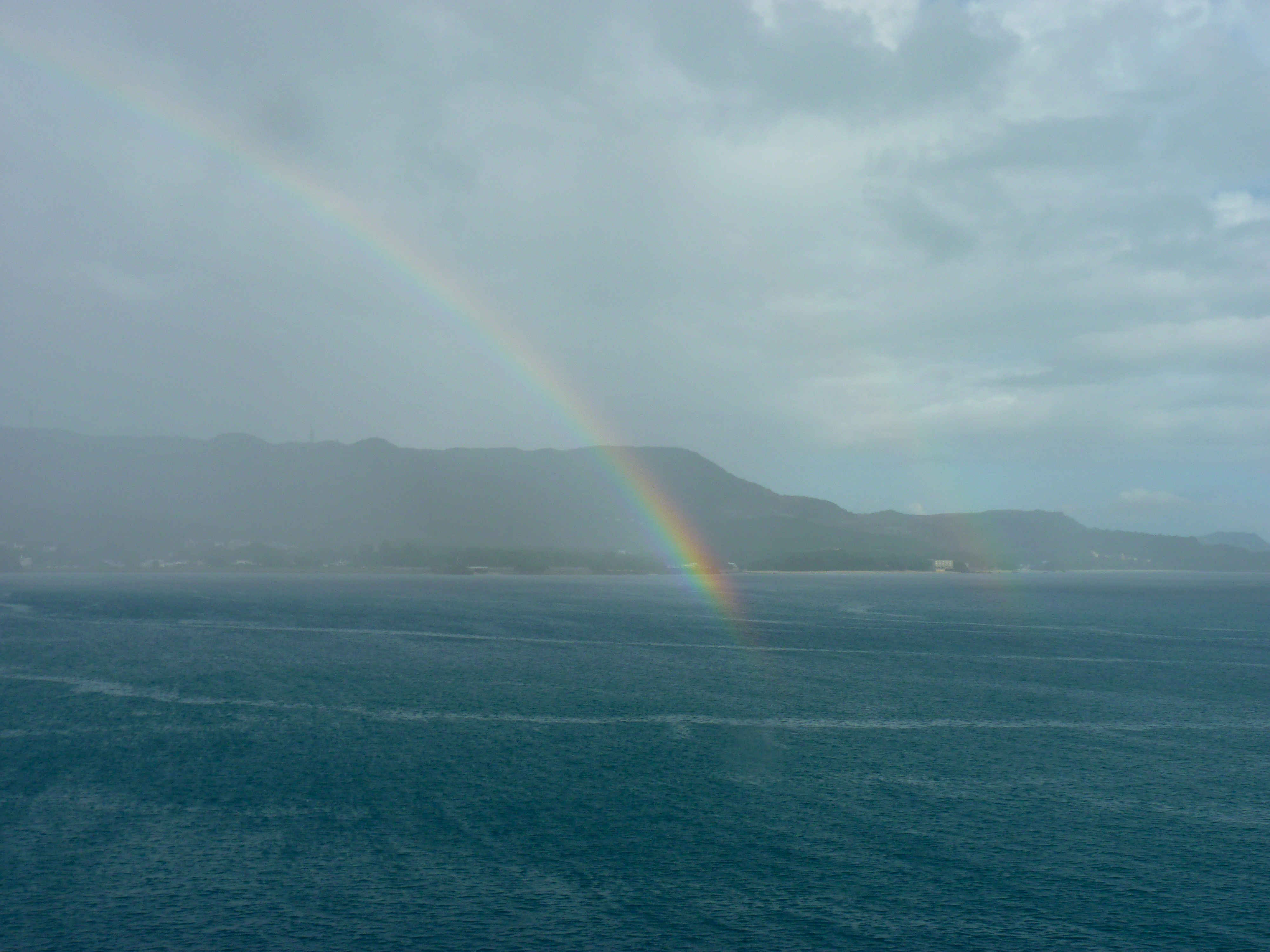
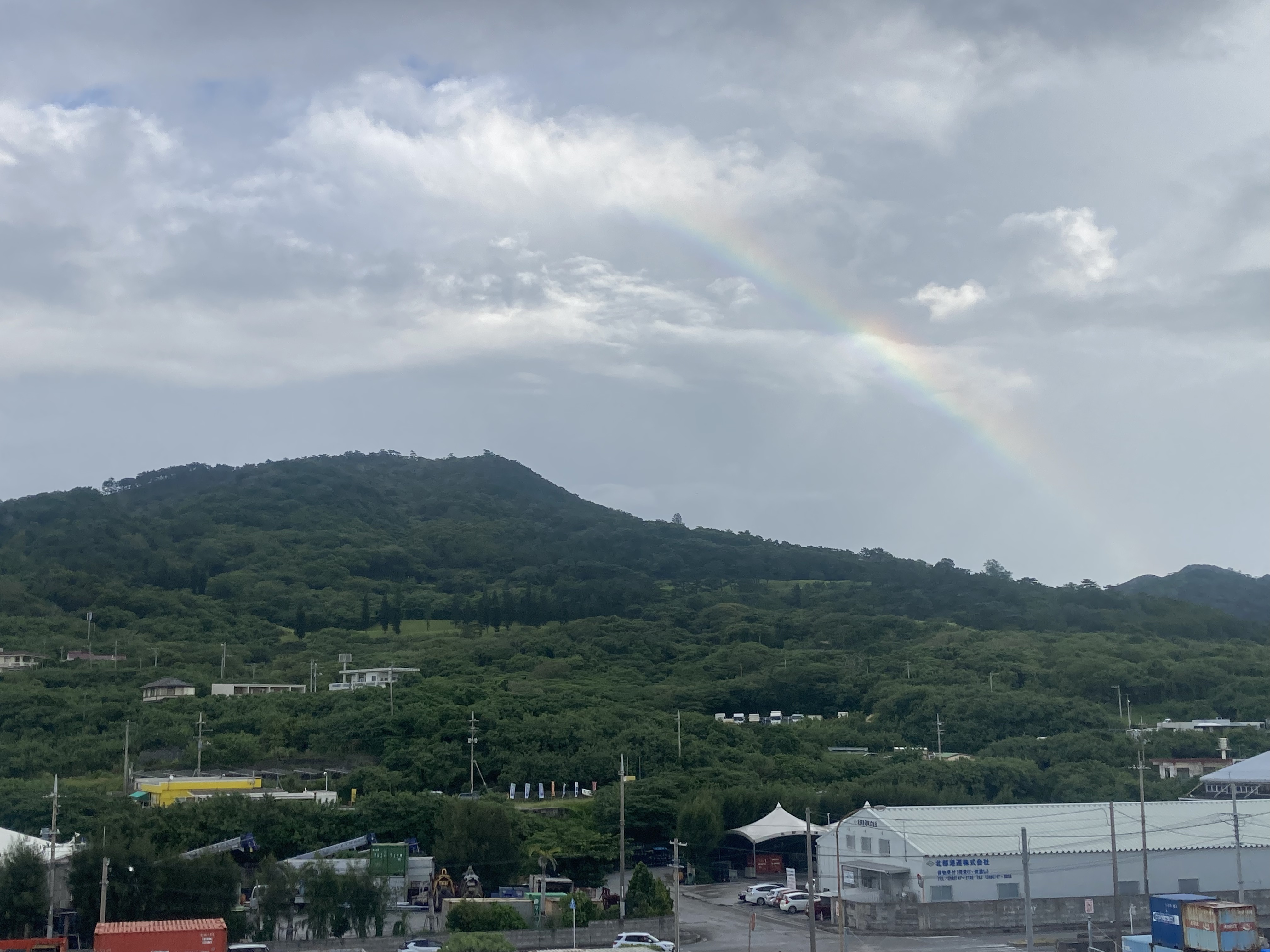
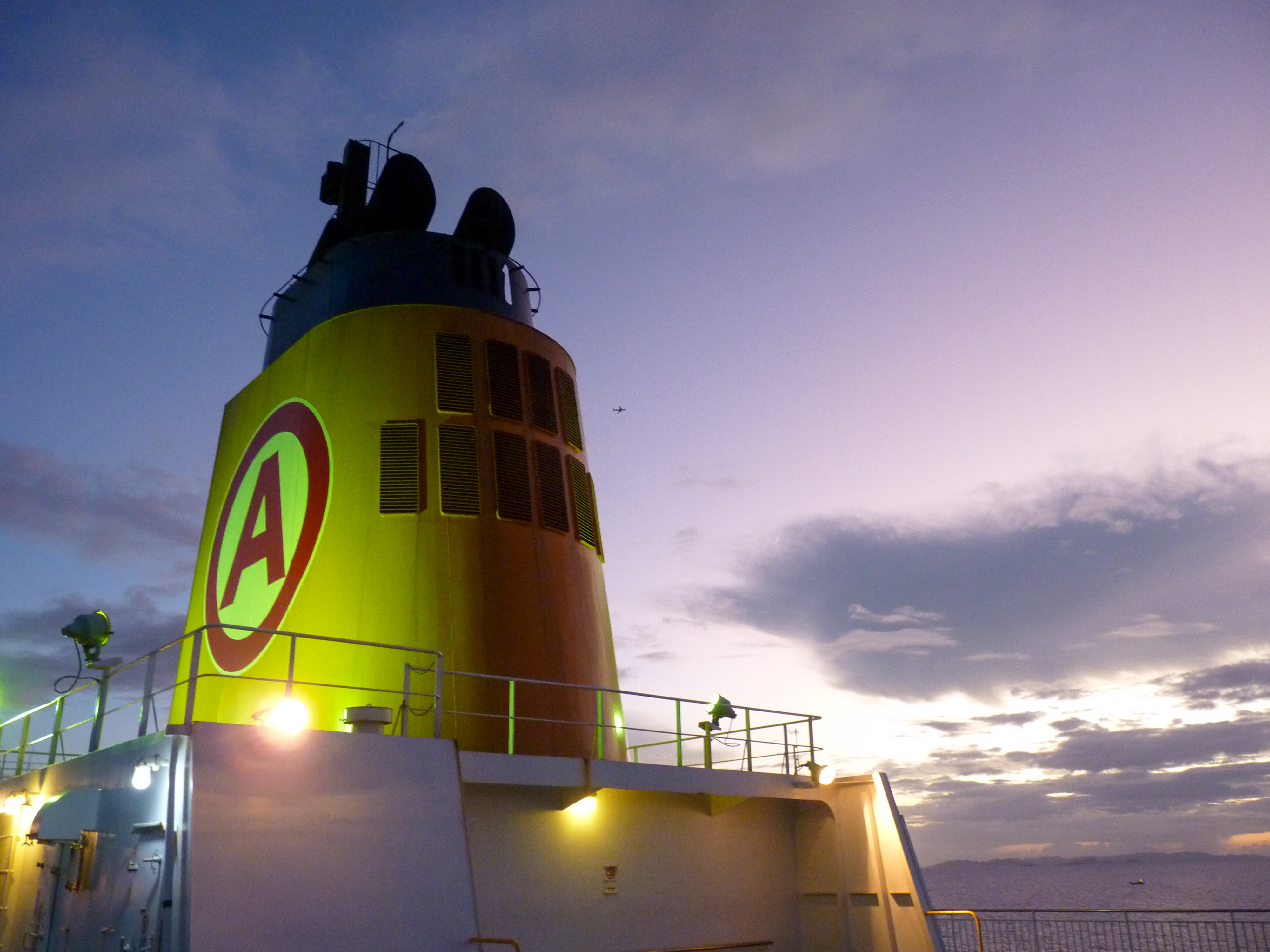
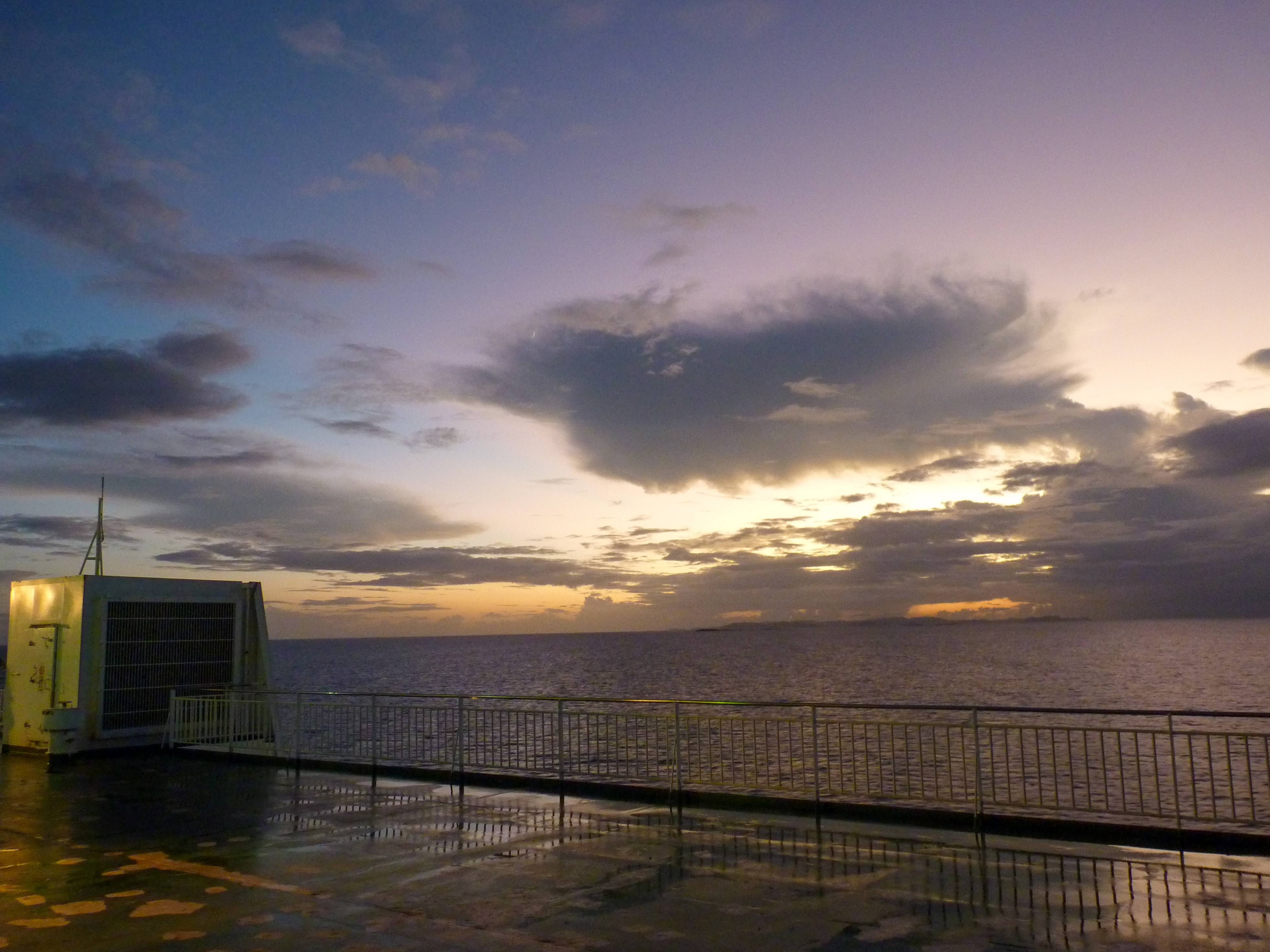
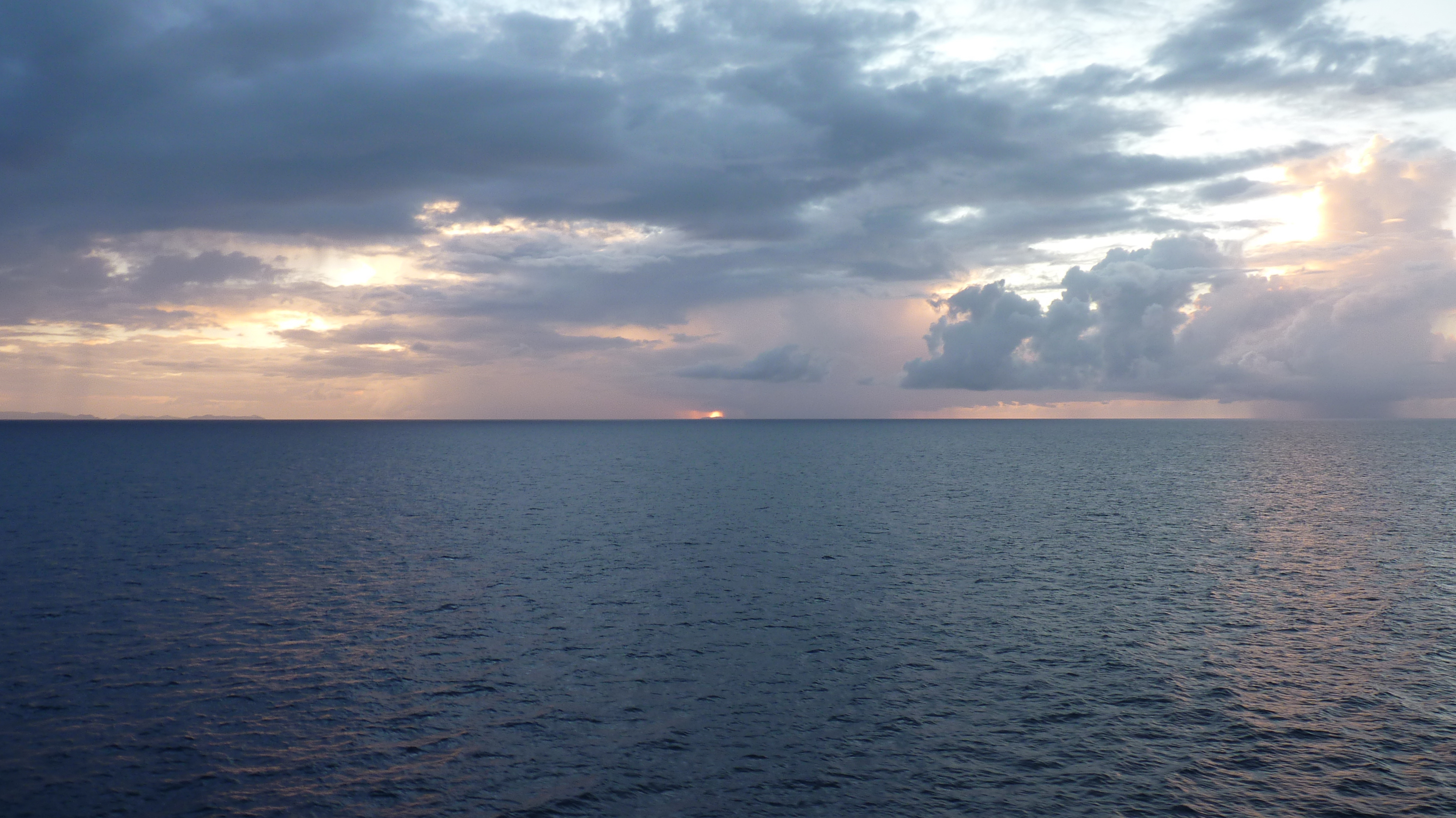
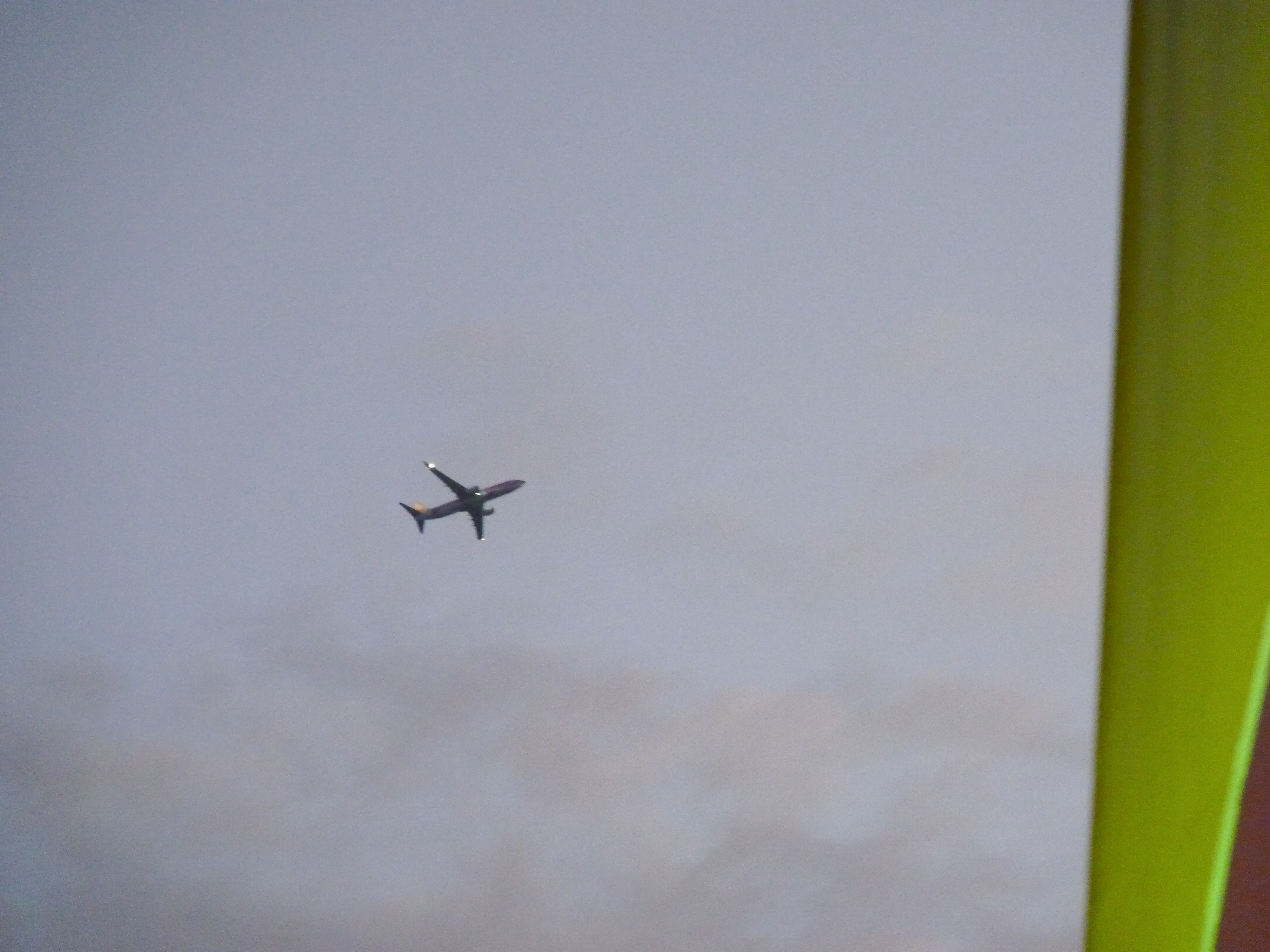
The weather improved in the vicinity of Okinawa and treated the remaining passengers to a stunning sunset on the home stretch. More and more vessels accompanied us and the sky also got busy with flights departing from Naha airport.
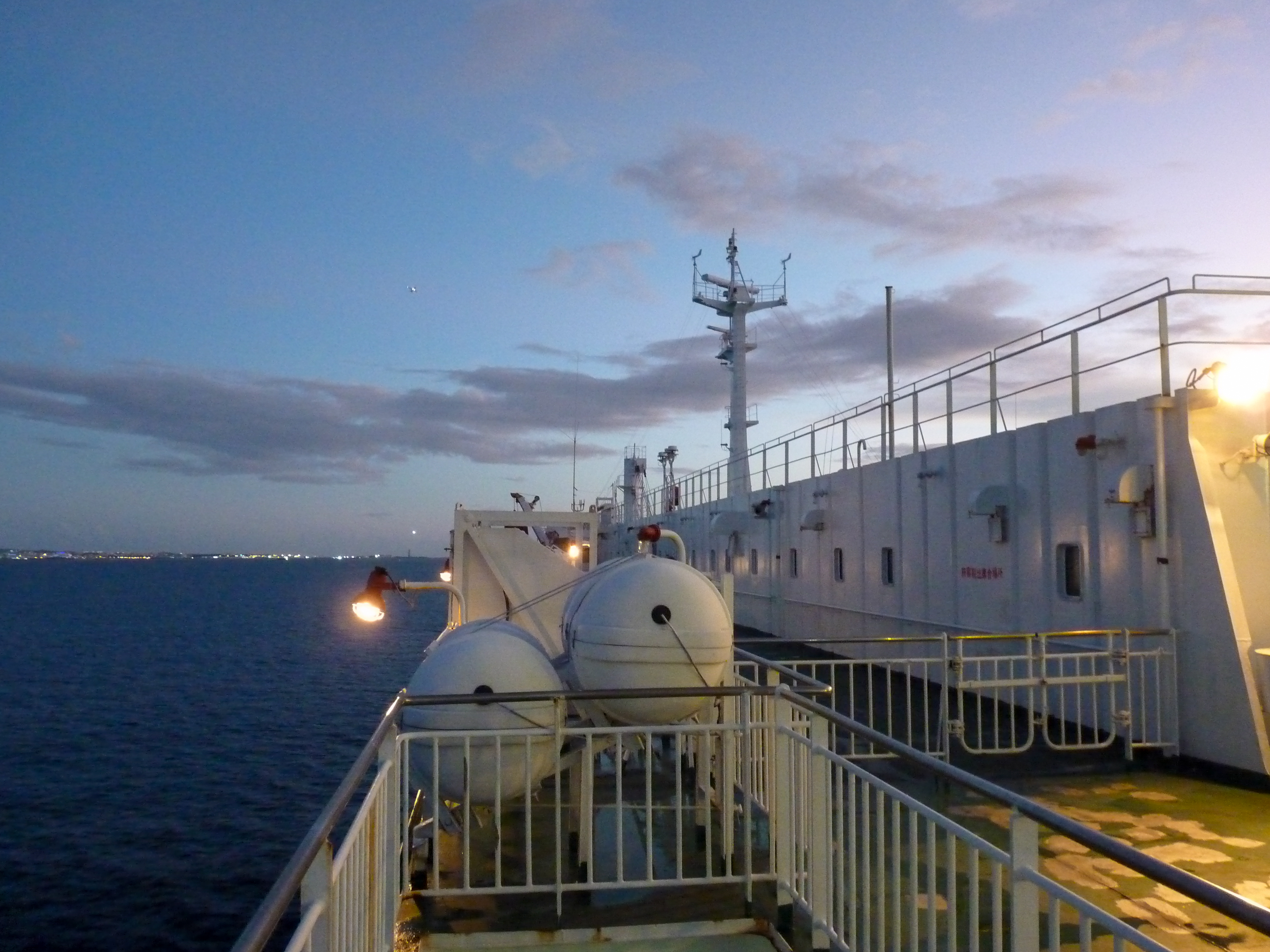
The final destination Naha is the capital of Okinawa, where all passengers have to disembark (no mini cruises on A Line Ferries!).
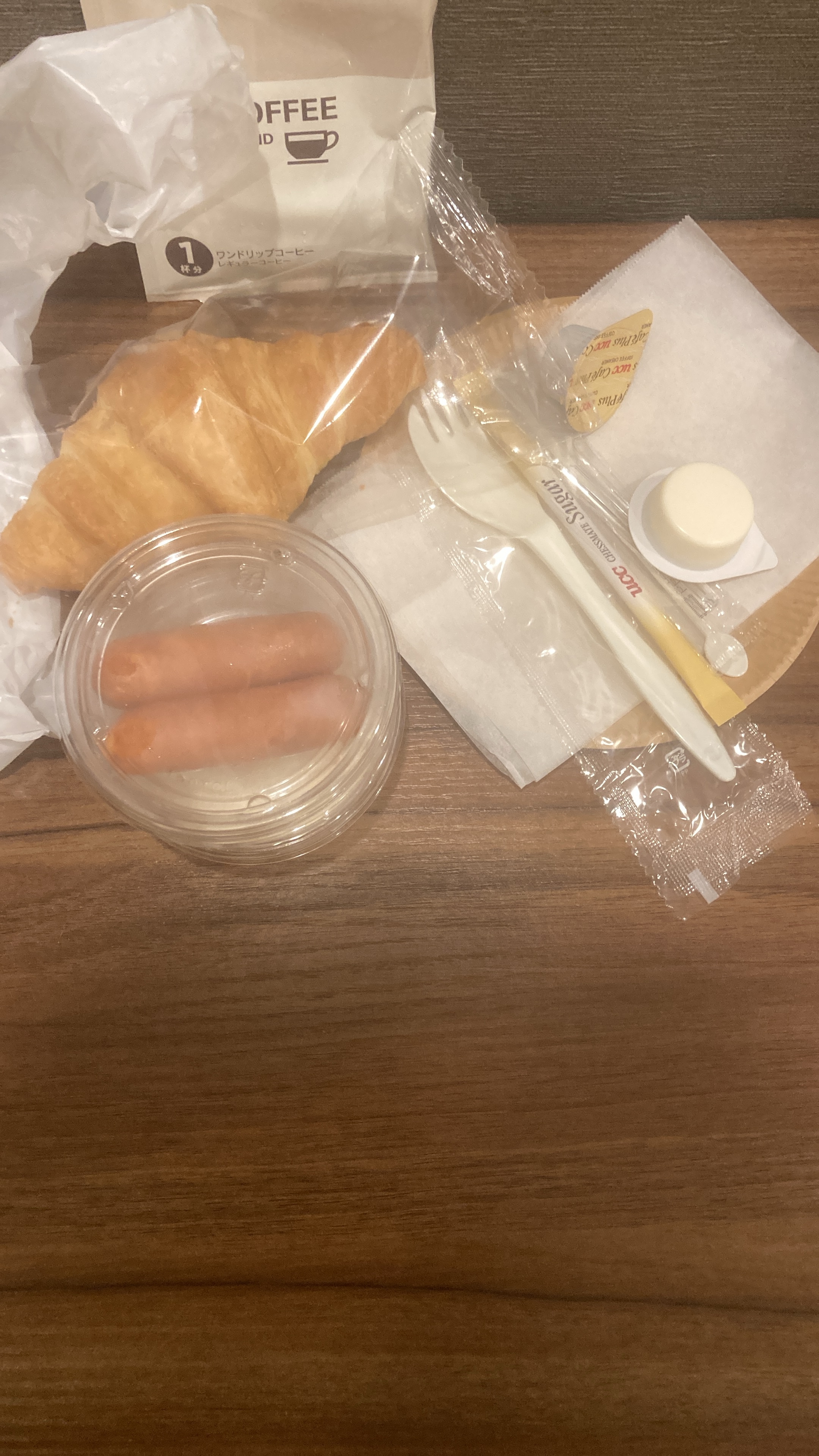
For those heading further into Okinawa, Naha is a major transport hub with easy connections to the rest of the island. Naha port is practically in the city center and it took me just a few minutes to reach my hotel where I had a comfortable room and received the weirdest hotel breakfast ever (a wiener sausage, potato salad and a croissant together with detailed prep instructions handed to me during checking-in. As directed, I put everything in the fridge in my room overnight – and made sure to leave it there in the morning.
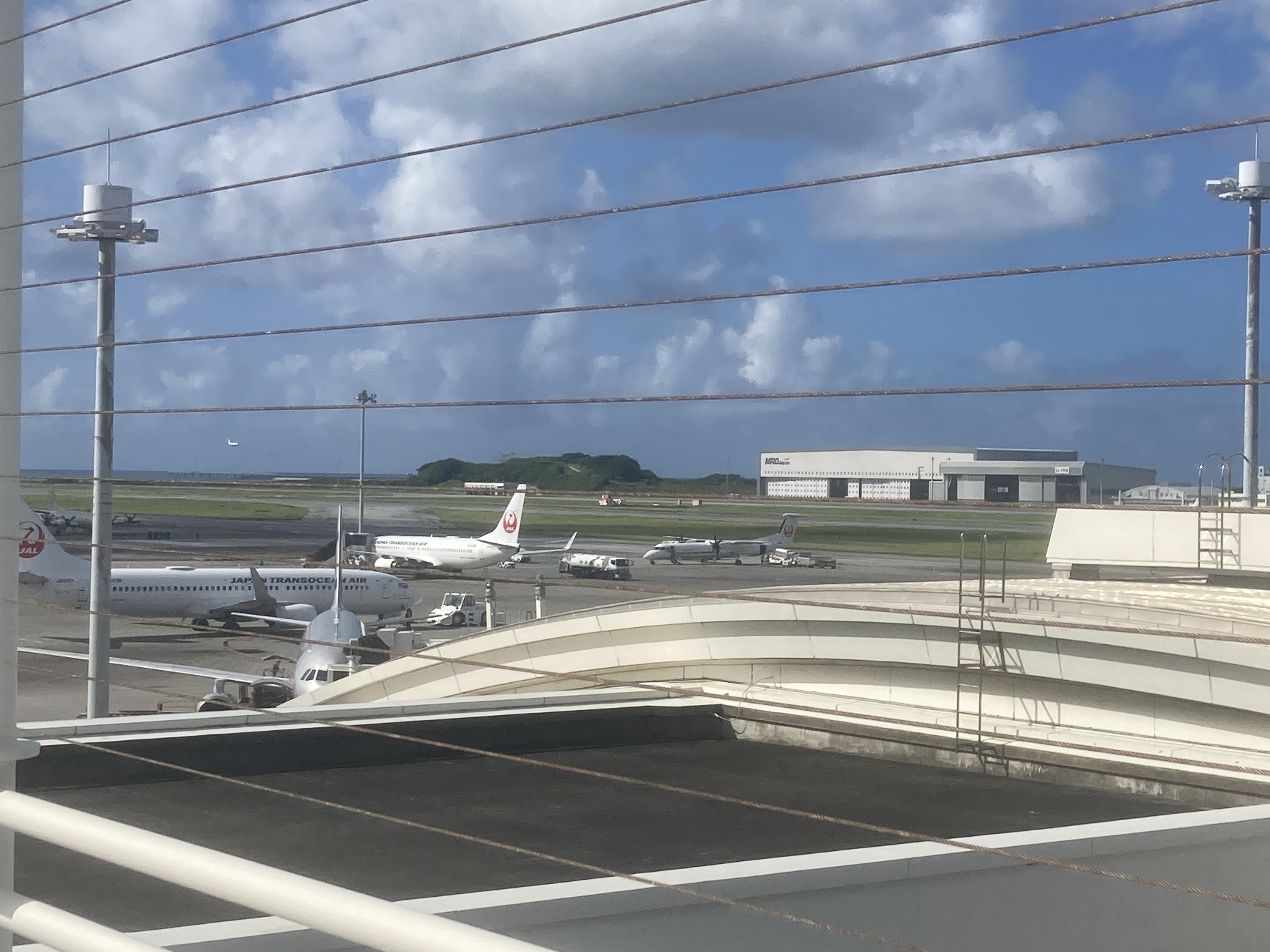
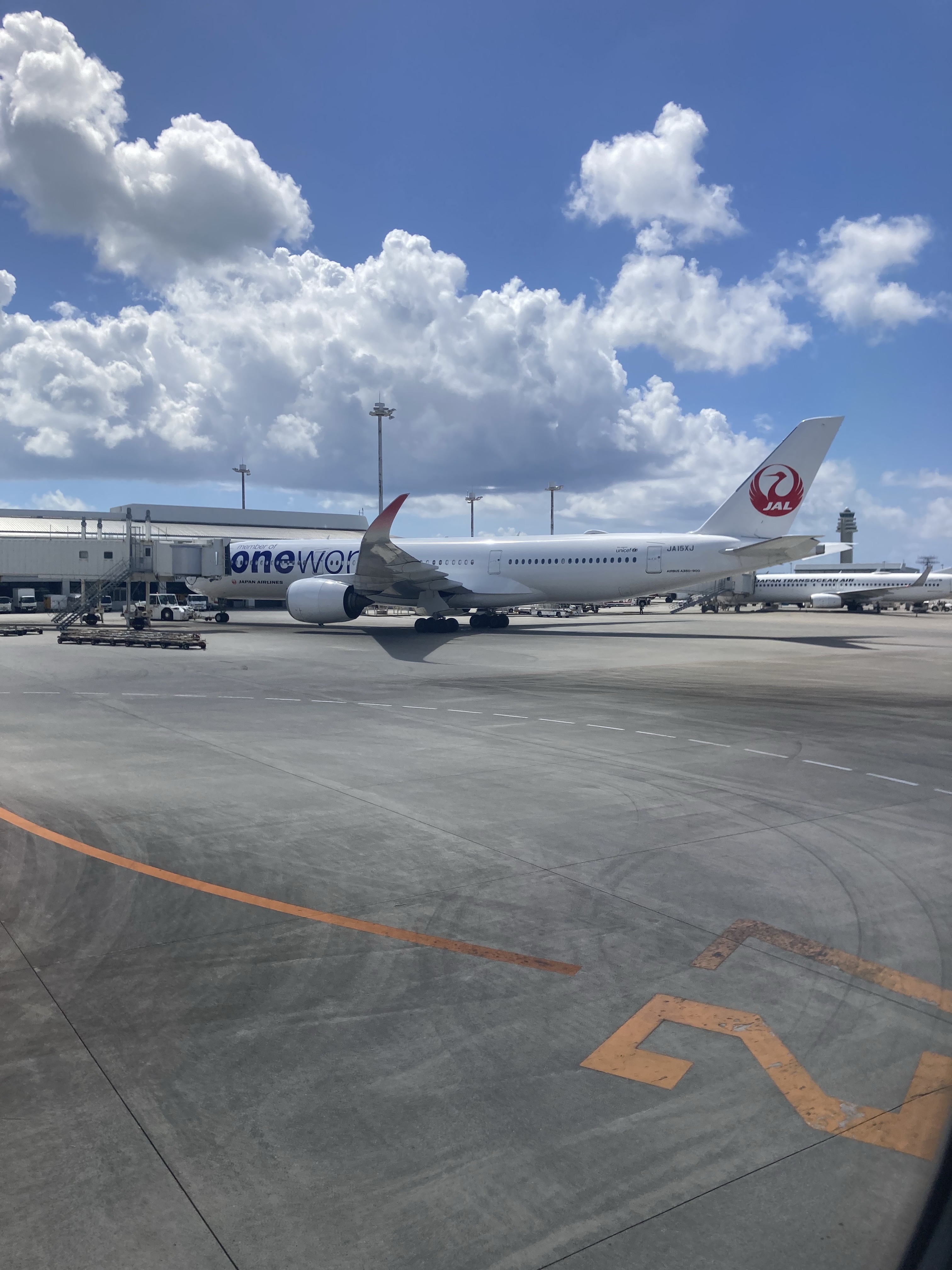
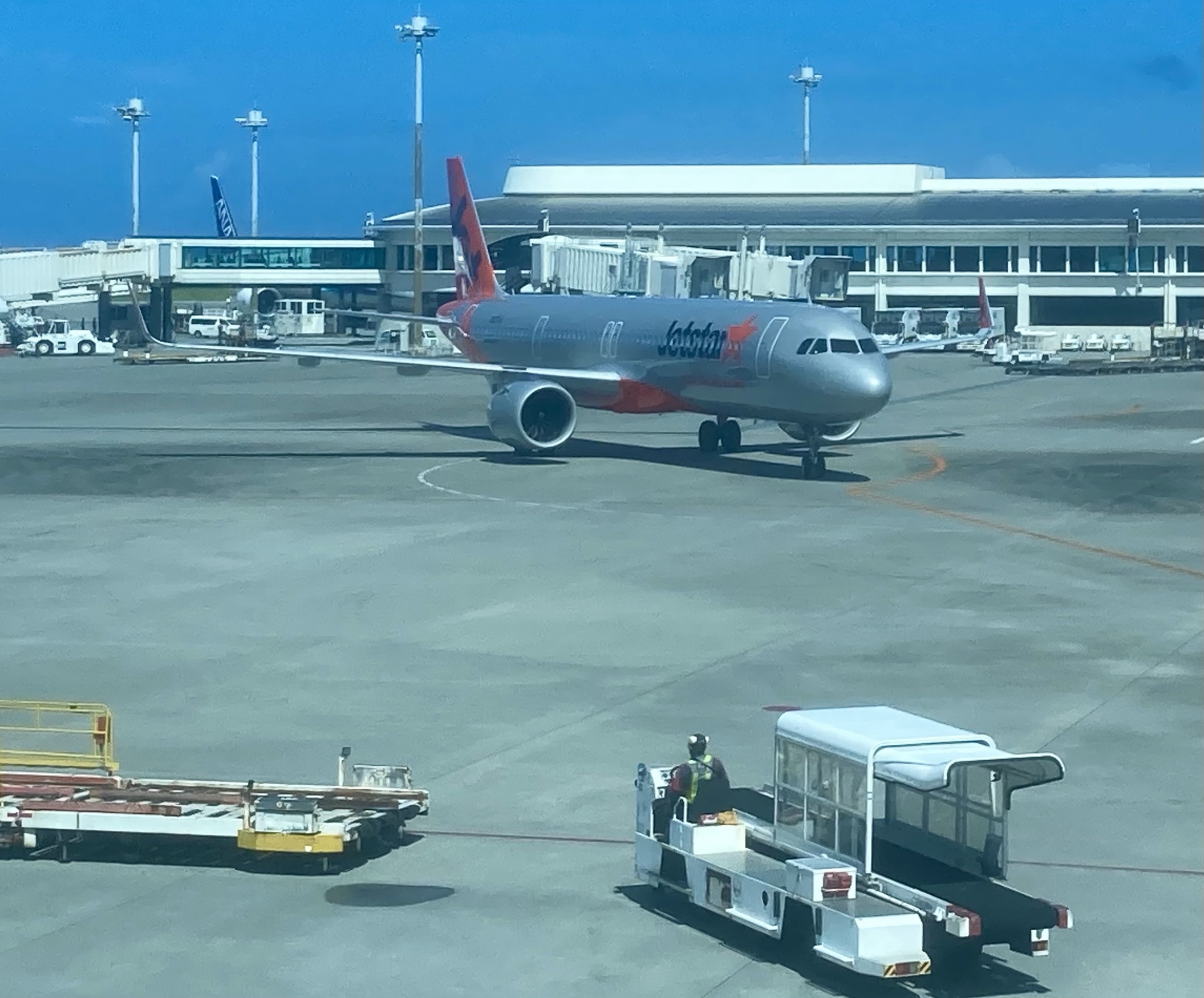
The nearby monorail took me to Naha airport, which by coincidence is very close to the official endpoint of Route 58, so I can proudly say that I did it in full. Naha is well-connected by ANA, JAL, Peach Air & co. I opted for a Jetstar flight and quite liked the trip onward to Tokyo-Haneda.
All things considered…
What a breezy and satisfying journey! A nice route with lots and lots to see during daylight hours, a profound insight into Japanese everyday life beyond the sparkling high-tech cities and a fascinating way to experience the maritime side of Japan on a sturdy working ferry.
The effort of navigating the complicated booking really paid off!
Route traveled in early October 2024. Fully carbon offset.
 Pennyblog
Hallo Tobias, vielen Dank für den Reisebericht! Gibt’s Duschen am Boot? Danke!
LikeLike
Ja, es gibt Gemeinschaftsduschen.
LikeLike